Dog Collar vs Shock Collar: What Every Owner Needs to Know
Choosing the right collar for your dog is more than a style decision — it affects safety, training, and welfare. This guide breaks down standard collars, training collars, and shock collars so you can make an informed choice.
Every dog needs a collar. It holds identification tags, provides a safe attachment point for a leash, and serves as the foundation for training. But when the term "training collar" enters the conversation, owners often get confused — and for good reason. The market is flooded with options ranging from simple nylon bands to electronic devices that deliver stimulation.
This guide explains the difference between a standard dog collar and a shock collar (also called an e-collar or remote training collar). We will cover how each works, when they are appropriate, and the safety considerations you must understand before using any training tool. Whether you are working on dog training collars or simply looking for a reliable everyday collar, the information here will help you decide.
Dog Collar Basics
A standard dog collar is a band — usually made of nylon, leather, or metal — worn around the dog's neck. Its primary purposes are identification and restraint. Every dog should wear a flat collar with an ID tag, even if they are microchipped.
Key Functions of a Standard Collar:
• Holds identification tags (name, phone number, rabies tag)
• Provides a leash attachment point for walks
• Serves as a base for attaching training tools if needed
• Offers a quick grab point if your dog is escaping
Types of Standard Collars
- Flat collar: The most common type. A simple band with a buckle or snap closure and a D-ring for leash attachment. Suitable for most dogs, but not for heavy pullers.
- Martingale collar: A limited-slip collar that tightens slightly when pulled, preventing dogs from backing out. Ideal for dogs with narrow heads like Greyhounds and Whippets. Must be fitted correctly to avoid choking.
- Head halter: Goes over the muzzle and behind the ears. Gives you control over the head, which controls the body. Humane and effective for strong pullers. Requires gradual introduction.
- Front-clip harness: Not a collar, but an alternative. Clips at the chest to discourage pulling. Recommended by many trainers and veterinarians as a humane alternative to aversive tools.
For everyday identification and basic leash walking, a well-fitted flat collar is sufficient for most dogs. For more on collar options, see our guide to dog collars.
What Is a Shock Collar?
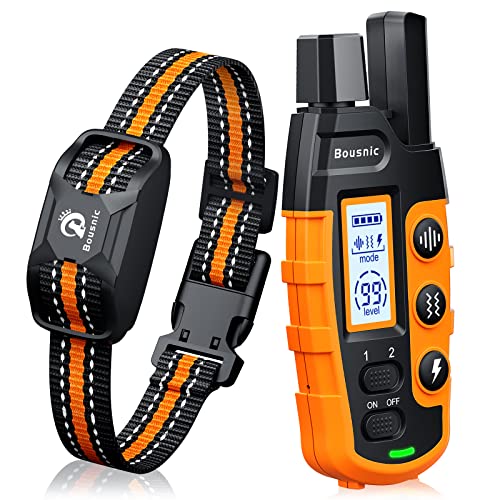
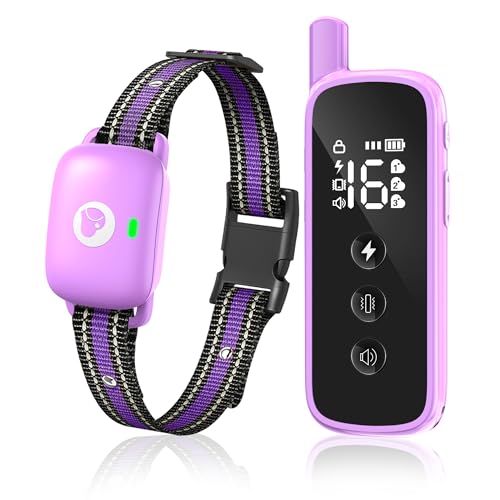
A shock collar — also called an e-collar, electronic collar, or remote training collar — is a device that delivers a static stimulation (a mild electric shock), vibration, or tone to the dog's neck. It is controlled by a handheld remote or, in some models, activated automatically by barking or boundary crossing.
Modern shock collars are not the crude devices of decades past. Quality units offer adjustable stimulation levels from very low (a tickle-like sensation) to higher levels, and many include vibration and tone modes that can be used without any static stimulation. However, the fundamental principle remains: the collar delivers an aversive stimulus to stop or discourage a behavior.
Important Distinction: A shock collar is not the same as a standard collar. It is a training tool that requires education, timing, and ethical judgment. It should never be used as a substitute for proper training or as a quick fix for behavior problems.
How Shock Collars Work
Most shock collars operate on one of two principles:
- Continuous stimulation: The collar delivers stimulation for as long as the button is held, up to a safety timeout. This is used for commands like "come" or to interrupt unwanted behavior.
- Momentary stimulation: A brief pulse (typically less than a second) is delivered when the button is pressed. This is used for corrections and is generally considered less aversive than continuous stimulation.
- Bark-activated: The collar automatically delivers stimulation when the dog barks. These are generally not recommended by behavior experts because they can increase anxiety and aggression.
- Boundary systems: The collar delivers stimulation when the dog crosses a buried wire or approaches a boundary. These are used for containment, not general training.
Some modern collars also include a "vibration" or "tone" mode that can be used as a cue or warning before any static stimulation. These modes are often used in training to teach the dog what the stimulation means.
Types of Training Collars
Shock collars are just one category of training collar. Understanding the full range helps you make a more informed decision.
Flat Collar
Standard buckle or snap collar. Used for ID and leash walking. Not a training tool for behavior modification. Best for calm dogs and everyday wear.
Entry-levelMartingale Collar
Limited-slip collar that prevents escape. Gives gentle pressure when the dog pulls. Ideal for sighthounds and dogs with narrow heads. Not for severe pullers.
Mid-rangeHead Halter
Controls the head to control the body. Humane and effective for strong pullers. Requires gradual conditioning. Best for dogs that pull aggressively on leash.
Mid-rangeRemote Training Collar (E-Collar)
Delivers tone, vibration, or static stimulation via remote. Used for recall training and off-leash reliability. Requires professional guidance. Not for basic obedience alone.
PremiumBark Collar
Automatically activates when the dog barks. Can use vibration, tone, or static stimulation. Generally not recommended by behavior experts due to risk of increased anxiety.
Mid-rangeGPS Training Collar
Combines GPS tracking with training stimulation. Useful for hunting dogs and rural properties. High-end features and complexity. Requires training to use effectively.
High-endSafety and Ethical Considerations
Shock collars are controversial. Some trainers and veterinary behaviorists consider them aversive and unnecessary; others argue they are valuable tools when used correctly. The consensus among professional organizations is that shock collars should be used only as a last resort, under professional guidance, and never as a substitute for positive reinforcement training.
Dogs That Should NOT Use Shock Collars:
• Puppies under 6 months of age
• Dogs with fear, anxiety, or aggression issues
• Dogs with health conditions affecting the neck or heart
• Dogs that are already fearful of handling or equipment
• Dogs in the early stages of training
Risks of Misuse
- Increased fear and anxiety: If the dog does not understand why the stimulation is happening, it can create chronic stress and fear.
- Aggression: A dog in pain or fear may redirect aggression toward the handler or other animals.
- Suppressed behavior, not learned behavior: The dog may stop a behavior out of fear, not because it has learned an alternative. The problem behavior often returns in a different form.
- Damage to the human-animal bond: Dogs associate the stimulation with whoever is holding the remote, which can erode trust.
- Physical injury: Poorly fitted collars can cause pressure sores, and high stimulation levels can cause burns or muscle spasms.
If you are considering a shock collar, consult a certified professional trainer or veterinary behaviorist first. They can assess your dog's temperament and determine whether a training collar is appropriate — and if so, how to use it humanely. For general behavior modification, see our guide to behavior modification techniques and when to see a behaviorist.
How to Choose the Right Collar
The right collar depends on your dog's size, temperament, training level, and your goals. Here is a practical framework:
For Everyday Wear and Identification
A flat collar with a sturdy D-ring is sufficient. Choose nylon or leather for durability, and ensure the buckle is secure. Add an ID tag with your current phone number. For puppies, choose a lightweight collar and check the fit weekly as they grow.
For Leash Training and Pulling
If your dog pulls, start with a front-clip harness or head halter. These tools are humane and effective. A martingale collar can help prevent escape but does not stop pulling. Shock collars are not appropriate for leash pulling — they can increase anxiety and do not teach loose-leash walking.
For Recall and Off-Leash Training
Remote training collars are sometimes used for recall training in high-distraction environments. However, they should only be used after the dog has learned the recall command through positive reinforcement. The collar is used to reinforce a known behavior, not to teach a new one. Our guide to dog training treats and training classes can help you build a positive training foundation first.
For Behavior Problems
Shock collars are not a solution for behavior problems like barking, digging, or aggression. These behaviors have underlying causes — boredom, anxiety, fear, or lack of training. Address the root cause with positive reinforcement and environmental management. If you need help, consult a professional. Our guide to dog calming products and anxiety wraps may also be useful for anxious dogs.
Proper Fit and Sizing
A poorly fitted collar is uncomfortable and dangerous. Whether you use a standard collar or a training collar, proper fit is essential.
Measuring Your Dog's Neck
- Use a soft measuring tape or a piece of string.
- Measure around the widest part of your dog's neck, just behind the ears.
- Add 2-3 inches for comfort and fit.
- For flat collars, you should be able to fit two fingers between the collar and your dog's neck.
- For training collars, follow the manufacturer's specific sizing guide — contact points must touch the skin without being too tight.
Fit Check: Check your dog's collar fit weekly. Puppies grow quickly, and a collar that fit last month may now be too tight. A too-tight collar can cause skin irritation, matting, and difficulty breathing. A too-loose collar can slip off during a walk.
For dogs with sensitive skin or allergies, choose a collar with a smooth lining or a hypoallergenic material. Our guide to dog health products includes options for sensitive skin.
Positive Training Alternatives
Modern dog training emphasizes positive reinforcement — rewarding desired behaviors rather than punishing unwanted ones. This approach is backed by decades of behavioral science and is endorsed by the American Veterinary Society of Animal Behavior (AVSAB) and other professional organizations.
- Treats and rewards: Use high-value treats to reward good behavior. Our guide to dog training treats covers how to choose and use them effectively.
- Clicker training: A marker signal that tells the dog exactly what behavior earned a reward. Effective for shaping new behaviors.
- Front-clip harness: A humane alternative for dogs that pull. Redirects forward motion to the side.
- Head halter: Gives you control over the head without pain or fear. Requires gradual introduction.
- Environmental management: Prevent problem behaviors by managing the environment — use baby gates, close doors, provide appropriate chew toys. See our guide to dog gates and chew toys.
- Mental stimulation: A tired dog is a good dog. Puzzle toys, training games, and sniff walks reduce problem behaviors. See our guides to interactive dog toys and puzzle toys.
If you are struggling with a behavior problem, invest in training classes or consult a professional trainer before considering aversive tools. Positive training builds a stronger bond and produces lasting results.
Common Collar Mistakes to Avoid
- Using a shock collar as a first resort. Aversive tools should only be considered after positive training methods have been exhausted and only under professional guidance.
- Leaving a training collar on all day. Training collars should only be worn during training sessions. Prolonged wear can cause pressure sores and skin irritation.
- Not checking the fit regularly. Collars loosen over time, and puppies grow quickly. Check the fit weekly.
- Using a collar without ID tags. A collar without identification is useless if your dog escapes. Always attach an ID tag with your current phone number.
- Assuming a shock collar will fix behavior. Shock collars suppress behavior; they do not teach alternative behaviors. Without training, the problem often returns or shifts to a different behavior.
- Ignoring your dog's body language. If your dog is showing signs of stress — lip licking, yawning, tucked tail, whale eye — stop the training session and reassess. See our guide to dog anxiety wraps for calming solutions.
- Using the wrong collar for the dog's size. A heavy collar on a small dog can cause neck strain. A flimsy collar on a strong dog can break during a walk.
- Punishing growls. A growl is a warning. Punishing it does not remove the underlying emotion — it removes the warning, which can lead to a bite without warning. Address the root cause of the growl instead.
For more on reading dog body language and understanding behavior, see our guide to dog pheromone diffusers and calming products for anxious dogs.
Frequently Asked Questions
Bottom Line: A standard dog collar is essential for every dog — it holds ID tags and provides a safe leash attachment. A shock collar is a controversial training tool that should only be used as a last resort, under professional guidance, and never as a substitute for positive reinforcement training. Focus on building a strong relationship with your dog through reward-based training, and consult a professional if you are struggling with behavior problems. For more on dog care and training, explore our guides to dog training collars, dog gear, and dog products.