Dog Grooming Supplies: The Complete Guide to Tools, Kits & Home Grooming
Everything you need to know before buying dog grooming supplies — from brushes and clippers to shampoos and complete kits — so you can keep your dog clean, comfortable, and healthy at home.
Grooming is not a luxury — it is a fundamental part of dog care that affects your dog's physical health, comfort, and overall well-being. Regular grooming removes dead hair, prevents painful matting, distributes natural oils, and gives you a chance to detect skin problems, lumps, or parasites early. But to groom effectively at home, you need the right dog grooming supplies.
This guide walks you through every category of grooming tool and product — from the brushes that match your dog's coat type to the clippers that handle thick fur, from gentle shampoos to complete grooming kits. By the end, you will know exactly which supplies your dog needs and how to choose quality tools that last.
Why Grooming Supplies Matter
Many dog owners assume that grooming is optional or only necessary for show dogs. In reality, every dog benefits from regular grooming — and the right supplies make the difference between a stressful ordeal and a bonding experience. The wrong brush can scratch skin, the wrong clippers can pull hair, and the wrong shampoo can cause allergic reactions. Investing in quality dog grooming tools pays off in your dog's comfort and your own confidence.
Grooming supplies also serve a preventive health function. Brushing removes loose fur before it becomes matted, which can pull on sensitive skin and hide underlying issues. Nail trimming prevents painful overgrowth that alters gait and stresses joints. Ear cleaning reduces the risk of infections that can become chronic. Dental care — using a dog toothbrush and canine toothpaste — prevents periodontal disease that affects not just the mouth but the heart, liver, and kidneys.
Key Takeaway: The right dog grooming supplies transform grooming from a chore into a health-maintenance routine. Quality tools protect your dog's skin and coat while making the process faster, safer, and more comfortable for both of you.
Brushes & Combs: Matching Tools to Coat Types
No single brush works for every dog. The right brush depends entirely on your dog's coat type, length, and density. Using the wrong brush can be ineffective at best and painful at worst. Below are the main categories of dog brushes and what they are designed to do.
Slicker Brushes
The workhorse of dog grooming. Fine wire pins set in a cushioned pad remove loose hair, detangle light mats, and smooth the coat. Best for medium to long coats, curly coats, and double coats. Entry-level slicker brushes have shorter pins; premium models feature flexible pads and longer, more durable pins for thick coats.
Essential toolUndercoat Rakes
Designed specifically for double-coated breeds like Huskies, Golden Retrievers, and German Shepherds. The rake's teeth reach through the topcoat to remove loose undercoat before it sheds all over your home. Essential during seasonal shedding. Look for models with rotating teeth to reduce pulling and discomfort.
Specialized toolBristle Brushes
Natural or synthetic bristles that distribute natural oils, remove surface dust, and add shine. Best for short-coated breeds and as a finishing brush after slicker or rake use. Soft bristles work for sensitive areas; firmer bristles work for general body brushing. Not effective for detangling.
Finishing toolMetal Combs
Essential for checking your work after brushing and for working through tangles. A comb with wide and narrow teeth handles different coat densities. Metal combs are more durable than plastic and glide through coats without creating static. Use after brushing to find hidden mats you missed.
Essential toolDematting Tools
For serious mats that a slicker cannot handle. Dematting rakes and combs have sharp blades that slice through tangles without pulling skin. Use with extreme care — these tools can cut skin if used too aggressively. Best for long-haired breeds prone to matting, such as Poodles, Doodles, and Shih Tzus.
Advanced toolGrooming Mitts & Gloves
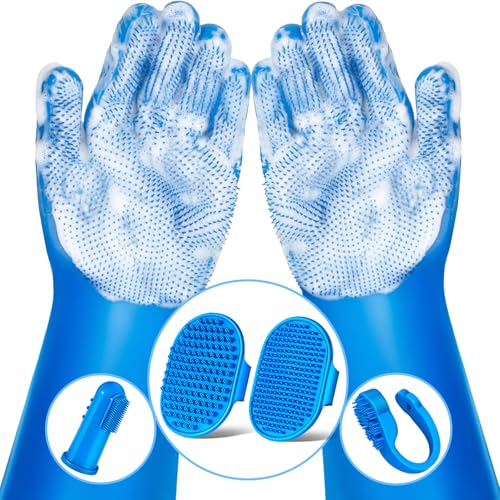
Rubber or silicone mitts that remove loose hair while massaging the skin. Excellent for short-haired dogs who dislike traditional brushes, and for dogs who enjoy the sensation of being petted. Less effective for thick or matted coats but ideal for daily maintenance and bonding.
Entry-level toolClippers & Trimmers: When and Why You Need Them
Not every dog needs clippers. Short-coated breeds often do fine with brushing alone. But dogs with continuously growing hair — Poodles, Shih Tzus, Yorkies, and Doodles — require regular clipping to prevent their coats from becoming unmanageable. Even double-coated breeds benefit from trimming around the paws, sanitary areas, and face.
Choosing clippers is one of the most important decisions in home grooming. The wrong clipper will stall on thick fur, pull hair, and terrify your dog. The right clipper glides through the coat smoothly, runs quietly, and stays cool during longer sessions.
Clipper Tiers Explained
- Entry-level clippers: Suitable for light touch-ups, paw pads, and sanitary trims on thin coats. Typically corded, with basic blade attachments. Best for owners who only need occasional trimming.
- Mid-range clippers: Handle regular grooming on medium coats. Quieter motors, better blade quality, and more consistent power. A good choice for most dog owners who groom at home every few weeks.
- Premium clippers: Designed for thick, double, or matted coats. Powerful motors, low vibration, and high-quality blades that stay sharp longer. Suitable for frequent full grooms.
- Professional-grade clippers: Used by groomers and owners of multiple dogs with demanding coats. Detachable blades, variable speed, and the durability to run for hours. An investment that pays off in reliability.
What to Look For in Clippers
- Noise level: Dogs are sensitive to sound. A quiet clipper — ideally under 60 decibels — reduces anxiety and makes grooming safer. Look for models marketed as "quiet" or "low-noise."
- Blade type and size: Detachable blades are easier to clean and replace. Different blade sizes correspond to different coat lengths. Most clippers come with adjustable or interchangeable blades.
- Motor type: Rotary motors are more powerful and better for thick coats. Magnetic motors are quieter and lighter but less powerful. Choose based on your dog's coat and your grooming frequency.
- Corded vs. cordless: Corded clippers offer constant power with no battery concerns. Cordless clippers offer freedom of movement but may lose power as the battery drains. Many owners prefer corded for reliability.
- Cooling system: Clipper blades heat up during use. Better models have cooling systems or heat-dissipating designs. Always check blade temperature during grooming to avoid burning your dog's skin.
Grooming Tip: Before clipping, bathe and thoroughly dry your dog. Clipping dirty or matted fur dulls blades quickly and pulls hair painfully. For matted coats, use a dog grooming kit with a dematting tool first, or consider professional help for severe mats.
Shampoos & Conditioners: Choosing Safe Products
Bathing your dog is about more than keeping them clean — it is an opportunity to care for their skin and coat. But the wrong shampoo can strip natural oils, cause itching, and trigger allergic reactions. Always use a shampoo formulated specifically for dogs. Human shampoo has the wrong pH and can damage canine skin.
Oatmeal Shampoos
Gentle, soothing formulas ideal for dogs with dry, itchy, or sensitive skin. Oatmeal helps calm irritation and restore moisture. A good everyday choice for most dogs, especially those prone to skin issues. Often paired with aloe vera or chamomile for additional soothing.
Everyday optionHypoallergenic Shampoos
Formulated without common allergens like fragrances, dyes, and certain preservatives. Best for dogs with known allergies or sensitive skin. Often recommended by veterinarians for dogs with environmental allergies or food-related skin issues.
Specialized optionMedicated Shampoos
Contain active ingredients like chlorhexidine, ketoconazole, or benzoyl peroxide to treat bacterial or fungal skin infections. Should be used under veterinary guidance. Not for routine bathing — these are treatment products with specific protocols.
Treatment optionWhitening & Brightening Shampoos
Designed for white-coated breeds to reduce yellowing and brighten the coat. Often contain optical brighteners or gentle cleansers that lift stains. Use as directed — overuse can dry out the coat. Best for occasional use before shows or photos.
Specialized optionConditioners & Detanglers
Applied after shampooing to restore moisture, reduce static, and make brushing easier. Detangling sprays are applied between baths to work through knots. Essential for long-haired breeds prone to matting. Leave-in conditioners provide ongoing protection.
Essential for long coatsPuppy-Specific Shampoos
Ultra-gentle formulas designed for puppies' sensitive skin and developing coats. Tear-free and mild. Puppies should not be bathed too frequently — every 4-6 weeks is usually sufficient unless they get into something messy.
Entry-level optionNail Care Tools: Clippers, Grinders & Safety
Nail trimming is the grooming task most owners dread — and the one most often neglected. Overgrown nails cause pain, change your dog's gait, and can lead to joint problems over time. The right tools make the job faster, safer, and less stressful.
Nail Clipper Types
- Scissor-style clippers: Best for small to medium dogs with thin nails. Easy to control and maneuver. The scissor action provides good visibility of the nail.
- Guillotine-style clippers: A circular blade that cuts when squeezed. Good for medium dogs with moderate nail thickness. Requires more hand strength than scissor-style.
- Plier-style clippers: Best for large dogs with thick nails. The plier design provides leverage for cutting through tough nails. Durable and long-lasting.
Nail Grinders
Rotary tools that grind nails down gradually instead of cutting. Grinders produce a smooth finish without sharp edges, reducing the risk of splitting. They are quieter than clippers and less likely to cut the quick — the sensitive blood vessel inside the nail. Best for owners who want a smooth finish and are willing to learn the technique. See our guide to dog nail clippers for detailed comparisons.
Safety First: Always have styptic powder on hand when trimming nails. If you accidentally cut the quick, apply pressure and styptic powder immediately to stop bleeding. If you are unsure about trimming, ask your vet or a professional groomer to demonstrate the technique. Never force a nervous dog — build positive associations gradually.
Dental & Ear Care Supplies
Grooming is not just about the coat. Dental and ear care are essential parts of a complete grooming routine, and they require their own specific supplies.
Dental Care Supplies
Dental disease is the most common health problem in dogs over age three. It causes pain, tooth loss, and systemic infections that affect the heart, liver, and kidneys. Daily brushing is the gold standard, and it requires just a few supplies:
- Dog toothbrush: Available in finger brush, dual-headed, and traditional handle styles. Finger brushes are easiest for beginners. See our full guide to dog toothbrush options.
- Dog toothpaste: Never use human toothpaste — it contains xylitol and fluoride, which are toxic to dogs. Canine toothpastes come in flavors dogs love, like poultry, peanut butter, and mint.
- Dental chews and toys: Not a substitute for brushing, but helpful for reducing plaque between brushings. Choose products with the Veterinary Oral Health Council (VOHC) seal.
- Dental wipes: A good alternative for dogs who resist brushing. Wipes remove plaque from the tooth surface but do not reach below the gumline.
Ear Care Supplies
Ear infections are common, especially in floppy-eared breeds like Cocker Spaniels and Basset Hounds. Regular cleaning with the right supplies prevents problems before they start. Read our complete guide to dog ear cleaning for step-by-step instructions.
- Dog ear cleaner solution: Specifically formulated to break down wax and debris. Never use hydrogen peroxide or alcohol, which can irritate the ear canal. See our guide to dog ear cleaner solution.
- Cotton balls or gauze: Use to wipe the outer ear and canal opening. Never insert cotton swabs into the ear canal — this can push debris deeper and damage the eardrum.
- Ear wipes: Convenient for quick cleanups between deeper cleanings. Useful for dogs who dislike liquid cleaners.
Complete Grooming Kits: Convenience vs. Customization
For owners who want everything in one purchase, a complete dog grooming kit is an attractive option. Kits bundle the essentials — brushes, combs, nail clippers, scissors, and sometimes clippers and shampoo — into a single package. But not all kits are created equal.
What to Look For in a Kit
- Tools that match your dog's coat: A kit designed for short coats will not work for a Poodle. Check that the included brushes and combs suit your dog's coat type.
- Quality over quantity: A kit with ten low-quality tools is less useful than a kit with five well-made essentials. Look for stainless steel combs, durable slicker brushes, and sharp scissors.
- Storage case: A case keeps tools organized, clean, and accessible. It also makes grooming sessions easier to start and finish.
- Replaceable parts: Clipper blades, brush pads, and comb teeth wear out. Choose kits with replaceable components rather than disposable tools.
When to Build Your Own Kit
If your dog has specific needs — a double coat, a curly coat, or sensitive skin — you may be better off buying individual tools. Building your own kit lets you choose the exact brush, clipper, and shampoo your dog needs without paying for tools you will never use. Start with the essentials: a slicker brush, metal comb, nail clippers, and dog shampoo. Add clippers and a dematting tool only if your dog's coat requires them.
How to Choose the Right Grooming Supplies
With so many products on the market, choosing can feel overwhelming. Use this framework to make confident decisions based on your dog's specific needs.
- Identify your dog's coat type. Short, medium, long, double, curly, or wire? This single factor determines most of your grooming supply needs. A short-coated Boxer needs different tools than a curly-coated Poodle.
- Assess your dog's temperament. A nervous dog benefits from quiet clippers, gentle brushes, and gradual introduction to grooming. A patient dog can handle more extensive tool use. Never force grooming on a fearful dog — build trust first.
- Decide between home grooming and professional services. Some tasks — like full clips on aggressive or extremely matted dogs — are best left to professionals. See our guide to dog grooming services for when to seek help.
- Start with essentials, expand as needed. You do not need every tool on day one. Begin with a brush, comb, nail clippers, and shampoo. Add clippers, a dryer, and specialty tools as your confidence and your dog's needs grow.
- Prioritize safety and comfort. Sharp tools should be handled carefully. Clippers should run cool and quiet. Shampoos should be gentle and dog-safe. A slightly higher-tier tool that lasts years is better than a budget tool that breaks in months.
- Consider storage and maintenance. Grooming tools last longer when cleaned and stored properly. A dedicated case or drawer keeps tools organized and ready. Clean brushes regularly, oil clipper blades, and replace worn parts promptly.
Pro Tip: Introduce grooming tools gradually. Let your dog sniff the brush before using it. Offer treats during short sessions. End on a positive note every time. A dog who associates grooming with treats and praise is a dog who stands calmly for nail trims and baths. For more help, see our guides on dog grooming close to me and dog groomers close to me if you decide to hire a professional.
Frequently Asked Questions
Ready to Start Grooming at Home?
You do not need every tool on the market to keep your dog looking and feeling great. Start with the essentials — a quality brush, a metal comb, nail clippers, and a gentle shampoo. Add a dog grooming kit if you want everything in one package, or build your own collection as you learn what your dog needs. For more support, explore our guides to dog grooming supplies and dog grooming tools. Your dog's comfort and health are worth the investment.