The Complete Dog Leash Buying Guide
Everything you need to know before choosing a dog leash — types, materials, lengths, widths, and how to match the right leash to your dog's size, strength, and walking style.
A dog leash is one of the few pieces of equipment you and your dog will use every single day. It is the physical connection between you and your dog during walks, training sessions, vet visits, and travel. Yet most owners buy the first leash they see on a shelf without thinking about length, width, material, or how it will perform with their specific dog.
The right leash makes walks safer and more enjoyable for both of you. The wrong leash causes hand injuries, encourages pulling, breaks at the worst possible moment, or gives you too little control in a dangerous situation. This guide breaks down every factor that matters so you can choose a leash with confidence — whether you have a tiny companion or a powerful puller.
Why the Right Leash Matters
A leash is a safety device, not just an accessory. In many jurisdictions, dogs are legally required to be on a leash in public spaces. Beyond the law, a properly chosen leash gives you control when your dog spots a squirrel, another dog, or a car. It protects your dog from traffic, fights, and running away, and it protects other people from unwanted approaches.
The wrong leash can actually create problems. A leash that is too long reduces control in urban environments. A leash that is too thin can cause rope burn or snap under tension. A heavy metal clip on a tiny dog's collar adds unnecessary weight. And a retractable leash used with a dog who pulls can teach exactly the wrong behavior.
Key Takeaway:
A good leash should feel comfortable in your hand, hold up to your dog's strength, and match the environment where you walk. Most owners are best served by a fixed-length leash of 4 to 6 feet in a material suited to their climate and lifestyle.
Types of Dog Leashes
Leashes come in several distinct designs, each with strengths and weaknesses. Understanding these differences is the fastest way to narrow down your choice.
Standard Fixed-Length Leash
The most common and versatile leash. Usually 4 to 6 feet long with a simple clip at one end and a handle loop at the other. Offers predictable control and is ideal for everyday walking, training, and busy areas. This is the best first leash for most owners.
Best All-AroundRetractable Leash
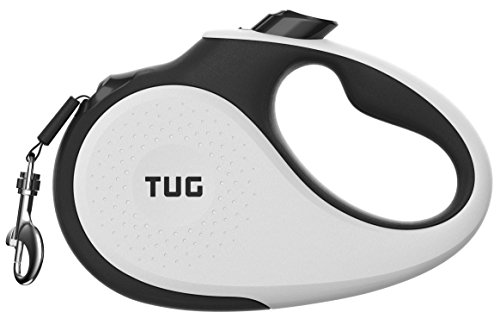
A spring-loaded reel inside a handle that lets the cord extend and retract. Convenient for letting a trained dog explore in open areas, but poor for control near traffic. The thin cord can cause burns and cuts, and the mechanism encourages pulling. Not recommended for training or strong pullers.
Convenience-OrientedTraining Leash
A shorter leash, typically 3 to 6 feet, often with multiple rings or a traffic handle near the clip. The extra handle lets you keep your dog close in crowded areas or during training exercises. Excellent for teaching loose-leash walking and for reactive dogs.
Training-FocusedLong Line
A very long leash, usually 15 to 50 feet, used for recall practice and supervised freedom in safe open spaces. Not for everyday walks. Requires careful handling to avoid tangles and rope burn. Best for owners actively training a reliable recall.
Specialty TrainingHands-Free / Waist Leash
A leash that attaches around your waist or across your body, leaving your hands free. Popular with runners and hikers. Often includes a bungee section to absorb shock. Best for dogs who already walk well on a loose leash, since a sudden lunge transfers force to your body.
Active LifestyleDouble / Coupler Leash
Designed for walking two dogs at once. A coupler splits one handle into two clips, while a double leash has two separate leads from one handle. Useful for multi-dog households, but requires dogs who walk well together without tangling.
Multi-Dog HomesBungee Leash
Contains an elastic section that stretches to absorb sudden jerks and pulls. Reduces strain on your arm and your dog's neck. Popular for running and for dogs who occasionally lunge. The stretch can reduce precise control, so it is not ideal for strict training.
Shock-AbsorbingChain / Metal Leash
A metal chain leash, often with a leather handle. Extremely durable and chew-resistant, making it a good choice for dogs who chew through fabric leashes. Heavier and noisier than other options, and not comfortable for everyday casual walking.
Chew-ResistantLeash Materials Compared
The material of your leash affects its durability, comfort, weight, and how it handles weather. Each material has trade-offs.
| Material | Durability | Comfort | Best For |
|---|---|---|---|
| Nylon | High | Good | Everyday walking, budget-friendly option, most climates |
| Leather | Very High | Excellent | Long-term use, comfort, classic look, cool climates |
| Biothane / Synthetic | Very High | Good | Wet climates, muddy walks, easy cleaning, water sports |
| Rope | High | Good (with padding) | Strong dogs, rugged terrain, outdoor adventures |
| Chain | Extreme | Low | Chewers, heavy-duty control, short-term use |
Nylon Leashes
Nylon is the most common leash material because it is strong, lightweight, and affordable. It comes in many colors and widths and is easy to clean. The main drawback is that nylon can fray over time and may become stiff in cold weather. It is an excellent entry-level choice and works well for most dogs.
Leather Leashes
Leather leashes are a premium choice. They are durable, comfortable in the hand, and develop a soft patina with use. Leather is naturally grippy and does not burn your hands as easily as thin nylon when a dog pulls. It requires some care — it should be kept dry and conditioned occasionally — but a well-made leather leash can last many years. Consider a quality leather leash if you want a long-term investment.
Biothane and Synthetic Leashes
Biothane and similar synthetic materials are waterproof, odor-resistant, and easy to wipe clean. They are ideal for rainy climates, beach walks, and dogs who love mud. They are slightly stiffer than leather but extremely durable and low-maintenance.
Rope Leashes
Rope leashes, often made from climbing rope, are strong and comfortable, especially when paired with a padded handle. They are popular with large, strong dogs and for outdoor adventures. Some rope leashes can absorb water and become heavy, so check whether the rope is treated or synthetic.
Choosing the Right Length
Leash length is one of the most important decisions you will make. The right length depends on where you walk and what you want your dog to be able to do.
- 3 to 4 feet: Best for crowded urban areas, busy streets, vet visits, and training. Gives maximum control and keeps your dog close.
- 4 to 6 feet: The sweet spot for most everyday walks. Allows your dog some freedom to sniff and explore while keeping good control.
- 6 to 10 feet: Good for relaxed walks in parks and quiet neighborhoods. Gives your dog more room to explore, but requires more attention to manage.
- 15 to 50 feet (long line): Only for supervised recall training in safe, enclosed spaces. Never use a long line near roads or in areas with hazards.
Rule of Thumb: Shorter leashes give more control; longer leashes give more freedom. When in doubt, choose a 5 or 6 foot leash for everyday use and add a long line only for dedicated training sessions in safe areas.
Matching Leash Width to Your Dog
Leash width matters for both comfort and safety. A leash that is too thin can cut into your hand or snap under the weight of a strong dog. A leash that is too thick feels clumsy for a small dog and adds unnecessary weight.
| Dog Size | Recommended Width | Notes |
|---|---|---|
| Small (under 20 lbs) | 1/2 inch | Lightweight clips and handles are important for comfort |
| Medium (20–60 lbs) | 5/8 to 3/4 inch | Most common width; balances comfort and strength |
| Large (60–90 lbs) | 3/4 to 1 inch | Choose wider leashes for stronger pullers |
| Giant (90+ lbs) | 1 inch or more | Heavy-duty hardware and reinforced stitching are essential |
If you have a strong dog who pulls, err on the wider side. The extra surface area distributes pressure across your hand and reduces the risk of injury. Pair the leash with an appropriate dog harness or front-clip harness for better control.
Features Worth Paying For
Not every feature is essential, but some make a real difference in daily use.
- Padded handle: A padded or neoprene-lined handle protects your hand from rope burn and makes walks more comfortable, especially with strong dogs.
- Traffic handle: A second handle near the clip lets you keep your dog close when passing other dogs, crossing streets, or in crowded areas. A must-have for reactive dogs.
- Swivel clip: A swivel prevents the leash from twisting and tangling, which reduces wear on the clip and improves handling.
- Reflective stitching: Reflective elements improve visibility during evening or early morning walks. A small feature that adds significant safety.
- Reinforced stitching: Check that the stitching near the handle and clip is double-stitched or bar-tacked. This is where leashes fail first.
- D-ring attachment point: Useful for clipping a poop bag holder, a small treat pouch, or dog tags without adding clutter to your dog's collar.
Leashes for Training & Pullers
If your dog pulls, the leash alone will not fix the behavior — but the right leash makes training easier and safer while you work on it. A short fixed-length leash and a front-clip harness or head halter are the standard recommendation for strong pullers.
Avoid retractable leashes for training. They reward pulling by letting the dog move forward when they pull, which reinforces the exact behavior you are trying to eliminate. The thin cord also poses a real injury risk if it wraps around a leg or hand.
For dedicated work on loose-leash walking, a training leash with a traffic handle is ideal. Our guide on stopping dog pulling covers the training steps in detail. If your dog is reactive or easily overstimulated, a dog muzzle used with positive conditioning can add an extra layer of safety during training.
Remember:
No leash or tool trains a dog by itself. Training works through consistency, rewards, and gradual practice. A good leash simply gives you the control you need while you teach the behavior you want.
Leash Safety & Maintenance
A leash is only as reliable as its condition. Inspect it regularly and replace it at the first sign of wear.
- Check the stitching and clip: Look for loose threads, fraying near the handle, and bent or rusted clips. A clip that does not fully close is an accident waiting to happen.
- Inspect the webbing or leather: Frayed nylon, cracked leather, and stiff, faded material are signs that the leash is nearing the end of its life.
- Avoid tying your dog with the leash: Leashes are not tie-out cables. Dogs can chew through them or injure themselves when they lunge against a fixed line.
- Keep the leash dry: Leather should be dried naturally and conditioned occasionally. Nylon and synthetic leashes should be rinsed and air-dried after muddy or salty walks.
- Retire chewed leashes: A leash that has been chewed, even slightly, has weakened fibers. Replace it rather than risk a break during a walk.
If your dog chews through leashes, a metal chain leash or a chew-resistant synthetic option can help while you work on the behavior. For dogs who pull hard enough to risk neck injury, a tracheal collapse risk makes a harness a better choice than a collar alone.
Common Leash Mistakes to Avoid
- Using a retractable leash as a primary walking leash. They encourage pulling, offer poor control near traffic, and cause cord injuries. Use one only in low-risk open areas with a trained dog.
- Choosing a leash that is too long for the environment. A 10-foot leash in a crowded city street is a hazard. Match length to setting.
- Ignoring leash width. A thin leash on a strong dog causes hand injuries and is more likely to break. Choose width based on your dog's size and strength.
- Letting the leash drag on the ground. A dragging leash gets stepped on, caught in wheels, and chewed. Keep it off the ground when possible.
- Wrapping the leash around your hand. This is a common cause of fractures and burns if the dog lunges. Hold the handle and gather slack in loops instead.
- Never inspecting the hardware. Clips fail. Stitching fails. Check your leash regularly before it fails during a walk.
- Using a leash to correct or punish. Jerking the leash can injure your dog's neck and damage your relationship. Training should be reward-based, with the leash used for safety and guidance.
Frequently Asked Questions
Bottom Line:
For most dog owners, a 5 or 6 foot fixed-length leash in nylon or leather is the most practical choice. Choose a width that matches your dog's size and strength, look for a padded handle and reinforced stitching, and consider a traffic handle if you walk in busy areas or have a reactive dog. Pair the leash with a well-fitted collar or harness, inspect it regularly, and replace it at the first sign of wear. A leash is simple equipment, but choosing the right one makes every walk safer and more enjoyable for both you and your dog.