Emotional Support Animal Paperwork for Doctor
Your complete guide to obtaining valid ESA documentation from a licensed medical professional for housing and travel accommodation.
Emotional support animals provide genuine therapeutic relief for millions of people living with mental health conditions. Unlike service dogs trained for specific tasks, ESAs offer comfort and companionship that helps alleviate symptoms of anxiety, depression, and other psychological disorders. However, to legally protect your right to live with your ESA, you need proper documentation from a licensed medical professional.
The paperwork required for an emotional support animal is specific and must come from a qualified doctor or mental health provider. Without valid documentation, landlords can legally deny your request to keep your animal, and airlines may refuse boarding. Understanding exactly what constitutes valid ESA paperwork saves you time, money, and potential legal complications.
This comprehensive guide explains everything you need to know about getting ESA paperwork signed by a doctor. You will learn which professionals can provide this documentation, what information the letter must contain, how to obtain it, and how to use it to secure reasonable accommodations in housing. Whether you are applying for your first ESA letter or renewing an expired one, this guide walks you through each step of the process.
What Is Emotional Support Animal Paperwork?
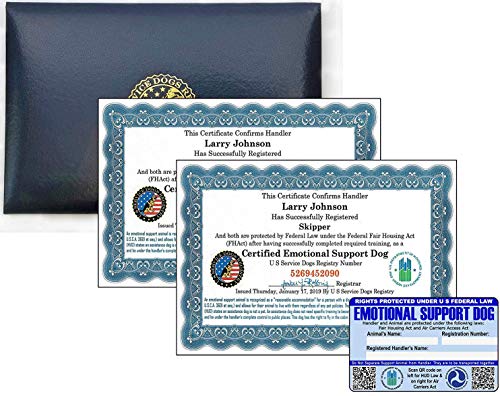
Emotional support animal paperwork is a formal letter written by a licensed mental health professional or medical doctor. This letter serves as verification that you have a diagnosed mental health condition and that your animal provides therapeutic benefit as part of your treatment plan. It is not a registration, certification, or ID card — despite what some websites claim.
The only legally recognized document for an emotional support animal is a signed letter from a qualified professional. This letter must meet specific criteria to be valid for housing and travel accommodations. It is fundamentally different from service dog documentation, which requires the animal to perform specific tasks for a person with a disability.
Important Distinction: Emotional support animals are not service animals under the Americans with Disabilities Act (ADA). Service animals are trained to perform specific tasks for people with disabilities and have public access rights. ESAs provide comfort through companionship and are protected primarily under the Fair Housing Act and the Air Carrier Access Act.
When you obtain an ESA letter, you are not registering your animal in any government database. No such official registry exists. Instead, you are establishing a therapeutic relationship with a licensed professional who confirms that your animal is part of your mental health treatment. This documentation protects your right to reasonable accommodation in housing and on commercial flights.
Why Doctor's Paperwork Matters
Without proper documentation from a licensed professional, your emotional support animal has no legal standing. Landlords can enforce no-pet policies, charge pet deposits, and deny your request to keep your animal. Airlines can refuse boarding or charge pet fees. Your ESA essentially has the same status as any other pet.
Valid ESA paperwork changes this legal landscape completely. Under the Fair Housing Act, landlords must provide reasonable accommodation for individuals with emotional support animals, including waiving no-pet policies and pet-related fees. For air travel, the Air Carrier Access Act requires airlines to permit ESAs in the cabin with proper documentation.
Legal Protections Afforded by ESA Documentation
- Housing accommodation: Landlords cannot refuse to rent to you because of your ESA, even if they have a no-pet policy. They also cannot charge pet deposits or monthly pet rent for your emotional support animal.
- Airline travel: With valid documentation, you can generally fly with your ESA in the cabin without paying pet fees, though airlines may have specific advance notice requirements and forms.
- Privacy protection: Your ESA letter contains confidential medical information. You are not required to disclose the nature of your mental health condition to landlords or airlines — only provide the letter from your provider.
- Renewal flexibility: ESA letters can be renewed annually as long as your therapeutic relationship with your provider continues and your need for the animal persists.
The therapeutic benefits of emotional support animals are well-documented. Research shows that interacting with animals reduces cortisol levels, lowers blood pressure, and increases oxytocin production. For people with mental health conditions, this physiological response can be life-changing. Proper documentation ensures you can access these benefits without unnecessary legal barriers.
Who Qualifies for an Emotional Support Animal Letter
To qualify for an ESA letter, you must meet two fundamental requirements: you must have a diagnosed mental health condition, and you must have a therapeutic relationship with a licensed professional who confirms that an animal provides meaningful support for your condition.
The mental health condition does not need to be severe or disabling. The key is that it significantly impacts your daily life or well-being and that an animal helps alleviate those symptoms. Common qualifying conditions include generalized anxiety disorder, depression, post-traumatic stress disorder, panic disorder, and various phobias.
Common Qualifying Mental Health Conditions
- Anxiety disorders: Generalized anxiety, social anxiety, panic disorder, and specific phobias
- Depressive disorders: Major depression, persistent depressive disorder, and seasonal affective disorder
- Trauma-related disorders: Post-traumatic stress disorder and acute stress disorder
- Bipolar disorders: Bipolar I and Bipolar II
- Obsessive-compulsive disorder: When symptoms cause significant distress or impairment
- Attention-deficit/hyperactivity disorder: When symptoms impact daily functioning
It is important to understand that any licensed mental health professional can assess whether you qualify for an ESA letter. You do not need to have a pre-existing diagnosis. If you are experiencing symptoms that affect your quality of life, you can seek an evaluation specifically for the purpose of obtaining ESA documentation.
Note: If you are already working with a therapist, psychiatrist, or counselor, they are often the best resource for an ESA letter. They have an established treatment relationship with you and can speak directly to how an animal would support your mental health goals. If you do not have a current provider, you can seek an evaluation from a licensed professional who specializes in ESA documentation.
Who Can Write Your ESA Letter
Not all healthcare providers can write a valid ESA letter. The professional must be licensed in your state to practice mental health care and must be qualified to diagnose and treat mental health conditions. This requirement ensures that the documentation carries legal weight and is accepted by housing providers and airlines.
The most common professionals who write ESA letters include psychiatrists, psychologists, licensed clinical social workers, licensed professional counselors, and licensed marriage and family therapists. Your primary care physician may also be able to write one if they are treating you for a mental health condition and are licensed to do so.
Qualified Professionals for ESA Letters
- Psychiatrists: Medical doctors specializing in mental health, able to prescribe medication and diagnose conditions
- Psychologists: Doctoral-level mental health professionals trained in assessment and therapy
- Licensed Clinical Social Workers (LCSW): Master's-level professionals trained in clinical mental health treatment
- Licensed Professional Counselors (LPC): Master's-level counselors trained in mental health diagnosis and treatment
- Licensed Marriage and Family Therapists (LMFT): Specialists in relationship and family dynamics with mental health training
- Primary Care Physicians: May write ESA letters if they are managing your mental health care and are licensed to do so in your state
It is crucial to verify that your provider is licensed in the state where you reside. An ESA letter written by a professional licensed in another state may not be accepted by your landlord or housing authority. If you move to a different state, you may need to obtain a new letter from a provider licensed in your new state.
You can verify a provider's license through your state's licensing board website. This step is particularly important when using online services that connect you with a mental health professional. Legitimate services will provide you with the provider's license information so you can confirm their credentials.
What Your ESA Letter Must Include
A valid ESA letter is more than a simple note from your doctor. It must contain specific elements that establish its authenticity and legal standing. Housing providers and airlines look for these elements when evaluating whether to accept your documentation. Missing even one required component can lead to rejection of your request.
Essential Components of a Valid ESA Letter
- Professional letterhead: The letter must be printed on the official letterhead of the licensed professional or their practice. This includes the provider's name, credentials, practice name, address, and phone number.
- Provider's license information: The letter must include the provider's license number, the state where they are licensed, and the type of license they hold. This allows verification of their credentials.
- Date of issuance: The letter must be dated. Most housing providers require a letter dated within the past year.
- Patient's full legal name: The letter must identify you as the patient by your full legal name, matching the name on your lease or travel documents.
- Diagnosis confirmation: The letter must state that you have a mental health condition that qualifies for an emotional support animal. The specific diagnosis may or may not be included depending on the provider's discretion.
- Therapeutic benefit statement: The letter must explain that the animal provides therapeutic benefit and is part of your treatment plan for the diagnosed condition.
- Provider's signature: The letter must be signed by the licensed professional. A stamped signature is not acceptable.
Some letters also include additional information that can strengthen your case, such as a description of how the animal helps with specific symptoms or a statement about the provider's ongoing treatment relationship with you. While not strictly required, these details can make your documentation more persuasive.
What Not to Include: An ESA letter should never include price information, guarantees about housing approval, or language that suggests the letter is being sold as a product. It should read as a clinical document, not a commercial one. Be wary of any service that provides a letter without a genuine assessment or that promises specific outcomes.
How to Get ESA Paperwork from a Doctor
Obtaining an ESA letter involves a clinical assessment, not just a paperwork transaction. The process is designed to ensure that the letter reflects a genuine therapeutic need and that you are working with a qualified professional who can verify your condition. Understanding each step helps you navigate the process smoothly.
Step-by-Step Process
- Determine if you qualify: Review the list of qualifying mental health conditions. If you are experiencing symptoms of anxiety, depression, or another condition that an animal helps alleviate, you likely qualify for an ESA letter.
- Find a qualified provider: You can work with your current therapist or doctor, or seek an evaluation from a licensed professional who specializes in ESA documentation. Online services can connect you with a provider in your state.
- Complete a clinical assessment: The provider will conduct an evaluation to understand your symptoms, how they affect your daily life, and how an animal supports your mental health. This may be done in person or via telehealth, depending on the provider.
- Receive your letter: If the provider determines that you qualify, they will write and sign your ESA letter. You will receive a copy that you can present to landlords, airlines, or other relevant parties.
- Keep your letter current: ESA letters typically expire after one year. Mark your calendar to renew before the expiration date to maintain continuous protection.
When seeking an ESA letter online, choose a service that connects you with licensed professionals in your state and that requires a genuine assessment. Reputable services will not provide a letter without a clinical evaluation, and they will provide you with the provider's license information for verification.
Pro Tip: Before paying for an ESA letter, verify the provider's license with your state's licensing board. Legitimate providers are transparent about their credentials and will not pressure you to purchase additional products like registrations or ID cards, which have no legal value.
Online vs In-Person ESA Letters
Both online and in-person ESA letters can be valid, provided they are issued by a licensed professional who has conducted a genuine clinical assessment. The method of consultation does not determine validity — the quality of the assessment and the credentials of the provider do.
In-person evaluations offer the advantage of face-to-face interaction and may be preferred if you have an established relationship with your provider. Your therapist or doctor already understands your mental health history and can write a letter that reflects your ongoing treatment. However, not all primary care providers are comfortable writing ESA letters, and some may not be familiar with the requirements.
Online services have made it easier to connect with licensed professionals who specialize in ESA documentation. These services typically use telehealth platforms to conduct assessments, which are just as valid as in-person evaluations. The key is to choose a service that employs licensed providers in your state and that requires a real assessment, not just a questionnaire.
What to Look for in an Online ESA Service
- Licensed providers in your state: The professional must be licensed to practice in the state where you reside
- Real assessment: The service should conduct a clinical evaluation, not just sell a letter
- Verifiable credentials: You should receive the provider's license information and be able to verify it
- No pressure for add-ons: Reputable services do not push unnecessary registrations or ID cards
- Refund policy: A fair refund policy indicates confidence in their service and compliance with legal requirements
Whether you choose an online or in-person option, the resulting letter should meet all the requirements outlined earlier. If a service promises a letter without any assessment or guarantees approval, it is likely not legitimate and may not hold up to scrutiny from housing providers or airlines.
Housing Rights and Legal Protections
The Fair Housing Act (FHA) provides the primary legal protection for emotional support animals in housing. Under the FHA, landlords must make reasonable accommodations for individuals with disabilities, including those who use emotional support animals. This means they cannot refuse to rent to you because of your ESA, even if they have a no-pet policy.
Landlords also cannot charge pet deposits, pet rent, or other fees related to your emotional support animal. They cannot require you to use a specific breed or size of animal. They cannot ask you to provide access to your medical records beyond the ESA letter itself, which contains only the information necessary to verify your need for accommodation.
What Landlords Can and Cannot Do
| Landlord Can | Landlord Cannot |
|---|---|
| Request a valid ESA letter from a licensed professional | Refuse to rent based on the presence of an ESA |
| Verify the authenticity of the letter with the provider | Charge pet deposits, pet rent, or pet fees |
| Apply the same rules for animal behavior and damage | Require a specific breed, size, or type of animal |
| Request documentation for multiple animals if needed | Ask for access to medical records beyond the letter |
| Deny accommodation if the animal poses a direct threat | Deny accommodation based on assumptions or stereotypes |
It is important to note that the FHA applies to most housing providers, including apartments, houses, condominiums, and mobile homes. There are some exceptions for certain types of housing, such as buildings with four or fewer units where the owner lives in one of the units. However, even in these cases, local laws may provide additional protections.
If your landlord refuses to accommodate your ESA despite valid documentation, you have the right to file a complaint with the Department of Housing and Urban Development (HUD) or pursue legal action. Many housing attorneys offer free consultations for disability discrimination cases, and some cases can be resolved through negotiation without going to court.
Common Mistakes to Avoid
Many people encounter problems with their emotional support animal documentation because they make avoidable mistakes. Understanding these pitfalls helps you obtain valid paperwork and avoid legal complications with landlords or airlines.
- Buying a registration instead of a letter: Websites offering ESA registration, certification, or ID cards are not providing legally valid documentation. The only document that matters is a letter from a licensed mental health professional.
- Using a provider not licensed in your state: An ESA letter is only valid if the provider is licensed in the state where you reside. Always verify the provider's license before paying for a letter.
- Not keeping your letter current: ESA letters expire, typically after one year. An expired letter leaves you vulnerable to eviction or denied housing accommodation.
- Falsifying information: Providing false information to obtain an ESA letter is fraud and can have serious legal consequences. Be honest about your condition and your need for the animal.
- Assuming public access rights: Emotional support animals do not have public access rights like service dogs. They are not allowed in stores, restaurants, or other public places where pets are prohibited, unless local laws allow it.
- Not communicating with your landlord: Before moving in or bringing an ESA into your home, notify your landlord in writing and provide a copy of your letter. Open communication prevents misunderstandings and legal disputes.
- Overlooking airline requirements: Airlines have specific requirements for ESAs, including advance notice, specific forms, and health records. Contact the airline before booking to ensure you meet all requirements.
Avoiding these mistakes ensures that your emotional support animal documentation serves its purpose — protecting your right to live and travel with your animal while maintaining the integrity of the ESA designation for those who genuinely need it.
Frequently Asked Questions
Ready to Get Your ESA Paperwork?
Obtaining an emotional support animal letter from a licensed professional is the first step toward securing housing accommodations and travel rights for your animal. The process is straightforward when you work with a qualified provider who understands the legal requirements. Whether you are applying for your first ESA letter or renewing an expired one, ensure your documentation meets all the criteria outlined in this guide. If you are considering an ESA for housing, our ESA letter for apartment guide provides additional insights. For a comprehensive overview of the ESA process, visit our emotional support animal main resource page.