Recommended Flea Treatment for Dogs
Compare vet-recommended oral chews, topical solutions, and long-lasting collars. Learn how to choose the right flea protection based on your dog's age, weight, lifestyle, and health needs.
Fleas are more than just an itchy nuisance—they can cause severe skin infections, transmit tapeworms, and even lead to life-threatening anemia in small or young dogs. A single female flea can lay up to 50 eggs per day, meaning a minor problem can become a full-blown household infestation within weeks [citation:14][citation:16].
The good news is that modern flea prevention is highly effective, convenient, and safer than ever. But with dozens of products on the market—each with different active ingredients, delivery methods, and duration of protection—choosing the right one for your dog can feel overwhelming. This guide cuts through the marketing noise and focuses on what actually works, based on veterinary guidance and product label data.
Why Year-Round Prevention Matters
Many dog owners make the mistake of treating fleas only during the summer months. In reality, fleas thrive indoors year-round, and central heating creates a comfortable environment for them to reproduce even in winter. The CDC recommends continuous flea control for all pets in the household, because fleas can survive for months in the environment waiting for a host [citation:4].
Prevention is also dramatically easier and more affordable than treatment. Once an infestation takes hold, you are not just treating your dog—you are treating your carpets, bedding, furniture, and yard. The CDC outlines a four-step process for elimination that includes sanitation, pet treatment, home treatment, and follow-up treatments within 5–10 days, often repeated for months in severe cases [citation:4].
Key Fact: The flea life cycle includes eggs, larvae, pupae, and adults. Adult fleas represent only about 5% of the total flea population—the rest are hidden in your home environment. This is why products that only kill adult fleas (like flea shampoos) are insufficient for lasting control.
Types of Flea Treatments Compared
Flea treatments fall into three main categories, each with distinct advantages and drawbacks. Understanding these differences is the first step toward making an informed choice.
Oral Chews & Tablets
Systemic medications that enter the bloodstream. Fleas die after biting your dog. Cannot be washed off, making them ideal for dogs that swim or get frequent baths. Typically last one month, with some lasting up to 12 weeks.
Convenience: HighTopical Spot-On Treatments
Liquid applied to the skin between the shoulder blades. Spreads across the skin and coat. Some kill fleas on contact without biting. Can be affected by bathing and swimming. Monthly application.
Convenience: MediumFlea Collars
Slow-release collars that provide continuous protection for months. The most popular option protects for up to 8 months. Effectiveness can be reduced by heavy dirt, mud, or frequent swimming. Must be properly fitted.
Convenience: High (Long-Term)Shampoos & Sprays
Immediate knockdown of adult fleas but no lasting residual protection. Useful as part of an active infestation treatment plan, but not a substitute for preventive medication. Best for quick relief.
Convenience: Low (Temporary)Important: Never use dog flea products on cats. Many canine flea medications contain permethrin, which is highly toxic—and often fatal—to cats. Always check the label and consult your veterinarian if you have a multi-pet household [citation:9].
Top Recommended Options
The following products are widely recommended by veterinarians and have strong safety and efficacy records. This is not an exhaustive list, but it covers the most reliable options across different categories.
Prescription Oral Chews (Vet-Recommended)
- Simparica Trio: A monthly chew that combines flea, tick, and heartworm prevention, plus protection against roundworms and hookworms. Approved for puppies as young as 8 weeks and weighing at least 2.8 lbs. Starts killing fleas within 4 hours [citation:1][citation:10].
- NexGard: A beef-flavored monthly chew that kills fleas and ticks, including the black-legged tick that transmits Lyme disease. Requires a prescription. Dogs generally accept the flavor well [citation:6].
- Bravecto: Provides up to 12 weeks of flea and tick protection per dose—significantly longer than most competitors. Available as a chewable or topical. Use with caution in dogs with a history of seizures [citation:2].
- Credelio: A monthly beef-flavored chew that starts killing fleas within 4 hours. Safe for dogs 8 weeks and older weighing at least 4.4 lbs. Works best when given with food [citation:2][citation:6].
Over-the-Counter Topicals (No Prescription Needed)
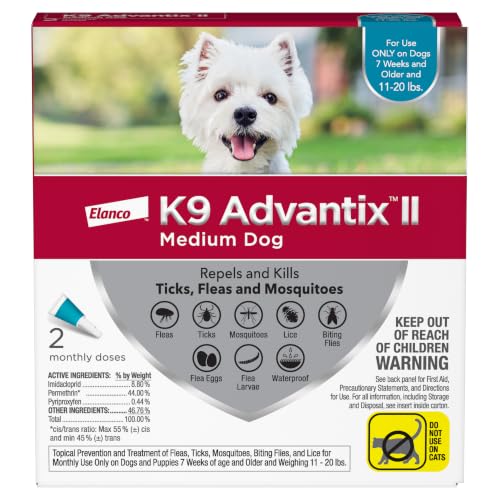
- Advantage II: A monthly topical that kills adult fleas, larvae, and eggs on contact. Does not protect against ticks. Waterproof and fragrance-free. Safe for dogs over 3 lbs [citation:1][citation:2].
- Frontline Plus: A monthly topical that protects against fleas and ticks. Safe for dogs 8 weeks and older. Waterproof after application. One of the most widely available OTC options [citation:2][citation:6].
- Revolution (Prescription): A monthly topical that protects against fleas, heartworm, ear mites, and sarcoptic mange. Safe for puppies as young as 6 weeks. A good option for dogs that cannot take oral medication [citation:1][citation:2].
Long-Lasting Collars
- Seresto: A collar that provides up to 8 months of continuous flea and tick protection. Odorless, non-greasy, and does not require a prescription. Approved for puppies 7 weeks and older. Effective through natural skin oils spreading the active ingredients across the coat [citation:6][citation:15].
| Product | Type | Duration | Prescription? | Key Feature |
|---|---|---|---|---|
| Simparica Trio | Oral Chew | 1 month | Yes | Flea, tick, heartworm, and worm protection |
| Bravecto | Chew or Topical | 12 weeks | Yes | Longest-lasting single dose |
| NexGard | Oral Chew | 1 month | Yes | Palatable beef flavor |
| Advantage II | Topical | 1 month | No | Kills on contact, no biting required |
| Frontline Plus | Topical | 1 month | No | Waterproof, flea and tick coverage |
| Seresto | Collar | 8 months | No | Set-and-forget convenience |
How to Choose the Right Product
There is no single "best" flea treatment for every dog. The right choice depends on several personal and practical factors:
- Your dog's lifestyle: If your dog swims or gets frequent baths, oral chews are more reliable because they cannot be washed off. If your dog has flea allergy dermatitis (where even one bite causes intense itching), a product that kills fleas on contact (like Advantage II) may be preferable.
- Household composition: If you have cats, avoid topical products containing permethrin unless you can strictly separate the animals for 24 hours after application. Oral products eliminate this risk entirely [citation:1].
- Your dog's health history: Dogs with a history of seizures or neurological disorders should avoid isoxazoline-class drugs (found in Bravecto, NexGard, Simparica, Credelio) unless your vet specifically approves. Revolution or spinosad-based products may be safer alternatives [citation:2][citation:10].
- Your budget and convenience preferences: Prescription oral chews typically cost more than OTC topicals. Collars offer the lowest per-month cost but may not suit dogs that swim frequently or get very dirty.
- Age and weight restrictions: Always check the label. Most flea products are not safe for puppies under 8 weeks or under a certain weight. Revolution is notable for being safe from 6 weeks of age [citation:1].
A Note on "Natural" Products: Essential oil-based flea treatments (peppermint, lemongrass, citrus) are not reliably effective and can be toxic to dogs. Garlic, often recommended as a natural flea repellent, is also toxic to dogs in sufficient quantities. The FDA and veterinary organizations consistently advise against relying on these methods for flea control [citation:9][citation:12].
Flea Treatment for Puppies
Puppies are especially vulnerable to fleas because their small body size means even a moderate infestation can cause dangerous blood loss and anemia. However, their developing livers and kidneys make them more sensitive to medication side effects.
Most flea preventives are labeled for puppies aged 8 weeks and older. A few, like Revolution, are approved for puppies as young as 6 weeks [citation:1]. Never use a product on a puppy younger than the label indicates, and always weigh your puppy before applying or administering any treatment.
For puppies under 8 weeks, the safest approach is physical removal: bathe with mild soap (which kills adult fleas), use a flea comb, and focus on environmental control by vacuuming and washing bedding frequently. Consult your veterinarian for guidance specific to your puppy's age and weight.
If you are bringing home a new puppy, our puppy supplies checklist can help you prepare, and our puppy vaccination schedule covers other essential preventive care.
Safety Warnings & Side Effects
Flea products are pesticides, and like all medications, they carry some risk of side effects. Being informed helps you recognize problems early.
- Isoxazoline class drugs (Bravecto, NexGard, Simparica, Credelio) carry an FDA advisory about potential neurological side effects, including tremors and seizures, particularly in dogs with a prior history of neurological disorders. This does not mean these products are unsafe for most dogs—millions of doses are used safely every year—but it is a risk to discuss with your vet.
- Topical products can cause application-site reactions: redness, itching, or hair loss. These are usually mild and temporary. If your dog experiences severe irritation, discontinue use and consult your vet.
- Oral products can cause gastrointestinal upset (vomiting, diarrhea, loss of appetite) in some dogs. Giving the chew with food often reduces this risk.
- Collars can cause skin irritation if too tight or if your dog is sensitive to the active ingredients. Monitor your dog for the first few days after fitting a new collar.
If you notice any concerning symptoms after applying or administering a flea product—especially lethargy, excessive drooling, tremors, or difficulty breathing—contact your veterinarian or an animal poison control service immediately.
Treating Your Home & Environment
Flea medication alone will not solve an active infestation. The CDC recommends a multi-step approach that addresses all life stages of the flea [citation:4]:
- Sanitation: Wash all pet bedding, human bedding, and throw rugs in hot water. Vacuum carpets, furniture, and baseboards thoroughly and frequently. Dispose of vacuum bags immediately after use.
- Treat all pets: Every dog and cat in the household must be on flea prevention. Untreated pets will continue to serve as a source of reinfestation.
- Environmental treatment: In severe infestations, consider professional pest control or use of premise sprays that contain insect growth regulators (IGRs) to prevent flea eggs and larvae from developing.
- Follow up: Because flea pupae are resistant to many treatments, follow-up applications and continued vacuuming are essential. The CDC notes that two or more follow-up treatments within 5–10 days may be needed.
For more detailed guidance on managing fleas on your dog, see our articles on the best way to get rid of fleas on a dog and what to do when you can't get rid of fleas.
Frequently Asked Questions
The Bottom Line
The best flea treatment for your dog is one that matches their lifestyle, health status, and your household situation. For most dog owners, a monthly prescription oral chew like Simparica Trio or NexGard offers the best combination of convenience, efficacy, and broad parasite coverage. If you prefer a non-prescription option, Advantage II or Frontline Plus are reliable choices for flea control. For maximum convenience, Seresto collars provide months of protection with a single application.
Whatever you choose, remember that consistency is key. Year-round prevention—not just seasonal treatment—is what keeps your dog comfortable and your home flea-free. And if you are dealing with an active infestation, treat the environment as diligently as you treat your dog.
For related topics, explore our guides on flea and tick treatment and safe flea prevention for dogs with seizures.