The Safest Over-the-Counter Flea Treatment for Dogs
Navigating store shelves and online listings can feel overwhelming. This guide breaks down which OTC flea treatments are genuinely safe, which dogs they suit best, and how to avoid the most common mistakes that put pets at risk.
Finding the safest over-the-counter flea treatment for dogs is not about finding a single "best" product—it is about finding the right match for your dog's age, weight, health history, and household environment. The flea control aisle is packed with options that look similar but carry very different safety profiles. Some ingredients are gentle enough for puppies, while others can trigger serious reactions in dogs with neurological conditions or in cats who share the home.
This guide cuts through the marketing claims and focuses on what matters: active ingredients, regulatory status, species-specific risks, and practical application. By the end, you will understand exactly which OTC options are safest for your situation—and which ones to avoid entirely. If you are also considering broader parasite protection, our guide to safest and most effective flea and tick treatment for dogs covers combination products in more depth.
Safety First: What Makes an OTC Flea Treatment Safe?
An over-the-counter flea treatment is considered safe when three conditions are met: it is used on the correct species, at the correct weight and age, and with full awareness of its active ingredients. The Environmental Protection Agency (EPA) regulates topical flea products and collars, while the FDA oversees oral flea medications like Capstar. Both categories are available without a prescription, but "OTC" does not mean "risk-free" [citation:1][citation:20].
Safety also depends on the individual dog. A product that works perfectly for a healthy five-year-old Labrador could be dangerous for a seven-week-old Chihuahua puppy or a Collie with the MDR1 gene mutation. Before choosing any product, verify three things:
- Species label: Is it labeled specifically for dogs? Never use a dog product on a cat unless the label explicitly says it is safe for both.
- Weight and age range: The label specifies minimum weight and age. Never split or improvise doses.
- Active ingredient warnings: Some ingredients carry neurological cautions. If your dog has a seizure history, these matter enormously.
Key Insight: The same active ingredients found in "vet-only" versions of Frontline Plus, Advantage II, and Seresto are identical to the OTC versions sold on store shelves. There is no secret, stronger formula behind the pharmacy counter for these specific products [citation:1].
Safest OTC Flea Treatment Options Compared
Based on active ingredients, regulatory status, and veterinary consensus, these are the OTC flea treatments most frequently recommended for safety-conscious owners. Each has a distinct role—no single product is ideal for every dog.
Frontline Plus (fipronil + S-methoprene)
Mid-range topicalKills adult fleas, ticks, and chewing lice, and destroys flea eggs and larvae to break the life cycle. Waterproof and applied monthly. Widely used and generally well-tolerated by healthy adult dogs [citation:1][citation:6].
Advantage II (imidacloprid + pyriproxyfen)
Mid-range topicalKills fleas at all life stages on contact, meaning fleas do not need to bite to die. Flea-only formula (no tick coverage). Often preferred for dogs with seizure histories because imidacloprid carries no neurological warnings [citation:8].
Capstar (nitenpyram)
Entry-level oral knockdownAn oral tablet that starts killing adult fleas within 30 minutes. Effects last approximately 24 hours. Not a monthly preventive—use it for immediate relief during an active infestation, then follow with a monthly product [citation:1][citation:12].
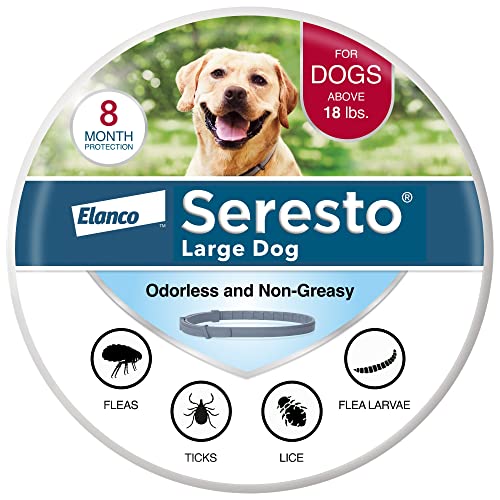
Seresto Collar (imidacloprid + flumethrin)
Premium collarProvides up to 8 months of flea and tick protection with no monthly dosing. The flumethrin ingredient targets ticks, while imidacloprid handles fleas. Convenient for owners who struggle with monthly schedules [citation:1].
Quick Safety Comparison
| Product | Active Ingredient(s) | Flea Coverage | Tick Coverage | Minimum Age/Weight | Best For |
|---|---|---|---|---|---|
| Frontline Plus | Fipronil + (S)-methoprene | Adults + eggs/larvae | Yes | 8 weeks | All-around flea and tick control |
| Advantage II | Imidacloprid + pyriproxyfen | All life stages | No | 8 weeks | Seizure-prone dogs, flea-only homes |
| Capstar | Nitenpyram | Adults (24-hour knockdown) | No | 4 weeks, 2 lbs | Immediate relief, puppies |
| Seresto Collar | Imidacloprid + flumethrin | Adults + larvae | Yes | 7 weeks | Hands-off 8-month protection |
⚠️ Critical Warning About K9 Advantix II: While effective, this product contains permethrin, which is highly toxic to cats. If you have cats in your home, do not use K9 Advantix II on your dog. Cats can be poisoned through contact with a treated dog. For flea-only households, recommended flea treatment for dogs includes safer alternatives.
Special Cases: Puppies, Seizures, and Sensitive Skin
Dogs with a History of Seizures
If your dog has epilepsy or has ever had a seizure, the choice of flea treatment becomes significantly more important. Some topical and oral flea products contain ingredients that lower the seizure threshold or carry neurological warnings. For these dogs, Advantage II (imidacloprid) is often the safest OTC topical option because it works on contact and does not require systemic absorption [citation:8]. Some owners also report success with Frontline Plus, but fipronil sensitivity varies by individual dog [citation:9].
Always inform your veterinarian about your dog's seizure history before starting any new product. If you are exploring prescription options, our guide to safe flea and tick prevention for dogs with seizures covers vet-approved alternatives in detail.
Puppies and Toy Breeds
Puppies are not simply small adults—their livers and kidneys are still developing, and their body weight makes dosing errors more dangerous. The safest OTC option for very young puppies is Capstar (nitenpyram), which is labeled for puppies as young as 4 weeks and as small as 2 pounds [citation:7][citation:12]. For ongoing prevention in puppies old enough for monthly topicals, choose a product labeled for their exact weight band and never split a larger dose.
Dogs with Sensitive Skin
Topical spot-ons can cause local irritation in dogs with sensitive skin. If your dog has reacted to topicals before, consider an oral option like Capstar for immediate needs, or discuss prescription oral preventives with your vet. If you prefer to stay OTC and topical, apply the product between the shoulder blades where your dog cannot lick it, and monitor the site for redness or swelling for 24-48 hours [citation:1]. For more targeted advice, see our guide to the best flea and tick treatment for dogs with sensitive skin.
How to Apply Flea Treatment Safely
Even the safest product can cause problems if applied incorrectly. Follow these steps to minimize risk:
- Read the entire label before opening the package. Confirm the weight range, age minimum, and species. If your dog falls outside the range, do not use the product.
- Apply topicals to dry skin, not fur. Part the hair between the shoulder blades and place the applicator directly against the skin. If the product sits on the fur, it will not be absorbed properly and your dog may lick it off.
- Prevent licking and scratching. Keep dogs from licking the application site for at least 30 minutes, or until the product is fully absorbed. An Elizabethan collar can help if your dog is persistent.
- Do not bathe immediately before or after. Most topicals need 24-48 hours to spread across the skin's oil layer. Bathing too soon can reduce efficacy or cause the product to wash off [citation:20].
- Wash your hands thoroughly after application. If you are pregnant or nursing, wear gloves as an extra precaution.
- Monitor for reactions. Mild redness at the application site is common and usually resolves within 48 hours. Vomiting, lethargy, tremors, or difficulty breathing warrant an immediate call to your vet [citation:1].
Household Safety and Multi-Pet Homes
Flea treatment is not just about the dog—it is about the entire household. Fleas spend roughly 95% of their life cycle off the host, meaning eggs, larvae, and pupae are hiding in carpets, bedding, and furniture. Treating your dog without addressing the environment guarantees reinfestation.
- Treat all pets simultaneously. If you have multiple dogs or cats, treat every animal on the same day. An untreated pet becomes a reservoir that reinfects the treated ones.
- Wash bedding in hot water. Weekly washing of pet bedding and your own bedding in hot water kills flea eggs and larvae.
- Vacuum thoroughly and frequently. Vacuum carpets, rugs, and upholstery daily during an active infestation. Discard the vacuum bag or empty the canister outdoors immediately.
- Protect cats from dog products. As noted earlier, permethrin-containing products are lethal to cats. If you have both species, choose products explicitly labeled safe for multi-pet households, or consult your vet for a coordinated plan.
- Store products safely. Keep flea treatments out of reach of children and pets. Dispose of empty applicators and packaging securely.
If you are dealing with a persistent infestation and need more aggressive environmental strategies, our article on how to get rid of fleas on a dog covers the full elimination protocol.
When to Skip OTC and Call Your Vet
Over-the-counter products are appropriate for many healthy dogs, but there are situations where self-treatment is not worth the risk. Call your veterinarian before choosing an OTC flea product if:
- Your dog is under the minimum age or weight listed on every OTC product label
- Your dog is pregnant, nursing, or has a compromised immune system
- Your dog has a history of seizures, tremors, or neurological symptoms
- Your dog is currently taking other medications (interactions are possible)
- Your dog has severe flea allergy dermatitis or a heavy infestation with signs of anemia
- You have cats in the home and are unsure which products are safe for them
A veterinarian can prescribe a product tailored to your dog's specific health profile, often with a wider safety margin for complex cases. Prescription options like oral isoxazolines (NexGard, Simparica, Bravecto) are not available OTC, but they may be the safer choice for dogs with certain risk factors. For a comparison of prescription and non-prescription approaches, see our guide to oral flea and tick for dogs without a vet prescription.
Remember: The "safest" product is the one that matches your dog's individual needs—not the one with the most aggressive marketing. A mid-range topical used correctly is safer than a premium product used incorrectly or on the wrong dog.
Frequently Asked Questions
The Bottom Line: The safest OTC flea treatment for your dog is the one that matches their weight, age, health history, and household environment—and that you apply correctly. Frontline Plus and Advantage II are dependable mid-range choices for most healthy adult dogs. Capstar is the safest option for very young puppies and for immediate flea knockdown. Seresto offers long-lasting convenience but requires caution in cat households. When in doubt, a quick call to your vet can prevent a costly mistake. For a broader overview of flea control strategies, explore our dog flea treatment resource hub.