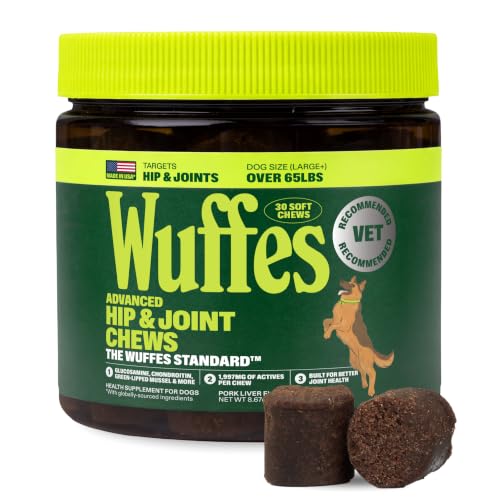
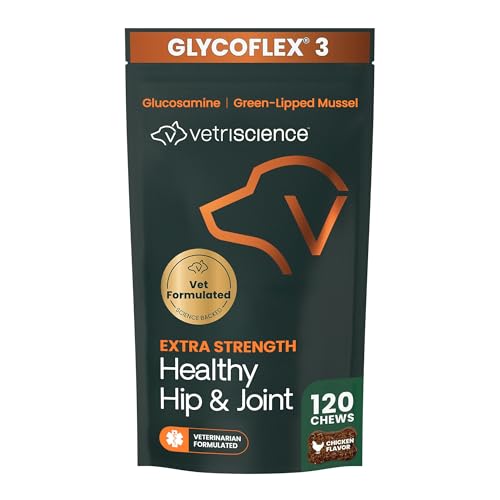
Vet Recommended Hip & Joint Supplements for Dogs
If your dog is slowing down, stiff after naps, or hesitant to jump, a joint supplement may help. This guide explains what veterinarians actually recommend, which ingredients have evidence behind them, and how to choose safely.
Joint issues are among the most common health concerns for dogs, especially as they age or for large and giant breeds. Osteoarthritis affects millions of dogs, and owners often notice the early signs: a dog who hesitates on stairs, seems stiff after resting, or is less eager to play. While joint supplements are not a cure, the right product—used consistently alongside veterinary care—can help support mobility and comfort.
The challenge is that the supplement market is crowded and loosely regulated. Not every product on the shelf contains what the label claims, and not every ingredient has meaningful evidence behind it. This guide cuts through the noise so you can have a more informed conversation with your veterinarian and make a confident choice.
Why Joint Supplements Matter
As dogs age, cartilage—the cushioning tissue between bones—naturally wears down. For large breeds, working dogs, and dogs with genetic predispositions like hip dysplasia, this process can accelerate. The result is pain, reduced mobility, and a lower quality of life.
Joint supplements aim to support cartilage health, maintain joint lubrication, and reduce inflammation. They are not painkillers and they do not reverse damage, but when used consistently as part of a broader care plan, they can help dogs stay comfortable and active for longer. For owners of senior dogs or breeds prone to joint issues, supplements are one of the most practical proactive tools available.
Important context: Over half of pet dogs are overweight or obese, and excess weight places enormous mechanical stress on joints. If your dog is carrying extra pounds, weight management—guided by your vet—is often more impactful than any supplement. Supplements work best in a dog at a healthy body condition.
Key Ingredients Vets Look For
Veterinarians prioritize ingredients with clinical evidence and transparent dosing. The following ingredients are the most commonly recommended and studied in canine joint care.
Glucosamine and Chondroitin
These are the most familiar names in joint supplements. Glucosamine is a building block of cartilage, and chondroitin helps cartilage resist compression. Both are naturally present in the body but decline with age. Research on the glucosamine-chondroitin combination is mixed—some studies show improved mobility scores in arthritic dogs, while others find no statistically significant benefit[citation:14]. Still, many veterinarians recommend trying them, particularly in early or mild cases, because they are generally safe and may offer baseline support. Look for products that list specific amounts of both ingredients rather than hiding them in a “proprietary blend.”
MSM (Methylsulfonylmethane)
MSM is a sulfur-containing compound that may help reduce inflammation and support connective tissue. It is frequently combined with glucosamine and chondroitin. One important caution: MSM may not be safe for dogs taking blood thinners, so always disclose all medications to your vet[citation:2][citation:5].
Green-Lipped Mussel
Native to New Zealand, green-lipped mussel is rich in omega-3 fatty acids, glycosaminoglycans, and antioxidants. Studies have shown it can improve peak vertical force (a measure of weight-bearing comfort) in dogs with osteoarthritis[citation:14]. It is a popular ingredient in vet-formulated products and is generally well-tolerated.
Omega-3 Fatty Acids (EPA and DHA)
Marine-sourced omega-3s from fish oil or krill oil have the strongest evidence for reducing joint inflammation and pain in dogs[citation:5]. They are not a “joint supplement” in the traditional sense, but many vets consider them foundational for any dog with mobility concerns. Plant-based omega-3s (like flaxseed) are not as effective for joint support.
UC-II (Undenatured Type II Collagen)
UC-II is a newer ingredient that works differently from glucosamine—it modulates the immune response that contributes to joint inflammation. A 2011 study found UC-II more effective than glucosamine/chondroitin in reducing osteoarthritis symptoms in dogs, with a faster onset (often noticeable within 30 days)[citation:14]. It is available in some premium vet-recommended formulas.
Boswellia Serrata
This herbal extract has anti-inflammatory properties and has been shown in studies to improve lameness and joint pain in dogs within about six weeks, with fewer gastrointestinal side effects than NSAIDs[citation:14]. It is often included in advanced formulas for dogs with more pronounced stiffness.
Supplement Forms: Chews, Powders, Tablets
The best supplement is the one your dog will actually take consistently. Form matters for compliance.
- Soft chews: The most popular format. Dogs often accept them as treats, making daily dosing easy. Best for picky eaters or dogs who resist pills. Downside: some chews contain fillers, sugars, or artificial flavors, and large dogs may need multiple chews per day.
- Powders: Easy to mix into food and simple to adjust dosing precisely. Ideal for dogs with sensitive stomachs or those who eat wet food. Downside: some dogs notice the taste or smell; powder can be messy.
- Tablets and capsules: Convenient for precise dosing and often the most economical per serving. Downside: dogs may resist taking pills, and some tablets are large or hard to break.
If your dog has food sensitivities, check the inactive ingredients carefully. Chicken liver flavoring and molasses are common in chews but may not suit every dog. For dogs with allergies, a powder with a short ingredient list may be the safer choice.
How to Choose a Quality Product
Because dog supplements are not regulated like pharmaceuticals, quality varies widely. Use these criteria to separate trustworthy products from marketing claims.
- Look for the NASC Quality Seal. The National Animal Supplement Council seal indicates the manufacturer follows strict testing and labeling guidelines. It is not a guarantee of effectiveness, but it is a strong signal of quality control[citation:2].
- Check for specific ingredient amounts. A label that lists “glucosamine, chondroitin, MSM” without amounts—or hides them in a “proprietary blend” with only a combined total—does not give you enough information to judge whether the product is dosed meaningfully. Choose products that disclose exact milligrams per serving.
- Prefer evidence-backed ingredients. Glucosamine, chondroitin, green-lipped mussel, omega-3s, and UC-II have the most research support. Ingredients like turmeric and Boswellia show promise but have less robust canine-specific evidence. Be skeptical of products that promise to “rebuild cartilage” or “reverse arthritis”—these claims are not realistic.
- Match the product to your dog's size and life stage. A supplement formulated for a 10-pound senior is not appropriate for a 100-pound adolescent. Check the dosing table and confirm it covers your dog's weight range. Puppies, pregnant dogs, and nursing dogs should only receive supplements under veterinary supervision.
- Consider third-party testing. Independent testing (such as by ConsumerLab) adds another layer of assurance that the product contains what it claims and is free of contaminants. Brands that participate in testing are generally more transparent.
Practical tip: Before buying, write down the exact ingredients and amounts in a product you're considering. Bring that information to your vet. A quick conversation can confirm whether the formula is appropriate for your dog's specific condition and medications—and may save you from an expensive trial-and-error process.
Safety and Drug Interactions
Most joint supplements are safe for healthy dogs, but “natural” does not mean “risk-free.” Certain ingredients can interact with medications or be inappropriate for dogs with specific health conditions.
- Blood thinners: MSM and vitamin E may increase bleeding risk. If your dog is on anticoagulant medication, avoid supplements containing these ingredients unless your vet approves[citation:5].
- Kidney or liver disease: Dogs with organ disease may not process certain ingredients efficiently. Always disclose your dog's full medical history to your vet before starting a supplement.
- Gastrointestinal sensitivity: Some dogs experience mild stomach upset when starting a new supplement. Giving it with food can help. If vomiting or diarrhea persists, stop and consult your vet.
- Pregnancy and nursing: Safety has not been established for most joint supplements in pregnant or nursing dogs. Avoid unless explicitly directed by your veterinarian.
If your dog is already taking prescription medication for arthritis—such as an NSAID—do not stop or reduce that medication without veterinary guidance. Supplements are an add-on, not a replacement.
Ingredient Comparison at a Glance
| Ingredient | Primary Role | Evidence Level | Best For |
|---|---|---|---|
| Glucosamine + Chondroitin | Cartilage support, joint lubrication | Mixed; some studies show benefit | Baseline support, early stiffness |
| MSM | Anti-inflammatory, connective tissue | Moderate; caution with blood thinners | Dogs needing additional inflammation support |
| Green-Lipped Mussel | Omega-3s, cartilage protection | Good; shown to improve weight-bearing | Dogs sensitive to NSAIDs, general mobility |
| Omega-3 (EPA/DHA) | Anti-inflammatory | Strong; vets often recommend as foundation | All dogs with joint concerns |
| UC-II | Immune modulation, cartilage preservation | Good; faster onset than glucosamine | Dogs needing faster visible improvement |
| Boswellia Serrata | Herbal anti-inflammatory | Moderate; shown to reduce lameness | Dogs with more pronounced stiffness |
Beyond Supplements: Complete Joint Care
Supplements are one piece of a larger puzzle. Veterinarians consistently emphasize that the most effective joint care plan combines multiple strategies.
- Weight management: This is the single most impactful intervention for joint health. Even a few extra pounds significantly increase stress on joints. Work with your vet on a safe weight loss plan if needed.
- Appropriate exercise: Controlled, low-impact movement—leash walks, swimming, gentle strengthening—keeps joints lubricated and muscles strong. Avoid sudden bursts of intense activity, which can aggravate painful joints.
- Environmental adjustments: Non-slip rugs, ramps instead of stairs, orthopedic beds, and raised food bowls reduce daily strain on stiff joints.
- Veterinary pain management: If your dog is visibly uncomfortable or reluctant to move, prescription pain relief may be necessary. Supplements do not act as quickly or as powerfully as prescription medications in painful dogs.
- Physical rehabilitation: A veterinary rehabilitation professional can assess gait, muscle loss, and range of motion, and design a targeted exercise plan.
If you are exploring other supportive products for your dog's comfort and mobility, our guides on glucosamine and chondroitin for dogs and dog vitamins may be helpful. For dogs with sensitive stomachs, see our recommendations for training treats that won't upset digestion.
Frequently Asked Questions
Bottom line: The best joint supplement for your dog is one that contains evidence-backed ingredients at meaningful doses, carries the NASC seal, and fits your dog's size and health profile. But no supplement can replace veterinary guidance, healthy weight, and consistent, appropriate exercise. If your dog is showing signs of joint pain, start with a vet visit—then build a plan that may include a supplement, not one that relies on it alone.