What Over-the-Counter Allergy Medicine Is Safe for Dogs?
When your dog is itchy, sneezing, or dealing with a mild allergic reaction, reaching for a human antihistamine may seem convenient. But not all OTC allergy medicines are safe for dogs — and the wrong choice can do more harm than good. Here is what veterinary professionals actually recommend.
If your dog has been scratching incessantly, rubbing their face on the carpet, or developing hives after a bee sting, you may have wondered whether the antihistamine in your medicine cabinet could offer relief. The short answer is: sometimes, but only with veterinary guidance. Over-the-counter (OTC) allergy medications like Benadryl, Zyrtec, and Claritin are sometimes used in dogs, but the margin for error is narrow, and many products contain additives that are toxic to canines.
This guide breaks down which OTC antihistamines veterinarians most commonly use, what the research says about their effectiveness, and — most importantly — the situations where giving your dog a human allergy pill could be dangerous. If your dog is experiencing a severe allergic reaction, difficulty breathing, or facial swelling, skip the OTC medicine and seek emergency veterinary care immediately. You can also review our guide on what human allergy medicine is safe for dogs for a broader comparison.
Why Human Allergy Medicine Is Risky for Dogs
The biggest danger with OTC allergy medicine is not the active antihistamine itself — it's everything else in the pill. Many combination products contain decongestants like pseudoephedrine or phenylephrine, which can cause dangerously elevated heart rate, high blood pressure, and seizures in dogs [citation:4][citation:18]. Others contain xylitol, an artificial sweetener that is profoundly toxic to dogs and can cause life-threatening hypoglycemia and liver failure [citation:1].
Even with plain antihistamines, dosing errors are common. Human tablets are formulated for human body weights, and a single tablet can represent a massive overdose for a small dog. Time-release and extended-release formulations are particularly hazardous because they release medication in a way that can overwhelm a dog's metabolism [citation:10][citation:15].
Critical Safety Rule: Never give your dog any OTC allergy medicine without first confirming with your veterinarian that (1) the active ingredient is appropriate for your dog's health status, (2) the dose is correct for your dog's weight, and (3) the product contains no additional active ingredients, sweeteners, or fillers that are toxic to dogs.
Safe OTC Antihistamine Options (With Vet Approval)
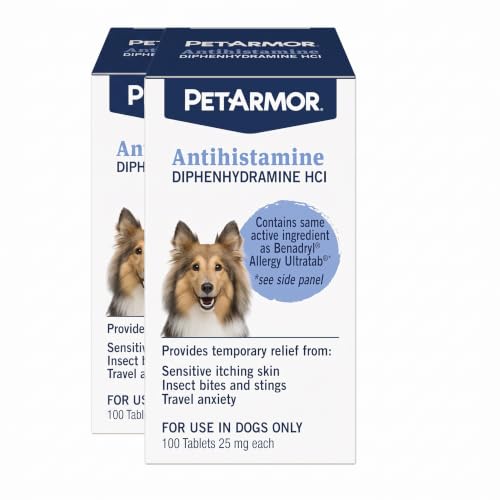
Veterinarians sometimes recommend three main OTC antihistamines for dogs, always as off-label use and always with a calculated dose. None of these are FDA-approved for veterinary use, but they have a long history of clinical use in appropriate cases [citation:3][citation:4].
| Medicine (Generic) | Common Brand | Typical Veterinary Use | Key Considerations |
|---|---|---|---|
| Diphenhydramine | Benadryl | Mild allergic reactions, insect bites, motion sickness | Only ~7% effective for allergies; causes drowsiness in most dogs but hyperactivity in some; never use time-release [citation:1] |
| Cetirizine | Zyrtec | Seasonal and environmental allergies | Less sedating than Benadryl; only use plain cetirizine without pseudoephedrine [citation:4] |
| Loratadine | Claritin | Mild allergy symptoms, itching | Non-sedating; avoid oral disintegrating tablets (may contain xylitol); avoid Claritin-D [citation:18] |
Diphenhydramine (Benadryl)
Benadryl is the most widely recognized OTC antihistamine for dogs, but its reputation outstrips its actual effectiveness. Veterinary research indicates diphenhydramine provides meaningful allergy relief in only about 7% of dogs [citation:1]. It is most useful for acute reactions like insect stings, mild hives, and vaccine reactions, and its sedative effect can help with motion sickness during car travel [citation:3]. The standard veterinary dose range is approximately 2–4 mg per kilogram of body weight (roughly 1–2 mg per pound), given every 8–12 hours, but this must be confirmed by your vet [citation:2][citation:10].
Cetirizine (Zyrtec)
Cetirizine is a second-generation antihistamine that tends to cause less drowsiness than diphenhydramine, making it a better option for dogs who need allergy relief without being knocked out. It is sometimes used for environmental and seasonal allergies. The critical warning: only plain cetirizine is acceptable. Zyrtec-D contains pseudoephedrine, which is dangerous for dogs [citation:4].
Loratadine (Claritin)
Loratadine is another non-sedating option that veterinarians occasionally recommend for mild allergy symptoms. The usual veterinary dose is very low — approximately 0.25 to 0.5 mg per kilogram (about 0.12 to 0.22 mg per pound) — which often means splitting small tablets [citation:18]. Avoid Claritin-D (contains pseudoephedrine) and oral disintegrating tablets, which frequently contain xylitol. If you are exploring antihistamine options more broadly, our article on what over-the-counter antihistamines are safe for dogs provides additional context.
General Dosage Guidelines (Vet Consultation Required)
There is no universal OTC allergy dose that is safe for every dog. The following ranges are provided for educational context only — your veterinarian must calculate the appropriate dose based on your dog's weight, age, health conditions, and other medications.
- Diphenhydramine: 2–4 mg/kg every 8–12 hours; some sources cite 2–3 mg/kg every 12 hours for allergic skin disease [citation:2][citation:14]
- Cetirizine: Often dosed at approximately 0.5 mg/kg once daily, but veterinary confirmation is essential
- Loratadine: 0.25–0.5 mg/kg once daily; tablets must be split carefully for accurate dosing [citation:18]
A Note on "Typical" Doses: Online dosage charts and forums often present a single number as if it applies to every dog. It does not. A dose that is appropriate for a healthy 60-pound Labrador could be dangerous for a 6-pound Yorkie with a heart murmur. Your veterinarian's calculation considers factors that no online chart can account for. If you want to understand the specific diphenhydramine dosing question in more depth, see our dedicated guide on how many mg of diphenhydramine can I give my dog.
When You Should Never Give OTC Allergy Medicine
Certain health conditions make antihistamines risky or outright dangerous. According to veterinary sources, dogs with the following conditions should not receive OTC antihistamines without explicit veterinary clearance [citation:3][citation:13]:
- Glaucoma — antihistamines can increase intraocular pressure
- Heart disease or high blood pressure — some antihistamines affect heart rate and blood pressure
- Prostate enlargement or urinary obstruction — antihistamines can worsen urinary retention
- Liver or kidney disease — impaired metabolism increases overdose risk
- Seizure disorders — antihistamines can lower the seizure threshold in some cases
- Pregnancy or nursing — safety has not been established
- Dogs taking sedatives, certain antidepressants, or MAO inhibitors — drug interactions can be severe [citation:11]
Additionally, puppies under a few months of age and senior dogs with multiple health issues should only receive OTC allergy medicine under direct veterinary supervision. If your dog falls into any of these categories, the safest course of action is to call your vet before giving anything.
Side Effects to Watch For
Even at appropriate doses, antihistamines can cause side effects. Most are mild and resolve within 8–24 hours, but some warrant immediate veterinary attention.
- Common: drowsiness, lethargy, dry mouth, increased thirst, urinary retention (difficulty peeing) [citation:3]
- Paradoxical reactions: Some dogs become hyperactive, agitated, or unusually excitable instead of sedated — this is more common than many owners expect [citation:4]
- Gastrointestinal: vomiting, diarrhea, or decreased appetite [citation:13]
- Serious (seek vet care): extreme lethargy or unresponsiveness, rapid or irregular heartbeat, difficulty breathing, tremors, seizures, or disorientation [citation:16]
If you suspect an overdose — whether from too high a dose or from a product containing a toxic additive — contact your veterinarian or an emergency animal poison control service immediately. Do not wait for symptoms to worsen. If your dog has a known allergy to antihistamines or has had a previous adverse reaction, note it clearly in their medical records. For dogs with sensitive skin prone to allergic reactions, our guide on flea and tick treatment for dogs with sensitive skin may also be helpful for managing environmental triggers.
When OTC Medicine Isn't Enough
If your dog's allergies are chronic, seasonal, or severe, antihistamines alone are rarely sufficient. Veterinary dermatologists often recommend a multi-modal approach that addresses the underlying cause rather than just suppressing symptoms.
- Prescription medications: Apoquel (oclacitinib) and Cytopoint (lokivetmab) are targeted therapies that are far more effective than OTC antihistamines for chronic allergic dermatitis [citation:13]
- Medicated shampoos and topical treatments: For skin-based allergies, addressing the skin barrier directly can reduce itching and prevent secondary infections
- Dietary management: If food allergies are suspected, a hypoallergenic diet trial under veterinary supervision is the gold standard for diagnosis. Our guide on best dog food for dogs with allergies and sensitive stomachs covers options for sensitive dogs
- Environmental control: Air purifiers, frequent vacuuming, and wiping paws after outdoor walks can reduce allergen exposure
- Flea prevention: Flea allergy dermatitis is one of the most common causes of severe itching. Consistent flea control is essential — see our safest and most effective flea and tick treatment guide
If your dog's itching is accompanied by hair loss, skin infections, ear infections, or gastrointestinal symptoms, the problem is likely more complex than a simple histamine reaction. A veterinary workup can identify the root cause and save you from months of trial-and-error with OTC products that were never going to work.
Frequently Asked Questions
The Bottom Line: OTC allergy medicine can be a useful short-term tool for mild allergic reactions in healthy dogs — but only when the product is plain antihistamine, the dose is calculated by a veterinarian, and your dog has no contraindications. For chronic allergies, OTC antihistamines are rarely the answer. Work with your vet to identify the cause and build a treatment plan that actually addresses it. Your dog's comfort is worth more than a quick fix from the medicine cabinet. For more guidance on managing your dog's health, explore our dog health section.