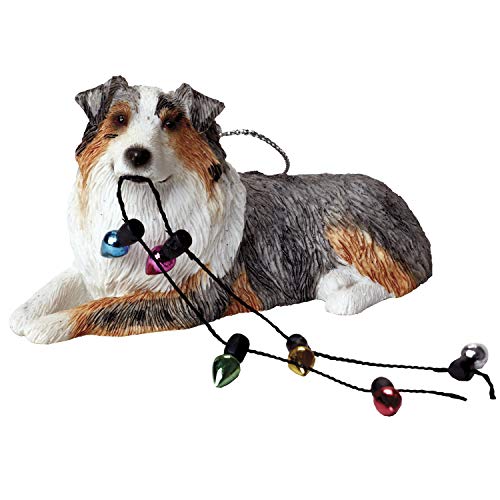
Blue Merle Australian Shepherd Puppy for Sale
Your complete guide to finding, evaluating, and bringing home a healthy blue merle Australian Shepherd puppy from a responsible breeder.
The blue merle Australian Shepherd is one of the most striking and sought-after dog varieties in the world. With its marbled coat of gray, black, and white, piercing blue eyes, and athletic build, this breed turns heads wherever it goes. But behind the beauty lies a working dog with serious needs — and a genetic pattern that requires responsible breeding to avoid serious health consequences.
If you are searching for a blue merle Australian Shepherd puppy for sale, you have likely already fallen in love with the look. This guide will help you understand what you are actually buying — the genetics, the temperament, the health risks, and the difference between a well-bred puppy and one that will cost you thousands in vet bills later. By the end, you will know exactly how to evaluate breeders, what questions to ask, and how to bring home a puppy who will be a healthy, happy member of your family for years to come.
What Is a Blue Merle Australian Shepherd?
The blue merle Australian Shepherd is not a separate breed — it is a color variation of the Australian Shepherd. The "blue merle" pattern is created by a dominant gene that dilutes black pigment into varying shades of gray, blue, and silver. The result is a marbled, mottled coat that often includes patches of solid black, white markings on the face, chest, and legs, and sometimes tan points.
Blue merle Aussies frequently have blue eyes, though eye color can range from blue to amber to brown. Some dogs have heterochromia, meaning two different colored eyes. The merle pattern can also appear in other breeds, including the miniature Australian Shepherd, French Bulldog, and mini Goldendoodle, but the Australian Shepherd remains the most iconic representative of this striking coat pattern.
Key Point: Blue merle is a coat pattern, not a breed. A blue merle Australian Shepherd is an Australian Shepherd with a specific genetic expression. It has the same temperament, exercise needs, and care requirements as any other Australian Shepherd.
Blue Merle vs. Red Merle
While blue merle is the most popular, Australian Shepherds also come in red merle — a pattern where the merle gene dilutes red (chocolate) pigment instead of black. Red merle Aussies have a liver, cream, and white coat with amber or copper eyes. Both patterns are equally beautiful and carry the same genetic considerations regarding the merle gene.
The choice between blue merle and red merle is purely aesthetic. Temperament, health, and care needs are identical. Some breeders specialize in one or the other, but most reputable breeders produce both patterns depending on the pairing.
Merle Genetics & Health: What Every Buyer Must Know
The merle gene is beautiful, but it carries serious responsibilities. Understanding the genetics is not optional if you are considering a blue merle puppy — it is essential for making an informed decision and avoiding heartbreak down the road.
Single Merle (Heterozygous)
A puppy that inherits one copy of the merle gene and one copy of the solid (non-merle) gene is called a single merle or heterozygous merle. This is the standard blue merle puppy you see advertised. These puppies typically have the classic marbled coat pattern and may have blue eyes. Their health profile is generally the same as a solid-colored Australian Shepherd, provided the breeding was done responsibly.
Double Merle (Homozygous)
When two merle dogs are bred together, some puppies inherit two copies of the merle gene. These puppies are called double merles or homozygous merles. Double merles are often predominantly white — sometimes called "lethal white" — and have a significantly increased risk of being born deaf, blind, or both. The merle gene affects pigment cells in the inner ear and eye, and when present in duplicate, it disrupts these structures during development.
Responsible breeders never breed two merle dogs together. If a breeder tells you they bred two merles because "the puppies are prettier," walk away. That is a clear sign of either ignorance or disregard for animal welfare.
Breeding Rule: A merle dog should only be bred to a solid-colored dog (black, red, or non-merle). This produces approximately 50% merle puppies and 50% solid puppies, with no risk of double merle. If a breeder cannot explain this rule clearly, they are not a reputable source for a blue merle puppy.
Health Issues Linked to the Merle Gene
- Deafness: Double merles have a high risk of congenital deafness. Even single merles can have pigment-related hearing issues, though the risk is much lower.
- Blindness and Vision Defects: Double merles frequently have underdeveloped or missing eyes (microphthalmia), colobomas, or complete blindness. Single merles may have minor eye abnormalities but are generally unaffected.
- Skin Problems: White areas on double merles are prone to sunburn and skin cancer due to lack of pigment. Single merles with white markings should also be protected from excessive sun exposure.
- Other Genetic Conditions: Australian Shepherds as a breed are prone to certain genetic conditions including MDR1 sensitivity, hereditary cataracts, collie eye anomaly (CEA), and hip dysplasia. These are not linked to the merle gene but are important to test for in any breeding program.
If you are considering a blue merle puppy, ask the breeder for proof that the parents were not both merle. A responsible breeder will gladly provide this information and explain their breeding strategy. If they hesitate or cannot answer, find another breeder. You can also explore our guide to genetic testing for dog breeds to understand what tests should be performed.
Temperament & Family Fit
Australian Shepherds are not for everyone. They are intelligent, energetic, and deeply loyal — but they are also demanding. Understanding their temperament before you buy is critical to ensuring a happy match.
The Australian Shepherd Personality
- Highly intelligent: Aussies are among the smartest dog breeds. They learn quickly but also get bored quickly. They need mental stimulation as much as physical exercise.
- Energetic and athletic: Bred to herd livestock all day, Australian Shepherds have boundless energy. They need 1-2 hours of vigorous activity daily.
- Loyal and protective: They bond deeply with their families and can be reserved with strangers. Early socialization is essential to prevent shyness or aggression.
- Herding instinct: They may try to herd children, cats, or other pets by nipping at their heels. This is instinctive, not aggressive, but it requires training to manage.
- Velcro dogs: Aussies want to be with their people. They do not do well left alone for long periods and can develop separation anxiety.
Blue merle Australian Shepherds are excellent candidates for dog sports like agility, obedience, rally, and herding trials. They also make wonderful hiking companions and running partners. If you are an active person or family looking for a dog to share your adventures, an Aussie could be a perfect match.
However, if you work long hours away from home, prefer a sedentary lifestyle, or are looking for a dog who will be content with a short daily walk, an Australian Shepherd is not the right choice. They will become destructive, anxious, or depressed without proper outlets for their energy and intelligence. For a detailed look at other herding mixes, you might explore the Border Collie and Australian Shepherd mix or the Blue Heeler and Australian Shepherd mix.
Good Fit For:
- Active individuals or families
- Homes with a securely fenced yard
- People interested in dog sports or advanced training
- Owners who want a constant companion
- Households with older children who can respect a dog's space
Not Ideal For:
- Sedentary households
- People away from home 10+ hours daily
- First-time dog owners who want a low-maintenance pet
- Apartments without easy access to outdoor space
- Families with very young children who cannot be taught to interact gently
Finding a Reputable Breeder
The breeder you choose has more influence on your puppy's health, temperament, and long-term well-being than almost any other factor. A good breeder produces healthy, well-socialized puppies and provides lifelong support. A bad breeder produces puppies with preventable health problems and leaves you to deal with the consequences alone.
What a Reputable Breeder Does
- Performs health testing: Both parents should have hip and elbow evaluations (OFA or PennHIP), eye exams (CAER), and genetic testing for MDR1, HSF4, CEA, and other breed-specific conditions. Ask to see the actual certificates, not just a verbal assurance.
- Breeding only merle to solid: A responsible breeder will never breed two merle dogs together. They will explain their breeding strategy and provide proof of the parents' merle status.
- Raises puppies in the home: Puppies should be raised in a clean, stimulating home environment — not in kennels or outdoor runs. They should be exposed to household sounds, different surfaces, and human handling from birth.
- Provides a health guarantee: A written contract should outline the breeder's health guarantee, return policy, and expectations for the buyer. This protects both you and the puppy.
- Asks you questions: A good breeder interviews you to ensure their puppy is going to a suitable home. They care about where their puppies end up and will refuse to sell to someone who is not a good fit.
- Allows you to meet the parents: At minimum, you should meet the mother. The father may be owned by another breeder, but you should see photos, health clearances, and pedigree information.
- Provides references: A reputable breeder will happily connect you with previous puppy buyers who can share their experiences.
For a deeper dive into evaluating breeders, see our guides on how to find a reputable dog breeder and questions to ask a dog breeder. If you are considering other herding breeds as well, you might also look at Border Collie and Australian Shepherd mix puppies or Border Collie puppies.
Where to Look for Blue Merle Aussie Breeders
- Breed club referrals: The Australian Shepherd Club of America (ASCA) and local breed clubs maintain breeder referral lists. These breeders have agreed to adhere to a code of ethics.
- Dog shows and trials: Attend local dog shows, agility trials, or herding events. Breeders who compete with their dogs are often the most dedicated to preserving breed health and temperament.
- Online directories with caution: Sites like the AKC Marketplace or Good Dog can be starting points, but always verify health clearances independently. Never buy a puppy based solely on an online listing.
- Veterinary referrals: Ask your veterinarian if they know of any reputable Australian Shepherd breeders in your area. Vets see the results of good and bad breeding firsthand.
Pricing Tiers & Value: What to Expect
The price of a blue merle Australian Shepherd puppy varies enormously based on the breeder's reputation, the puppy's pedigree, health clearances, and the market. While we cannot provide specific figures (and any breeder who quotes you a price without meeting you first should be treated with suspicion), we can break down the general tiers of the market so you understand what you are paying for.
| Breeder Tier | Typical Characteristics | Health Testing | Pedigree | Support |
|---|---|---|---|---|
| Entry-Level / Backyard | No health clearances, limited socialization, sold online or via classifieds | None or verbal only | Unknown or unregistered | None after purchase |
| Mid-Range / Hobby | Some health testing, home-raised, limited litters, registered dogs | Partial (hips/eyes) | Registered, some champion lines | Basic guidance, return policy |
| Premium / Show | Full health clearances, titled parents, extensive socialization, contract | Full (hips, elbows, eyes, genetics) | Champion and working titles | Lifelong support, health guarantee |
| Luxury / Top-Tier | Best of breed, imported lines, competition-ready, waiting lists | Full plus additional testing | Grand champion bloodlines | Comprehensive contract, mentorship |
As a general rule, a well-bred blue merle Australian Shepherd puppy from a reputable mid-range or premium breeder will be in the mid-tier to premium range of the market. The extra cost reflects the health testing, veterinary care, high-quality nutrition, and early socialization that go into raising a puppy who is set up for a healthy, stable life. Entry-level prices may look attractive, but they often come with hidden costs — both financial and emotional — in the form of preventable health problems and behavioral issues.
Value Consideration: A puppy from a breeder who does full health testing may cost more upfront, but the odds of dealing with crippling hip dysplasia, hereditary eye disease, or MDR1 sensitivity are dramatically reduced. The initial investment in a well-bred puppy is often the most cost-effective decision you can make for your dog's long-term health.
Health Testing & Clearances: What to Demand
Health testing is the single most important difference between a responsible breeder and a puppy mill or backyard breeder. Here is what you should see proof of before committing to a blue merle Australian Shepherd puppy.
Required Health Clearances for Australian Shepherds
- Hip Dysplasia: Evaluated via OFA (Orthopedic Foundation for Animals) or PennHIP. Both parents should have "Good" or "Excellent" hip ratings. Hip dysplasia is a painful, debilitating condition that can require expensive surgery.
- Elbow Dysplasia: Also evaluated by OFA. Elbow dysplasia causes lameness and arthritis. Breeding dogs should have normal elbows.
- Eye Examination: Annual CAER (Canine Eye Registry Foundation) exam by a board-certified veterinary ophthalmologist. This screens for hereditary cataracts, collie eye anomaly (CEA), and other inherited eye diseases.
- MDR1 Gene Mutation: A genetic test for multidrug resistance. Dogs with this mutation can have severe, sometimes fatal reactions to common medications, including ivermectin and certain anesthetics. Responsible breeders test for this and provide results.
- HSF4 (Hereditary Cataracts): A genetic test for a form of cataracts that affects Australian Shepherds. Breeders should test for this and avoid breeding carriers to carriers.
- CEA (Collie Eye Anomaly): A genetic test for an inherited eye condition. While often mild, severe cases can cause blindness. Breeders should test for this.
- PRA (Progressive Retinal Atrophy): A genetic test for a degenerative eye disease that causes blindness. Responsible breeders test for the form that affects Aussies.
All of these tests should be completed on both the sire and dam before breeding. Ask to see the actual OFA certificates, the CAER exam forms, and the genetic test results. If a breeder cannot or will not provide these, find another breeder. You can learn more about this topic in our health guarantee for puppies guide and our breeder contract guide.
Verification Tip: You can independently verify OFA health clearances at the OFA website by searching the dog's registered name or AKC number. This prevents breeders from forging or altering certificates. Always verify before you buy.
Puppy Care Essentials for Your Blue Merle Aussie
Bringing home a blue merle Australian Shepherd puppy is exciting, but it requires preparation. These puppies are not low-maintenance — they need the right nutrition, veterinary care, and daily routine to thrive.
Nutrition
Feed your blue merle Aussie puppy a high-quality puppy food formulated for medium-to-large breed dogs. Look for a food that meets AAFCO standards, has a named meat protein (like chicken, lamb, or salmon) as the first ingredient, and provides balanced calcium and phosphorus for controlled growth. Large-breed puppy foods are designed to prevent growth-related joint problems by moderating calorie and calcium levels.
Feed 3-4 meals daily until your puppy is 6 months old, then transition to 2 meals daily. Always provide fresh water. Avoid free-feeding, as it can lead to obesity and make house training difficult. Your veterinarian can recommend specific foods based on your puppy's individual needs. For general guidance, see our best puppy food guide and our best dry dog food recommendations.
Veterinary Care
Your puppy will need a series of vaccinations starting at 6-8 weeks of age, with boosters every 3-4 weeks until 16-20 weeks. Core vaccines include distemper, parvovirus, adenovirus, parainfluenza, and rabies. Your vet may also recommend non-core vaccines like Bordetella and leptospirosis based on your lifestyle and location.
Schedule a wellness exam within 48 hours of bringing your puppy home. Bring any health records from the breeder. Your vet will check for parasites, congenital issues, and overall health. They will also discuss deworming, flea and tick prevention, and heartworm prevention, which should be started as soon as your puppy is old enough.
Regular veterinary care throughout your dog's life is essential. You can explore our flea treatment options and dog first aid kit recommendations to be prepared for routine and emergency care.
Supplies You Will Need
- Crate: A properly sized crate is essential for house training, safe confinement, and giving your puppy a den-like space. See our dog crates guide.
- Bed: A comfortable, washable bed for inside the crate and around the house. See our dog beds recommendations.
- Collar and ID tag: Your puppy should wear a collar with an ID tag from day one. Microchipping is also highly recommended. See our dog collars and dog tags guides.
- Leash and harness: A 6-foot leash and a well-fitted harness for walks and training. See our dog leashes and dog harnesses guides.
- Food and water bowls: Stainless steel or ceramic bowls are best. See our dog bowls guide.
- Toys: A variety of chew toys, puzzle toys, and fetch toys to keep your puppy mentally and physically engaged. See our chew toys, puzzle toys, and fetch toys guides.
- Grooming tools: A slicker brush, undercoat rake, nail clippers, and dog-specific shampoo. See our dog brushes, nail clippers, and dog shampoo guides.
- Dental care: Dog toothbrush and toothpaste for daily dental hygiene. See our dog toothbrush guide.
Training & Socialization
Australian Shepherds are highly trainable, but they also need structure and consistency. A blue merle Aussie puppy who is not properly socialized and trained can become anxious, reactive, or destructive. The good news is that these dogs are eager to learn and excel in a variety of activities when given clear guidance.
The Critical Socialization Window
The socialization window for puppies is roughly 3-14 weeks of age. During this period, positive exposure to new people, places, sounds, and experiences shapes your puppy's temperament for life. Puppies who are well-socialized during this window are far less likely to develop fear, anxiety, or aggression problems later.
Your blue merle Aussie puppy should be exposed to:
- Different types of people (men, women, children, people in hats, people with canes, etc.)
- Other friendly, vaccinated dogs and puppies
- Different surfaces (grass, concrete, gravel, tile, wood)
- Household sounds (vacuum, blender, doorbell, thunder)
- Car rides and new environments
- Handling (touching ears, paws, mouth, tail) to prepare for vet visits and grooming
Enroll in a reputable puppy kindergarten class as soon as your puppy has had their first set of vaccinations. These classes provide controlled socialization opportunities and teach basic obedience in a safe environment. For more details, see our guide on the critical puppy socialization period.
Basic Training Commands
Start training your blue merle Aussie puppy as soon as you bring them home. Use positive reinforcement — reward desired behaviors with treats, praise, or play. Never use punishment-based methods, which damage trust and can cause fear and aggression in sensitive herding breeds.
- Sit: Lure your puppy's nose up with a treat until their bottom hits the ground. Mark with "yes!" and reward. Practice in different rooms and with increasing distractions.
- Stay: Start with one second of staying, then gradually increase duration and distance. Reward heavily. This command is essential for safety and impulse control.
- Come (Recall): The most important command you will ever teach. Never punish your puppy for coming to you, even if they took forever. Make yourself the most rewarding thing in the environment. Practice on a long line in safe areas before going off-leash.
- Leave It: Teach your puppy to ignore something they want. Start with a treat in your closed hand, reward when they back off. Build up to dropping items on the floor and eventually outdoor distractions.
- Drop It: Teach your puppy to release items from their mouth. Trade a toy for a treat, then return the toy. Never chase or pry — that turns it into a game.
- Loose-Leash Walking: Australian Shepherds are prone to pulling. Stop when the leash is tight, reward when it is loose. Use a front-clip harness if needed as a training tool. See our dog harnesses guide.
For more training guidance, explore our dog training section and our puppy guide.
Advanced Training & Activities
Once your blue merle Aussie has mastered basic obedience, consider enrolling in advanced training or dog sports. Australian Shepherds excel in:
- Agility: Navigating obstacle courses with speed and precision
- Obedience: Formal obedience competitions
- Rally: A fun, fast-paced obedience sport
- Herding: Working livestock, which is what they were bred for
- Tracking: Following scent trails
- Disc Dog: Catching flying discs with athletic leaps
These activities provide physical exercise, mental stimulation, and strengthen the bond between you and your dog. For more ideas, see our guides on off-leash training, agility training, and trick training.
Red Flags to Avoid When Buying a Blue Merle Puppy
The market for blue merle Australian Shepherds is flooded with unscrupulous breeders who prioritize profit over animal welfare. Knowing the red flags can save you from heartbreak and financial loss.
- No health clearances: If the breeder cannot provide OFA, CAER, and genetic test results for both parents, walk away. No exceptions.
- Breeding two merle dogs: This is a definitive red flag. It shows a disregard for the health and well-being of the puppies.
- Multiple breeds or litters year-round: A responsible breeder focuses on one breed and may have one or two litters per year. If they always have puppies available, they are likely a puppy mill or broker.
- No home visit or video call: A breeder who will not let you see where the puppies are raised is hiding something. At minimum, request a live video call to see the puppies and their environment.
- Selling puppies under 8 weeks old: Puppies need to stay with their mother and littermates until at least 8 weeks for proper socialization and development.
- No questions asked of you: A breeder who does not interview you does not care where their puppies end up. This is a major red flag.
- Pressure to buy immediately: Good breeders have waiting lists and will not pressure you to make a snap decision. If they say "this puppy will be gone tomorrow if you don't put down a deposit now," be very skeptical.
- No written contract or health guarantee: A verbal promise is worthless. Insist on a written contract that outlines the health guarantee, return policy, and spay/neuter requirements.
- Puppies kept in unsanitary conditions: If the puppies are dirty, crowded, or living in filth, the breeder is not reputable. This is often the case with puppy mills.
- No AKC or ASCA registration paperwork: While registration is not a guarantee of quality, a reputable breeder will provide registration papers. If they cannot, ask why.
To learn more about avoiding bad breeders, see our guides on red flags of a bad dog breeder, puppy mill vs reputable breeder, and backyard breeder dangers.
Trust Your Gut: If something feels off about a breeder — even if you cannot articulate exactly what — listen to that feeling. There are always more puppies. There is no shame in walking away from a situation that does not feel right. Your future dog depends on you making a careful, informed decision.
Frequently Asked Questions
Ready to Find Your Blue Merle Aussie?
Bringing home a blue merle Australian Shepherd puppy is a commitment of 12-15 years. Take your time, do your research, and choose a breeder who prioritizes health and temperament over appearance alone. The right puppy from the right breeder will be a healthy, joyful companion who enriches your life every single day. If you are also considering other herding breeds, explore our Blue Heeler and Australian Shepherd mix guide or our Border Collie and Australian Shepherd mix guide. For everything else you need to know about raising a happy, healthy dog, explore our dog care and dog training sections.