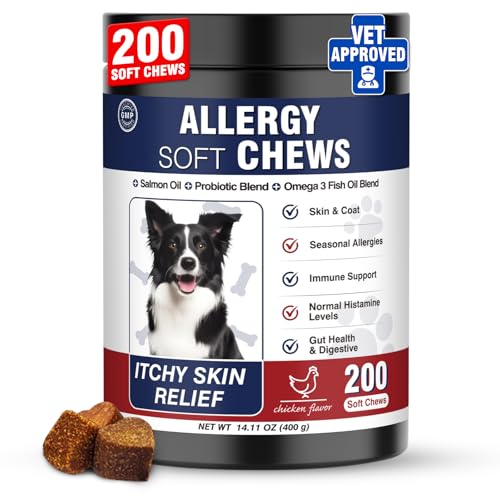
Can I Give My Dog Allergy Medicine for Itching?
If your dog is scratching constantly, it is tempting to reach for a human antihistamine. Some options can be safe under veterinary guidance—but the wrong product can be dangerous. Here is what you need to know before giving your dog any allergy medicine.
The short answer is: sometimes, but only with the right medication, the right dose, and your veterinarian's approval. Antihistamines like Benadryl, Zyrtec, and Claritin are widely used in veterinary medicine to take the edge off mild allergic itching, but they are not a cure-all and they are not risk-free [citation:4][citation:7]. The bigger problem is that many human allergy products contain additional ingredients that are toxic to dogs—and those products cause serious harm every year.
Before you open your medicine cabinet, understand that itching is a symptom, not a diagnosis. Allergies, parasites, skin infections, and even food sensitivities can all cause a dog to scratch. A pill that suppresses the itch without addressing the cause can delay proper treatment and let a manageable problem become a chronic one [citation:12]. If your dog has recurring skin issues, a dietary review is often the smarter first step—our guide to dog food for dogs with allergies and sensitive stomachs explains how nutrition can reduce flare-ups.
Safe OTC Antihistamines for Dogs (With Vet Approval)
Three over-the-counter antihistamines are most commonly used in dogs. All are off-label, meaning they are not FDA-approved for veterinary use, and all require a conversation with your vet before the first dose [citation:1][citation:4].
Diphenhydramine (Benadryl)
The most familiar option. Often used for mild allergic reactions, insect bites, and hives. It causes drowsiness, which can be helpful or problematic depending on your dog. Never use time-release capsules—they can release too much medication at once. Typical veterinary dosing starts around 1 mg per pound every 8–12 hours, but your vet must confirm the exact amount [citation:3][citation:14].
Entry-level tier · widely availableCetirizine (Zyrtec)
A second-generation antihistamine that causes less drowsiness than Benadryl. Commonly used for atopic dermatitis and environmental allergies. Dosing is weight-based and usually once daily. Avoid in dogs with kidney or liver disease, and never use Zyrtec-D [citation:8][citation:19]. It is generally mid-tier in cost among OTC options.
Mid-tier · less sedatingLoratadine (Claritin)
Another low-drowsiness option, often given once daily. The dose is typically calculated as roughly 1 mg per 4 pounds of body weight, but tablets only come in fixed sizes, so rounding requires care. As with all antihistamines, evidence for strong itch control is modest—some dogs respond well, many do not [citation:2][citation:4].
Mid-tier · once-daily convenienceCritical rule: Only plain, single-ingredient antihistamines are ever considered. The tablet must contain only diphenhydramine, cetirizine, or loratadine. Anything with added decongestants, pain relievers, or sweeteners is off-limits.
Medicines You Must Never Give Your Dog
This is where most accidental poisonings happen. Human allergy products are frequently combination formulas, and the “extra” ingredients can be lethal to dogs.
- Anything ending in “-D”: Claritin-D, Zyrtec-D, and similar products contain pseudoephedrine or phenylephrine. These decongestants cause dangerous heart rate increases, severe agitation, and can be fatal. This is the single most common dangerous mistake [citation:2][citation:8][citation:19].
- Combination cold and flu products: Many contain acetaminophen (Tylenol) or ibuprofen, both of which are toxic to dogs and can cause liver failure or kidney damage.
- Chewable or liquid formulations with xylitol: Xylitol is an artificial sweetener that triggers severe hypoglycemia and liver failure in dogs. Always read the inactive ingredients list, not just the active ones [citation:8].
- Time-release and extended-release capsules: These can dump the full dose too quickly, leading to overdose. Benadryl in particular should never be given in time-release form [citation:14].
- Any human topical cream or ointment: Hydrocortisone creams, calamine lotion with additives, and human anti-itch sprays are not formulated for dogs and can be licked off and ingested.
If you have already given your dog a product containing any of these ingredients, do not wait for symptoms. Call your veterinarian or a pet poison control hotline immediately. You can also review our guide on dog allergy testing to understand what professional diagnosis involves, which is far safer than repeated trial-and-error with human medications.
Why Dosing Must Come From Your Vet, Not a Chart
You will find countless dosage charts online. Ignore them as a primary source. Here is why:
- Dose depends on weight, but also on health. A dog with liver disease, kidney disease, glaucoma, seizures, or heart conditions may not be a candidate for certain antihistamines at all. Your vet knows your dog's bloodwork and history [citation:8][citation:13].
- Tablet sizes are fixed. A 5 mg difference in a 10-pound dog is enormous. Your vet will tell you exactly how much to give and whether to round up or down, often accounting for half-tablet splits.
- Antihistamines interact with other drugs. If your dog is on flea prevention, joint supplements, or prescription medication, the interaction risk is real. Your vet needs the full picture [citation:17].
- Antihistamines are often weak for chronic itch. Veterinary dermatology guidelines note that antihistamines have at best small benefits in canine atopic dermatitis and are not recommended as sole therapy for moderate-to-severe disease [citation:1]. If your dog's itching is severe, you may be wasting time and money on a pill that cannot work.
For a dog with genuine seasonal allergies, your vet may recommend prescription options like Apoquel or Cytopoint instead—these target itch pathways more effectively than antihistamines, but they require a diagnosis first [citation:5][citation:17].
Side Effects to Watch For
Even at the correct dose, antihistamines can cause reactions. Most are mild, but you should monitor your dog for the first few hours after any new medication.
- Drowsiness and lethargy: Expected with Benadryl. If your dog seems excessively sedated or difficult to rouse, call your vet.
- Gastrointestinal upset: Vomiting, soft stool, or reduced appetite. Giving the pill with a small meal can help, but ask your vet first.
- Dry mouth and urinary retention: More common with first-generation antihistamines like Benadryl.
- Paradoxical excitement: Some dogs become hyperactive or agitated instead of sleepy. This is a reason to stop and call your vet.
- Severe reactions: Collapse, difficulty breathing, facial swelling, rapid heart rate, tremors, or seizures are emergencies. Seek immediate veterinary care [citation:1][citation:14].
Safer, Non-Drug Itch Relief You Can Try First
If your dog's itching is mild and there are no signs of infection or severe skin damage, these approaches carry far less risk than medication and can provide real relief while you arrange a vet visit.
1. Confirm parasite prevention is current
Fleas are the number one cause of itching in dogs, and a single flea bite can trigger intense scratching in a flea-allergic dog [citation:6]. Make sure every pet in the household is on year-round prevention. If you suspect fleas, our guide on the best way to get rid of fleas on a dog walks through the full process, and OTC flea and tick treatment options covers product categories.
2. Bathe with an oatmeal shampoo
Colloidal oatmeal has anti-inflammatory properties that soothe irritated skin and support the skin barrier. Use a dog-specific oatmeal shampoo, leave it on for 5–10 minutes, and rinse thoroughly with cool or lukewarm water. Never use human shampoo—the pH is wrong for canine skin [citation:6][citation:18]. A dog bath with the right product can calm a flare-up without any systemic medication.
3. Add an omega-3 supplement
Fish oil rich in EPA and DHA can reduce skin inflammation over time. This is not a quick fix—it takes weeks to see results—but it is safe and supported by veterinary dermatology. Ask your vet about the right dose, especially if your dog has a sensitive stomach. You can explore dog health products for quality supplement options.
4. Remove environmental triggers
Wipe your dog's paws and belly after walks to remove pollen. Wash bedding weekly in fragrance-free detergent. Vacuum frequently if dust mites are a concern. These steps cost little and can meaningfully reduce allergen exposure.
A note on human hydrocortisone cream: Do not apply human anti-itch creams to your dog. Dogs lick them off, and ingested hydrocortisone can cause problems. If your dog has a localized hot spot, ask your vet for a dog-safe topical product rather than improvising with human medicine.
When Itching Needs a Vet, Not a Pill
Antihistamines are for mild, occasional itch. They are not appropriate for the following situations, and using them can delay real treatment:
- Hair loss, red inflamed skin, or open sores: These suggest infection, severe allergy, or a skin condition that needs prescription treatment [citation:12].
- Odor or oozing from the skin: Likely a bacterial or yeast infection. Antihistamines will not touch it.
- Itching that does not improve within a few days: If an antihistamine trial does not work, the problem is not histamine-driven. Your vet needs to look deeper.
- Facial swelling, hives, vomiting, or difficulty breathing: This is anaphylaxis or a severe allergic reaction. It is a medical emergency. Go to the vet immediately—do not give an oral pill and wait.
- Head shaking or ear scratching: Often indicates an ear infection, which requires a different treatment entirely. Our guide on dog ear infections explains the signs.
For dogs with confirmed environmental allergies, your vet has access to far more effective options than OTC antihistamines, including prescription medications that specifically target the itch pathway. The key is getting an accurate diagnosis first. If you are unsure whether your dog's itching is allergy-related or something else, a dog allergy test can provide clarity and prevent months of ineffective home treatment.
Frequently Asked Questions
The Bottom Line: You can sometimes give your dog a plain antihistamine for mild itching—but only after your vet confirms the drug, the dose, and that your dog has no health conditions that make it unsafe. Never give combination products, never guess a dose from the internet, and never let a pill replace a proper diagnosis. If the itching is severe, recurring, or accompanied by skin changes, the fastest path to relief is a veterinary exam, not a human medicine bottle.