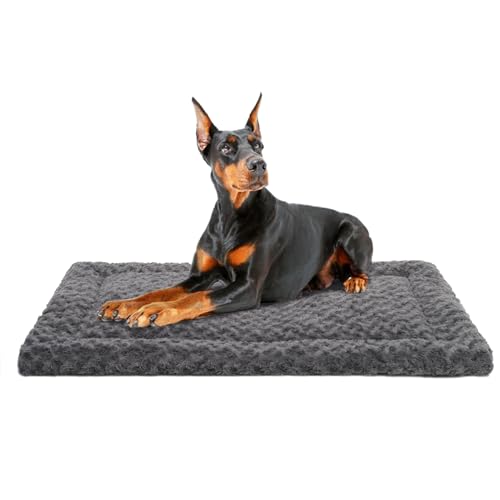
The Ultimate Guide to Dog Crate Mats
Transform your dog's crate from a simple enclosure into a cozy, supportive den. Learn how to choose the right mat for comfort, joint health, and easy cleaning.
A crate is more than just a training tool or a safe space for your dog—it's their personal den. But a bare plastic or metal tray is uncomfortable, cold, and uninviting. A high-quality dog crate mat is the single most important accessory you can add to transform that space into a comfortable retreat. It provides insulation, cushioning for joints, and a sense of security that helps with crate training and reduces anxiety.
This guide will walk you through everything you need to know to choose the perfect mat for your dog. We'll cover the different types available, what materials hold up best, how to get the sizing right, and how to keep it clean. By the end, you'll have the knowledge to make a confident purchase that improves your dog's daily life.
Why a Quality Crate Mat Matters
You might think a simple towel or blanket is enough, but a purpose-built crate mat offers significant benefits that a makeshift solution cannot.
- Joint Support & Pain Relief: Hard surfaces put pressure on a dog's joints, especially the hips and elbows. A supportive mat, particularly an orthopedic one, cushions these pressure points and provides relief for dogs with arthritis or dysplasia.
- Temperature Regulation: Crates can be cold in winter and hot in summer. A mat provides insulation from cold floors and can offer cooling properties if made from breathable materials, helping your dog stay comfortable year-round.
- Security & Comfort: A soft, familiar surface gives your dog a sense of ownership and security. It makes the crate a positive, inviting space, which is crucial for successful puppy crate training.
- Protection for the Crate: A mat protects the crate's bottom tray from scratches, dirt, and accidents, making cleanup much easier and extending the life of the crate itself.
- Better Sleep: Dogs sleep for 12-14 hours a day. A comfortable mat promotes deeper, more restful sleep, which is essential for their physical and mental health.
Pro Tip: A good crate mat isn't just a luxury—it's an investment in your dog's health. The support it provides can help prevent future joint issues and significantly improve the quality of life for dogs already dealing with mobility challenges.
Types of Dog Crate Mats
Crate mats come in several designs, each with its own strengths. The right choice depends on your dog's age, health, and chewing habits.
Standard Flat Mats
The most common and basic option. These are simple, flat pads that provide a layer of comfort and insulation. They are typically made of polyester or fleece and are easy to clean. Best for dogs who are not destructive chewers and just need a soft surface.
Budget-FriendlyOrthopedic Memory Foam Mats
These mats are thicker and made with high-density or memory foam. They are designed to contour to your dog's body, distributing weight evenly and relieving pressure on joints. Ideal for senior dogs, large breeds, and dogs with arthritis or hip dysplasia.
PremiumWaterproof & Cooling Mats
These mats feature a waterproof liner or are made from non-porous materials like gel-infused foam. Cooling mats are designed to dissipate body heat, providing relief in hot weather. Waterproof mats are perfect for puppies, senior dogs with incontinence, or dogs who drool.
Mid-Range to PremiumChew-Resistant & Tough Mats
Made from heavy-duty, tear-resistant materials like ballistic nylon or reinforced denier polyester. These are designed for persistent chewers who might otherwise destroy a standard mat. While no mat is 100% indestructible, these are the most durable options available.
High-EndMaterials & Durability
The materials used in a crate mat determine its comfort, durability, and ease of cleaning. Here's what to look for:
Top Fabrics (Comfort & Feel)
- Fleece & Sherpa: Incredibly soft and cozy, providing warmth and comfort. Best for dogs who don't chew. They can pill over time and may not be as durable as other options.
- Microfiber & Plush Polyester: Soft, durable, and resistant to wrinkling. They hold up well to regular use and are generally machine washable. A good middle-ground for comfort and longevity.
- Canvas & Denier Polyester: Highly durable and resistant to tearing and chewing. Less plush than fleece but far more resilient. Often used as the base for chew-resistant mats.
- Mesh & Breathable Fabrics: Designed for airflow and cooling. Ideal for warm climates or dogs who tend to overheat.
Fill Materials (Support & Comfort)
- Polyester Fiberfill: The most common fill. It provides basic loft and cushioning but can flatten over time with heavy use.
- Memory Foam: The gold standard for orthopedic support. It conforms to your dog's shape, distributing weight and relieving pressure points. It's denser and more supportive than fiberfill.
- High-Density Support Foam: A firmer foam that provides excellent support for large breeds. It doesn't contour as much as memory foam but offers more structural support.
- Gel Infused Foam: Combines foam support with a cooling gel layer to help regulate temperature, perfect for dogs who get hot easily.
Sizing for a Perfect Fit
A mat that is the wrong size is uncomfortable and ineffective. Follow these simple steps to get it right:
- Measure Your Crate: Use a tape measure to find the interior length and width of your crate's floor tray. Do not measure the outside of the crate.
- Choose the Right Dimensions: Your mat should be the same size as, or slightly smaller than, the interior dimensions. A mat that is too large will bunch up at the sides, reducing the usable space and creating a lumpy surface. A mat that is too small will leave areas of the hard floor exposed.
- Consider Your Dog's Sleeping Style: If your dog likes to stretch out fully, get a mat that covers the entire floor. If they like to curl up in a ball, a slightly smaller mat in a corner might be fine, but full coverage is generally recommended.
- Check the Thickness: For most dogs, a mat that is 1 to 3 inches thick is ideal. It provides comfort without taking up too much vertical space. For senior dogs or those needing extra support, a thicker orthopedic mat (3 to 5 inches) is better. Ensure the thickness doesn't interfere with the crate door or your dog's ability to move around freely.
Mats for Special Needs
Every dog is different. Here’s what to prioritize based on your dog’s specific situation:
For Puppies
Prioritize easy cleaning and accident-proof features. A waterproof mat with a removable, machine-washable cover is essential. Look for a mat that is durable enough to withstand occasional chewing. A slightly thinner mat is also easier for a puppy to navigate.
Mid-RangeFor Senior Dogs
Orthopedic support is non-negotiable. Look for a thick, memory foam mat to cushion aging joints and provide relief from arthritis. A mat with a lower profile or a gentle ramp can also help senior dogs get in and out of the crate more easily.
PremiumFor Chewers
Choose a mat made from heavy-duty, tear-resistant materials like ballistic nylon. Avoid mats with zippers or loose edges that can be easily chewed off and ingested. A flat, durable mat without a removable cover is often the safest bet for a determined chewer.
High-EndFor Dogs with Anxiety
A comfortable, secure mat can be a powerful tool for reducing crate anxiety. A plush, warm mat can provide a sense of security. You can also use a pheromone diffuser or a calming wrap in conjunction with the mat to create a calming environment.
Mid-Range to PremiumCleaning & Maintenance
Keeping your dog's crate mat clean is vital for their health and hygiene. A dirty mat can harbor bacteria, parasites, and allergens. Here's how to keep it fresh:
Routine Care
- Shake & Vacuum: Every few days, take the mat outside and give it a good shake to remove loose hair and dirt. Vacuum it with a brush attachment to remove embedded hair and dander.
- Spot Clean: For minor accidents or spills, spot clean immediately with a pet-safe enzymatic cleaner. This breaks down odors and stains at the source.
- Rotate: If you have multiple mats, rotate them. This gives you a chance to clean one while the other is in use and extends the life of both.
Deep Cleaning
- Check the Label: Always read the manufacturer's care instructions first. Some mats are fully machine washable, while others require spot cleaning only.
- Remove the Cover: If your mat has a removable cover, unzip it and remove the inner foam or filling. This allows for a more thorough clean.
- Machine Wash: Wash the cover on a gentle cycle with cold water and a pet-safe, mild detergent. Avoid using fabric softeners, which can irritate your dog's skin and reduce the fabric's breathability.
- Dry Thoroughly: Air dry the cover whenever possible. If using a dryer, use the lowest heat setting. High heat can shrink the fabric or damage the waterproof liner. Ensure the mat is completely dry before placing it back in the crate to prevent mold and mildew.
- Clean the Foam: The inner foam core cannot be machine washed. Spot clean it with a damp cloth and a mild soap solution, then allow it to air dry completely.
Comparison Table: Which Mat is Right for You?
Use this table to quickly compare the different types of crate mats based on your dog's needs.
| Feature | Standard Flat Mat | Orthopedic Memory Foam | Waterproof / Cooling | Chew-Resistant |
|---|---|---|---|---|
| Best For | Non-destructive dogs, budget-conscious owners | Senior dogs, large breeds, joint issues | Puppies, incontinent dogs, hot climates | Persistent chewers |
| Support Level | Low | High | Medium | Low to Medium |
| Durability | Medium | Medium to High | Medium | Very High |
| Ease of Cleaning | Easy (machine washable) | Moderate (removable cover) | Very Easy (wipe down) | Easy (wipe down) |
| Chew Resistance | Low | Low to Medium | Low | High |
| Typical Tier | Budget-Friendly | Premium | Mid-Range to Premium | High-End |
Frequently Asked Questions
Ready to Make a Decision?
Choosing the right dog crate mat is a simple but impactful way to show your dog you care about their comfort and well-being. Focus on your dog's individual needs—their age, health, and chewing habits—to guide your choice. A supportive, well-fitting, and easy-to-clean mat will make their crate a true sanctuary, promoting better rest and reducing anxiety. For more ways to create a perfect environment, explore our guides on other crate accessories and calming solutions.