Dog Steps: The Complete Guide to Choosing the Right Mobility Solution
Everything you need to know about dog steps, ramps, and stairs — from choosing the right type for your dog's size and mobility needs to training them to use it safely.
If your dog struggles to get on the couch, bed, or into the car, dog steps can transform their daily life. These simple mobility aids reduce the strain on your dog's joints, prevent injuries from jumping, and give them back their independence. Whether you have a tiny Chihuahua who can't reach the sofa, a senior Labrador with arthritis, or a puppy learning boundaries, the right set of dog steps makes a world of difference.
This guide walks you through everything you need to know about dog steps — the different types available, how to choose the right one for your dog's size and needs, safety features to prioritize, and how to train your dog to use them confidently. By the end, you'll know exactly which mobility solution fits your home and your dog.
Why Dog Steps Matter for Your Dog's Health
Jumping on and off furniture is one of the most common causes of joint injuries in dogs. Every leap from a bed or couch puts significant stress on your dog's shoulders, elbows, hips, and spine. Over time, this repetitive trauma can lead to chronic pain, arthritis, and costly veterinary bills.
Dog steps eliminate this risk by providing a gradual, controlled way for your dog to reach elevated surfaces. For small breeds, steps are often a necessity — a jump from a standard bed is equivalent to a human jumping from a second-story window. For senior dogs, steps restore access to their favorite spots without pain. For dogs recovering from surgery or managing conditions like mobility issues, steps are an essential part of their daily care routine.
Did You Know?
Small breed dogs are especially vulnerable to tracheal collapse and spinal injuries from jumping. Breeds like Chihuahuas, Yorkies, and Pomeranians can suffer serious harm from a single bad landing. Dog steps are not a luxury — they are a preventive health measure that can add years of comfortable living to your dog's life.
Types of Dog Steps & Ramps
Not all dog steps are created equal. The right choice depends on your dog's size, age, mobility level, and the surfaces in your home. Here are the main types available:
Classic Dog Stairs
Traditional step design with 3-5 steps and a gradual rise. Best for small to medium dogs who can comfortably climb. Compact footprint makes them ideal for tight spaces. Look for models with non-slip carpeted treads and sturdy construction. Entry-level and mid-range options are widely available.
entry-level to mid-rangeDog Ramps
A continuous incline rather than individual steps. Ideal for senior dogs, large breeds, and dogs with joint issues. Provides the gentlest ascent with minimal joint stress. Often used for vehicles, beds, and couches. Folding and telescoping models are available for portability. Mid-range to premium options offer the best stability.
mid-range to premiumFoam Dog Steps
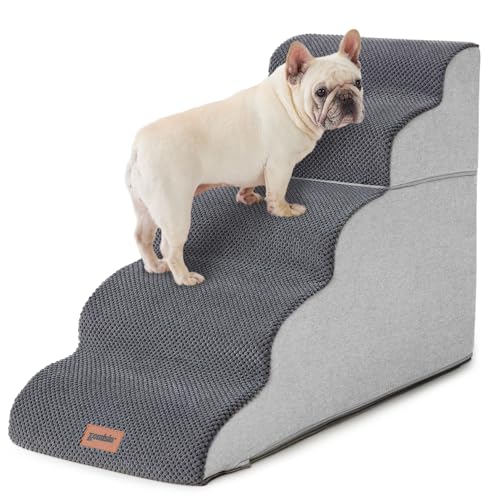
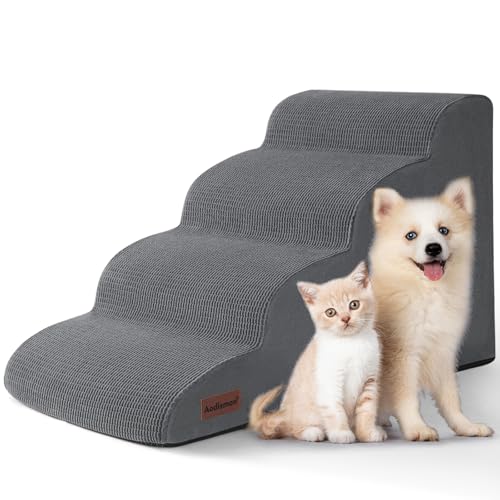
Lightweight and soft, made from high-density foam. Easy to move and store. Best for very small dogs under 15 pounds. Often used as a gentle introduction to steps for puppies. Less stable than wood or plastic models, so supervision is recommended. Budget-friendly and widely available.
budget-friendlyWooden Dog Steps
Sturdy, elegant, and built to last. Blends seamlessly with home decor. Typically holds more weight than plastic or foam. Often features carpeted treads for traction. Premium wooden models can be customized to match your furniture. Best for medium to large dogs.
mid-range to high-endPlastic Dog Steps
Lightweight, affordable, and easy to clean. Often foldable for storage. Good for small dogs and occasional use. Look for models with rubberized feet to prevent sliding. Some plastic steps can feel less stable than wood, so check weight capacity carefully.
entry-levelBed & Couch Steps
Specifically designed to match the height of standard beds and sofas. Usually 3-4 steps with a gentle rise. Often available in fabric covers that complement bedroom or living room decor. Some models convert from steps to a ramp for versatility.
mid-rangeHow to Choose the Right Dog Steps
Choosing the wrong steps can be worse than having none at all — unstable or improperly sized steps can cause falls and injuries. Use these criteria to find the perfect match for your dog:
1. Measure the Height
Measure the surface your dog needs to reach — the top of your bed, couch, or car trunk. Standard bed heights range from 24 to 30 inches, while couches are typically 18 to 22 inches. Choose steps that match this height with a gradual rise. Most dogs do best with a step rise of 4-6 inches for small breeds and 6-8 inches for larger breeds.
2. Consider Your Dog's Size
- Toy breeds (under 10 lbs): 3-step foam or lightweight plastic steps work well. Look for narrow step depths that match their short stride.
- Small breeds (10-25 lbs): 3-4 step wooden or sturdy plastic steps. Ensure adequate width for comfortable footing.
- Medium breeds (25-50 lbs): 4-step wooden steps or a ramp. Check weight capacity carefully.
- Large breeds (50-90 lbs): Ramps are generally safer than steps. If using steps, choose heavy-duty wooden models with wide treads.
- Giant breeds (90+ lbs): Ramps are strongly recommended. Steps rarely provide adequate stability for very large dogs.
3. Assess Your Dog's Mobility
If your dog has arthritis, hip dysplasia, or any joint condition, a ramp is almost always the better choice. Ramps put less stress on joints and are easier for dogs with limited range of motion. For dogs recovering from surgery, consult your veterinarian before introducing steps or ramps. Our guide to dog joint supplements can help support your dog's mobility alongside steps.
4. Check the Surface
Non-slip surfaces are non-negotiable. Carpeted treads, rubberized mats, or textured plastic all provide traction. Smooth surfaces like bare wood or hard plastic are dangerous, especially for senior dogs or dogs with paw protection needs. If your steps come with smooth surfaces, consider adding adhesive traction pads.
5. Stability & Weight Capacity
The steps must not wobble or shift when your dog uses them. Look for wide bases, rubber feet, and sturdy construction. Check the weight capacity — it should exceed your dog's weight by at least 50%. A 20-pound dog needs steps rated for at least 30 pounds.
6. Storage & Portability
If you need steps for travel or have limited space, folding or collapsible models are ideal. Telescoping ramps are excellent for cars and SUVs. For permanent placement, sturdier non-folding models are usually more stable.

Safety Features to Look For
Your dog's safety should be the top priority when selecting steps. Here are the features that matter most:
- Non-slip treads: Carpeted or rubberized surfaces prevent slips and falls. This is the single most important safety feature.
- Rubberized feet: Keep the steps from sliding on hard floors. Essential for tile, hardwood, and laminate.
- Side rails or raised edges: Help prevent your dog from stepping off the side, especially useful for puppies and senior dogs.
- Wide, deep steps: Each step should be wide enough for your dog to stand comfortably and deep enough for their full paw. A general rule: step depth should be at least equal to your dog's body length.
- Sturdy construction: No wobbling or flexing when your dog climbs. Check weight capacity and reviews for stability complaints.
- Low step rise: Smaller rises are easier on joints. For senior dogs, look for steps with 3-4 inch rises or choose a ramp instead.
- Safety certification: Some manufacturers test to ASTM or other safety standards. While not required, it's a good indicator of quality.
Safety Tip: Even the safest steps require supervision at first. Always watch your dog during the learning phase, and keep steps away from stairs or other hazards. For dogs with separation anxiety or safety concerns, consider placing steps in a corner or against a wall for added security.
Training Your Dog to Use Steps
Some dogs take to steps immediately; others are suspicious of anything new. Patience and positive reinforcement are key. Never force or rush your dog — this creates fear and can set back training.
Step-by-Step Training Process
- Start with the steps on the ground. Place the steps flat on the floor and let your dog investigate at their own pace. Reward any interaction — sniffing, pawing, or stepping on.
- Lure onto the first step. Use a high-value treat to encourage your dog to place a paw on the first step. Reward generously when they do. Repeat until they are comfortable putting all four paws on the first step.
- Practice one step at a time. Once your dog is confident on the first step, lure them to the second. Reward. Then the third. Don't rush — some dogs need multiple sessions on each step.
- Place steps against the furniture. Once your dog can climb all steps on the ground, move the steps to their intended location. Start with the lowest height setting if your steps are adjustable.
- Practice going up and down. Going down is often scarier than going up. Lure your dog down slowly, one step at a time. Stay calm and reward every successful descent.
- Gradual height increase. If your steps are adjustable or you're using a ramp, increase the incline gradually. Give your dog time to adjust at each height.
Training Tips:
• Use high-value treats like small pieces of chicken or cheese for step training.
• Keep sessions short (5 minutes max) and end on a positive note.
• Never punish your dog for avoiding the steps — this makes fear worse.
• If your dog is severely afraid, try clicker training or consult a professional. Our guide to clicker training can help.
• For puppies, start training early but don't overdo it — growing joints need rest. See our puppy training guide for age-appropriate tips.
Steps for Senior & Special Needs Dogs
Senior dogs and dogs with mobility challenges have different needs than young, healthy dogs. Here's what to prioritize:
- Choose a ramp over steps. Ramps provide a gradual incline that's much easier on arthritic joints. Even a low-incline ramp is better than the gentlest steps.
- Look for non-slip, padded surfaces. Senior dogs need maximum traction. Carpeted ramps or rubberized surfaces are ideal.
- Consider a low-profile ramp. Shorter ramps (under 12 inches high) work for couches and low beds. For higher beds, choose a longer ramp to reduce the incline angle.
- Add side rails. Side rails prevent falls and give your dog confidence. They're especially important for dogs with vision or balance issues.
- Support with joint supplements. Steps and ramps reduce strain, but joint supplements can further support your senior dog's mobility. Our guide to green-lipped mussel supplements covers natural options.
- Consult your vet. If your dog has a specific condition like hip dysplasia or a recent injury, ask your veterinarian for recommendations. They may suggest physical therapy or other mobility aids alongside steps.

Placement & Setup Tips
Where and how you place your dog steps matters as much as which steps you buy. Follow these guidelines for safe, effective placement:
- Place against a stable surface. Steps should sit flush against the furniture or wall. Gaps can cause wobbling or make your dog hesitant.
- Position in a corner when possible. Corners provide natural barriers that make dogs feel more secure. If using steps for a bed, place them at the foot or side, not where you get in and out.
- Ensure a clear landing area. Your dog needs space at the top of the steps to stand and turn around. Don't place steps where they lead directly into a wall or tight space.
- Secure the steps. Use rubber feet or anti-slip pads underneath. For ramps, look for models with safety straps that attach to the bed frame or vehicle.
- Keep the path clear. Remove clutter around the steps so your dog can approach and use them without obstacles.
- Use multiple sets if needed. If your dog needs to access both the bed and the couch, consider having steps at each location. Moving steps back and forth is inconvenient and may confuse your dog.
Cleaning & Maintenance
Dog steps need regular cleaning to stay hygienic and safe. Dirt, hair, and moisture can reduce traction and cause odors. Here's how to maintain your steps:
- Carpeted steps: Vacuum weekly to remove hair and dirt. Spot clean with a pet-safe carpet cleaner. For deep cleaning, use a dog stain remover and allow to dry completely before use.
- Plastic steps: Wipe down with a damp cloth and mild soap. Avoid harsh chemicals that can leave residue or damage the surface. Dry thoroughly to prevent slipping.
- Wooden steps: Dust regularly and wipe with a damp cloth. Avoid soaking the wood. Check for loose screws or wobbling and tighten as needed.
- Foam steps: Most foam steps have removable, washable covers. Follow the manufacturer's instructions. If the foam itself gets wet, allow it to air dry completely before use.
- Ramps: Clean the surface regularly, especially if used outdoors. Check hinges and folding mechanisms for wear. Lubricate if needed.
Maintenance Tip: Inspect your steps monthly for signs of wear — loose screws, torn fabric, cracked plastic, or compressed foam. A wobbly or damaged step is a safety hazard. Replace worn steps promptly, especially if your dog is a senior or has mobility issues.
Common Mistakes to Avoid
These mistakes can undermine the benefits of dog steps or even cause injury:
- Buying steps that are too steep. A steep incline is hard on joints and scary for dogs. Choose steps with a gradual rise or a ramp with a low angle.
- Ignoring weight capacity. Steps that aren't rated for your dog's weight can collapse or wobble, causing injury and fear.
- Choosing smooth surfaces. Non-slip treads are essential. Bare plastic or wood is dangerous.
- Not securing the steps. Steps that slide or shift will scare your dog and may cause falls.
- Rushing training. Forcing your dog onto steps creates fear and can set back progress. Go at your dog's pace.
- Using steps for the wrong dog. A 90-pound Labrador needs a ramp, not a 3-step foam staircase. Match the solution to your dog's size and mobility.
- Neglecting maintenance. Worn or dirty steps lose traction and become unsafe. Regular cleaning and inspection are essential.
- Placing steps in high-traffic areas. Steps in walkways can be bumped or knocked over. Place them in stable, low-traffic locations.
Frequently Asked Questions
Ready to Help Your Dog Move More Comfortably?
Dog steps are one of the simplest, most effective ways to protect your dog's joints and restore their independence. Whether you choose a classic staircase for a small breed, a ramp for a senior dog, or a portable solution for travel, the right mobility aid pays for itself many times over in reduced injury risk and improved quality of life. Start by measuring your furniture and assessing your dog's needs, then check our product recommendations below to find the perfect match. If you're also looking for other mobility aids like orthopedic beds or joint supplements, we've got you covered.