Over the Counter Flea and Tick Medicine for Dogs
Everything you need to know before choosing an OTC flea and tick product — how different types work, what to look for on the label, safety risks, and how to make an informed decision for your dog.
Fleas and ticks are more than a nuisance — they cause itching, transmit dangerous diseases, and can lead to serious health problems if left unchecked. For many dog owners, the first instinct is to reach for an over the counter flea and tick medicine for dogs at the local pet store or online retailer. It's convenient, requires no vet visit, and often costs less than prescription alternatives.
But not all OTC products are created equal. Some are highly effective and have decades of safety data behind them. Others are less reliable, and a few have been linked to adverse reactions when misused. This guide cuts through the confusion so you can make a confident, informed choice for your dog.
Understanding OTC vs Prescription Flea and Tick Medicine
The key difference between over the counter and prescription flea and tick medicine for dogs comes down to regulation, oversight, and typically, potency. Prescription products have undergone rigorous clinical trials and are dispensed under veterinary supervision. They often use newer active ingredients with higher efficacy against resistant parasite populations.
OTC products are available without a prescription, but that doesn't mean they are unregulated. In the United States, the EPA regulates many topical flea and tick products, while the FDA oversees oral medications. Reputable OTC brands still meet safety and efficacy standards — but the margin for error is narrower. Misapplication, incorrect dosing by weight, or using a product on the wrong species can cause serious problems.
Important distinction: "Over the counter" does not mean "risk-free." Many veterinarians note that prescription flea and tick medications generally offer stronger, more consistent protection, especially in areas with high parasite pressure. OTC options can be a reasonable choice for some dogs, but they work best when chosen carefully and used exactly as directed.
If you have a dog with health issues, a history of seizures, or a breed known for drug sensitivity, a conversation with your veterinarian is essential before starting any OTC product. For more detailed guidance on monthly prevention schedules, see our guide to monthly flea, tick, and heartworm prevention for dogs.
Types of Over the Counter Flea and Tick Medicine for Dogs
OTC flea and tick products fall into three main categories: topicals, collars, and oral medications. Each has distinct advantages and limitations. Understanding how they work helps you match the right product to your dog's lifestyle and your household situation.
Topical Spot-On Treatments
Liquid applied directly to the skin between the shoulder blades. Active ingredients spread across the skin and coat to kill fleas and ticks on contact. Many OTC topicals are waterproof after drying and remain effective for a month. Popular examples include Frontline Plus and K9 Advantix II. These are among the most widely used OTC options and have extensive safety records when used correctly.
Mid-range tierFlea and Tick Collars
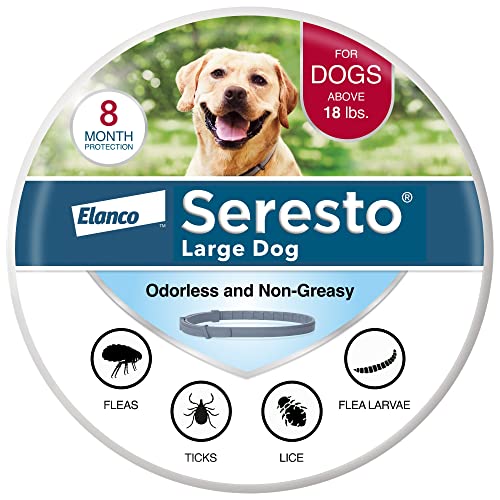
Collars release active ingredients slowly over months. The Seresto collar is the most well-known OTC option, providing up to eight months of flea and tick protection. Newer collars are far more effective than older designs. They are convenient for owners who prefer not to apply monthly treatments, but effectiveness can decline if the collar gets wet frequently, and some dogs experience skin irritation.
Premium convenience tierOral Chewable Tablets
OTC chewables are relatively new to the market. Frontpro (afoxolaner) became the first OTC chewable flea and tick treatment for dogs in some regions, killing fleas within hours and providing a month of protection. Oral products avoid the mess of topicals and the risk of children or other pets contacting the application site, but they require your dog to accept a chewable tablet.
Entry-level access tierShampoos and Sprays
Flea shampoos and sprays offer immediate knockdown of adult fleas but have no residual activity. They are useful for quickly reducing a heavy infestation before starting a longer-acting preventive, but they are not a standalone solution. Most veterinarians do not recommend relying on shampoos for ongoing flea and tick control.
Budget-friendly tierFor a broader comparison of treatment formats, including how OTC options stack up against prescription-only products, explore our guide to the most effective over the counter flea treatment for dogs.
How OTC Flea and Tick Options Compare
The table below summarizes key characteristics of the main OTC product categories. Remember that individual products within each category vary — always read the specific label for your chosen product.
| Feature | Topical Spot-On | Flea Collar | Oral Chewable | Shampoo/Spray |
|---|---|---|---|---|
| Duration | Monthly | Up to 8 months | Monthly | Immediate only |
| Application | On skin between shoulders | Worn around neck | Given by mouth | Bath or spray |
| Water resistance | Varies; many waterproof after drying | Reduced with frequent swimming | Not affected by bathing | None |
| Cat household safety | Some contain permethrin (toxic to cats) | Generally safer if cats don't chew collar | No topical transfer risk | Depends on ingredients |
| Ease of use | Moderate — requires restraint | Easy — apply once | Easy if dog accepts chew | Moderate — wet dog |
| Relative tier | Mid-range | Premium convenience | Entry-level access | Budget-friendly |
Choosing based on your dog's lifestyle: If your dog swims frequently, an oral chewable or a product labeled waterproof may be more reliable. If you have cats in the home, avoid any dog product containing permethrin — it is highly toxic to cats. If your dog has sensitive skin, a chewable or collar may be preferable to a topical.
Safety and Side Effects of OTC Flea and Tick Medicine
Safety should be your first consideration when choosing any flea and tick product. The most common problems with OTC products stem not from the products themselves, but from misuse: applying a product meant for a large dog to a small dog, using dog products on cats, or applying multiple products simultaneously without veterinary guidance.
Critical Safety Rules
- Match the product to your dog's weight: Weight ranges on the label exist for a reason. Under-dosing leaves your dog unprotected; overdosing increases the risk of adverse reactions. Never split a large-dog product for a small dog.
- Check the age minimum: Many flea and tick products are not approved for puppies under a certain age — often 8 weeks or 12 weeks. Using an adult product on a young puppy can be dangerous.
- Never use dog products on cats: Permethrin, a common ingredient in dog flea products, is extremely toxic to cats and can be fatal. Cats lack the liver enzymes needed to metabolize it. If you have cats, choose dog products that are explicitly labeled safe for use in households with cats.
- Do not combine products without advice: Using a topical and an oral product together may increase toxicity risk. If you need to combine treatments, consult your veterinarian first.
- Watch for reactions: After applying any new product, monitor your dog for signs of irritation at the application site, lethargy, vomiting, excessive drooling, or neurological symptoms like tremors. If you notice anything unusual, contact your vet.
Some OTC topical products have been associated with a higher rate of adverse reactions, particularly in small dogs or when dosed incorrectly. Newer prescription products are not automatically safer in every case — they simply have different risk profiles and are used under veterinary supervision. The key is informed, cautious use regardless of which product you choose.
If your dog has a known sensitivity to flea products or has experienced reactions in the past, our article on the best flea and tick treatment for dogs with sensitive skin may help you identify gentler options.
How to Choose the Right OTC Flea and Tick Medicine
With dozens of products on the shelf, choosing can feel overwhelming. Work through these steps to narrow your options:
- Assess your dog's risk level: A dog who lives in an apartment and walks on paved paths has different exposure than a dog who hikes in wooded areas or lives in a region with heavy tick populations. Higher risk may justify a more robust product or a conversation with your vet about prescription options.
- Consider your household: If you have cats, children, or other pets, choose a product that minimizes the risk of accidental exposure. Oral chewables and collars avoid the transfer risk of wet topicals.
- Evaluate your dog's tolerance for application: Some dogs tolerate collars without issue; others scratch at them constantly. Some dogs take chewables eagerly; others refuse anything that isn't their regular food. Choose a format your dog will accept consistently.
- Check the active ingredients: Look up the active ingredient and understand what it targets. Some products kill fleas but not ticks. Some repel; others only kill after the parasite bites. Match the product's coverage to your needs.
- Read recent reviews and veterinary commentary: Product formulations and parasite resistance patterns change over time. What worked five years ago may be less effective today in your region.
- Start with a single product and monitor: Avoid stacking multiple new products at once. Give one product a fair trial, observe your dog's response, and adjust if necessary.
For a curated look at the most reliable OTC options currently available, see our guide to the best over the counter flea and tick treatment for dogs. If you're specifically interested in chewable formats, the over the counter flea and tick chewables for dogs article covers what to look for.
Common Mistakes to Avoid with OTC Flea and Tick Medicine
These mistakes are surprisingly common, and they can compromise your dog's protection or even put their health at risk:
- Buying based on price alone: The least expensive product is rarely the most effective. Look at active ingredients, duration, and safety record before cost.
- Using a product past its expiration date: Expired products may have degraded active ingredients and unpredictable efficacy.
- Applying a topical and bathing soon after: Many topicals need 48 hours to spread and absorb fully. Bathing too soon washes away the protection you paid for.
- Forgetting that fleas have a life cycle: Killing adult fleas on your dog is only part of the job. Eggs, larvae, and pupae in your home environment must also be addressed. Vacuum frequently and wash bedding during an infestation.
- Assuming year-round protection is unnecessary: In many climates, fleas and ticks remain active through winter indoors. Year-round prevention is often the most reliable approach.
- Ignoring the environment: Your yard, your car, and your home all harbor flea life stages. If your dog keeps getting fleas despite treatment, the problem may be in the environment, not the product.
When OTC isn't enough: If you've used an OTC product correctly and your dog still has fleas or ticks, or if the infestation keeps recurring, it's time to talk to your vet. Prescription options may be more appropriate, or there may be an underlying issue like resistance or environmental reinfestation that needs a different strategy. See our guide to most effective flea and tick medicine for dogs for a comparison of prescription and OTC approaches.
Frequently Asked Questions
The Bottom Line on OTC Flea and Tick Medicine
Over the counter flea and tick medicine for dogs can be a practical, affordable option for many owners — but only when chosen carefully and used correctly. Prioritize products with clear labeling, appropriate weight ranges, and a known safety record. If you have cats in your home, avoid permethrin-containing dog products entirely. And remember: if fleas or ticks persist despite proper OTC use, or if your dog has health concerns, a conversation with your veterinarian is the safest next step. For more prevention strategies, explore our guides to dog flea treatment and monthly flea, tick, and worm treatment for dogs.