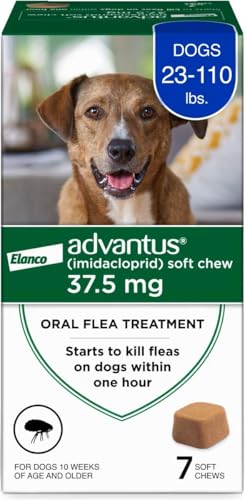
Most Effective Over the Counter Flea Treatment for Dogs
You have done the research, you know you need a flea treatment, and you want the one that actually works. This guide cuts through the marketing and explains exactly how OTC flea products compare, so you can make a confident decision for your dog.
If your dog is scratching, biting at their skin, or you have spotted small dark insects moving through their coat, you are dealing with fleas. It is one of the most common problems dog owners face, and the sheer number of products on the shelf can be overwhelming. You want to know which over the counter flea treatment for dogs is genuinely the most effective, not just the most heavily advertised.
The honest answer is that the "best" OTC flea treatment depends on several factors: your dog's size and age, whether they swim or get bathed frequently, whether you have cats in the home, and how severe the infestation is. This guide will walk you through the major categories of OTC flea control, explain what the active ingredients actually do, and help you understand why some products work better than others for certain situations.
One thing to understand upfront: over the counter treatments can be effective, but they are not all created equal. Prescription products are generally more potent and better regulated, but OTC options remain a practical choice for many owners. The key is choosing the right type and using it correctly. If you are also dealing with ticks, our guide to the most effective flea and tick medicine for dogs covers combination products in more detail.
Why Choose OTC Flea Treatment?
Over the counter flea treatments offer convenience and accessibility. You do not need a veterinary appointment or a prescription, which makes them a practical first line of defense, especially if you have just noticed a few fleas and want to act quickly. For dogs with no underlying health conditions and no history of adverse reactions to flea products, a well-chosen OTC option can be a reasonable choice.
However, it is important to understand the trade-offs. According to veterinary guidance, prescription products are usually more effective because they are more tightly regulated and often contain newer, more potent active ingredients [citation:2]. OTC products vary widely in quality. Some are excellent and have been used safely for decades. Others are less reliable, and a few are essentially ineffective. The difference almost always comes down to the active ingredient and the formulation.
Key Consideration: If your dog has sensitive skin, allergies, or a history of reacting poorly to topical products, an oral or collar-based option may be a better fit. If you have cats in the home, you must be extremely careful: many dog flea products contain permethrin, which is toxic to cats and can be fatal [citation:15]. Never use a dog product on a cat unless the label explicitly says it is safe for both species.
How OTC Flea Products Work
Understanding the mechanism of action helps you choose wisely. Flea treatments generally fall into three categories based on how they kill fleas:
- Contact killers: The product kills fleas when they come into contact with the treated area of the dog's skin or coat. The flea does not need to bite the dog to die. Many topical spot-on treatments work this way, which is advantageous because it stops fleas before they can feed and cause itching.
- Systemic killers: The active ingredient is absorbed into the dog's bloodstream. When a flea bites the dog, it ingests the medication and dies. Oral chewables are the most common systemic option, but most effective oral flea medications require a prescription. OTC systemic options are limited.
- Insect growth regulators (IGRs): These do not kill adult fleas directly. Instead, they prevent flea eggs and larvae from developing into adults. IGRs are often combined with an adulticide in spot-on products to break the flea life cycle more completely.
For a deeper look at how different formulations compare, see our breakdown of the most effective topical flea treatment for dogs and the most effective flea and tick prevention for dogs.
Top OTC Options Compared
Here is a comparison of the most commonly recommended OTC flea treatment types, along with their strengths and limitations. No prices are listed, as costs vary by retailer and region. Instead, products are categorized by their relative market positioning.
Topical Spot-On Treatments
Applied to the skin between the shoulder blades. Products like Frontline Plus and Advantage II are among the most widely used OTC options. They typically kill fleas within 12–24 hours and remain effective for about a month. Waterproof formulas exist, but bathing frequency can affect duration.
mid-range to premiumFlea Collars (e.g., Seresto)
Offer long-lasting protection, with some collars lasting up to 8 months. They are convenient and do not require monthly application. However, fit matters enormously, and some dogs manage to lose or remove them. The quick-release mechanism can be too easy to trigger.
premiumOral OTC Options
True OTC oral flea treatments for dogs are limited. Most effective chewable flea medications (like NexGard or Bravecto) require a prescription in many regions. Some OTC oral supplements claim to repel fleas, but evidence for their effectiveness is weak. Be skeptical of products marketed as "natural" oral flea control.
varies widelyFlea Shampoos and Sprays
Useful for immediate relief and for washing away adult fleas, but they have no residual effect. Once the shampoo is rinsed off, protection is gone. Shampoos are best used as part of a comprehensive treatment plan, not as a standalone solution. For more on this category, see our guide to the most effective flea and tick shampoo for dogs.
entry-levelComparison Table: OTC Flea Treatment Types
| Product Type | Speed of Kill | Duration | Water Resistance | Best For |
|---|---|---|---|---|
| Topical Spot-On | 12–24 hours | ~30 days | Often waterproof | Dogs that tolerate liquid application; households with no cats (check ingredients) |
| Flea Collar | Gradual (days) | Up to 8 months | Generally water-resistant | Owners who want low-maintenance, long-lasting protection |
| Oral (OTC) | Limited options | Varies | Not applicable | Dogs with skin sensitivities; but most effective orals require prescription |
| Shampoo | Immediate (during bath) | None after rinsing | Not applicable | Immediate flea removal; part of a multi-step plan |
For a broader look at how these options fit into a complete prevention strategy, including treatments that also address ticks and worms, explore our guide to all-in-one flea, tick, and worm treatment for dogs.
Key Active Ingredients in OTC Flea Treatments
The effectiveness of any product comes down to its active ingredients. Here are the most common ones you will find in OTC dog flea treatments, and what they do:
- Fipronil: The active ingredient in Frontline and many generic equivalents. It kills adult fleas by disrupting their nervous system. It is effective and has a long track record, but some flea populations have developed resistance in certain areas. Products containing fipronil often also include (S)-methoprene, an IGR that prevents eggs from hatching.
- Imidacloprid: The active ingredient in Advantage and some Seresto collars (combined with flumethrin). It is highly effective against adult fleas and works on contact. Advantage II also contains pyriproxyfen, an IGR.
- Permethrin: Found in some spot-on treatments, often combined with imidacloprid (as in K9 Advantix II). It repels and kills fleas and ticks. Critical warning: Permethrin is highly toxic to cats. If you have cats, avoid products containing permethrin entirely [citation:15].
- Flumethrin: Used in Seresto collars alongside imidacloprid. It provides long-lasting flea and tick control by migrating through the dog's coat.
Important Safety Note: Always read the label carefully before applying any flea product. Check the weight range and age restrictions. Puppies under a certain age (often 7–8 weeks) should not use many flea products. Pregnant or nursing dogs may also have restrictions. If you are unsure, consult your veterinarian. Also, be aware that counterfeit flea products exist online. Buy from reputable retailers, or better yet, purchase through your vet's recommended supplier [citation:15].
If your dog has sensitive skin and you are worried about reactions to topical treatments, our article on the best flea and tick treatment for dogs with sensitive skin offers targeted advice. You may also want to explore over the counter flea and tick chewables for dogs, though be aware that many chewables are prescription-only in practice.
Application Tips That Make or Break Effectiveness
Even the best product can fail if applied incorrectly. Here are the application details that most owners overlook:
- Apply to the skin, not the fur. Part the hair at the base of the neck (between the shoulder blades) and apply directly to the skin. If you apply on top of the coat, the product will not absorb properly and will be ineffective.
- Do not bathe immediately before or after. Most topical products need 24–48 hours to spread across the skin and fully absorb. Bathing too soon can wash away the medication. Check the specific product instructions for guidance.
- Use the correct weight range. Never split a dose meant for a larger dog or guess at the dosage. Applying too little leaves your dog unprotected; applying too much can cause adverse reactions.
- Prevent licking. After application, keep your dog from licking the application site. An Elizabethan collar (cone) can help if your dog is persistent. Licking reduces effectiveness and may cause minor stomach upset.
- Mark your calendar. Topical treatments need to be reapplied monthly. Set a reminder so you do not miss a dose. Gaps in protection allow fleas to re-infest.
For dogs that live in households with cats, or if you need a treatment that is safe around other animals, you may want to look at oral flea and tick for dogs without a vet prescription, though again, verify the active ingredients and safety profile carefully.
Treating the Environment: The Step Most Owners Skip
Here is a fact that surprises many dog owners: the adult fleas you see on your dog represent only about 5% of the total flea population. The other 95%—eggs, larvae, and pupae—are living in your carpets, bedding, furniture, and yard [citation:11]. If you only treat the dog, you will never get rid of the fleas. New adults will continue to emerge from the environment and re-infest your dog.
The CDC recommends a four-step process for eliminating fleas: sanitation (thorough cleaning), pet treatment, home treatment, and follow-up [citation:4]. Here is what that looks like in practice:
- Wash all bedding in hot water. This includes your dog's bed, blankets, and any bedding your dog sleeps on. Dry on the highest heat setting.
- Vacuum thoroughly and frequently. Focus on carpets, rugs, upholstered furniture, and crevices along baseboards. Vacuuming removes eggs, larvae, and pupae, and the vibration encourages pupae to emerge from their cocoons so they can be killed by the treatment. Dispose of the vacuum bag immediately after each use.
- Use a household flea spray. Look for products that contain an IGR as well as an adulticide. These sprays kill adult fleas and prevent eggs from developing. Follow the label instructions carefully and keep pets away from treated areas until dry.
- Treat the yard if necessary. Focus on shady areas and places where your dog spends the most time. Professional pest control may be needed for severe outdoor infestations.
- Repeat. Because of the flea life cycle, follow-up treatments may be needed within 5–10 days of the first application [citation:4]. Consistency is key.
Remember: If you have multiple pets, every pet in the household must be treated, even if they do not show signs of fleas. Fleas move between animals, and untreated pets will reinfest treated ones. For a comprehensive approach that includes all pets, see our guide to monthly flea, tick, and heartworm prevention for dogs.
If you are dealing with a severe infestation and want to understand why it is so persistent, our article on why you can't get rid of fleas on your dog addresses the most common reasons treatments fail.
When to See a Vet Instead of Using OTC Treatment
OTC treatments can work well for many dogs, but there are situations where veterinary intervention is the smarter choice:
- Your dog has a severe infestation. If your dog is covered in fleas, has raw or infected skin from scratching, or seems lethargic, a vet can prescribe faster-acting, more potent treatments and address any secondary skin infections.
- Your dog has health conditions. Dogs with epilepsy, liver disease, or compromised immune systems may not be good candidates for certain flea products. A vet can recommend a safer option.
- You have tried multiple OTC products without success. If fleas persist despite correct application and environmental treatment, your local flea population may be resistant to the active ingredient you are using. Prescription products use different classes of drugs and may be more effective.
- You have puppies or pregnant dogs. Many OTC products are not safe for very young puppies or pregnant/nursing dogs. Your vet can advise on the safest approach.
- You have cats in the home. As mentioned, permethrin toxicity is a real and serious risk. A vet can help you choose a product that is safe for all animals in your household.
For a detailed comparison of prescription-strength options, our article on the best over the counter flea and tick treatment for dogs may be useful, though note that some products discussed there may require a prescription depending on your region. You can also read about the safest and most effective flea and tick treatment for dogs for a safety-focused perspective.
Frequently Asked Questions
Final Takeaway
The most effective over the counter flea treatment for your dog is the one that matches their lifestyle and is used correctly and consistently. Topical spot-ons and long-lasting collars are the most reliable OTC categories. Regardless of which product you choose, treat the environment and all pets in the household. If fleas persist despite your best efforts, or if your dog has health issues, a veterinarian can prescribe a more powerful solution. For a comprehensive prevention plan, see our guide to the most effective flea and tick treatment for dogs.