Pet Carriers for Dogs: The Complete Buying Guide
Everything you need to choose the safest, most comfortable carrier for your dog — sizing, carrier types, airline rules, training tips, and expert recommendations for stress-free travel.
A pet carrier for dogs is far more than a travel accessory — it is a safety device, a portable den, and often a legal requirement for air travel. Whether you are planning a cross-country flight, a road trip, a vet visit, or simply want a safe way to transport your dog in an emergency, the right carrier makes the difference between a stressful ordeal and a calm, secure experience.
Most dog owners begin their search knowing they need a carrier but quickly discover a confusing maze of options: soft-sided versus hard-shell, cabin-approved versus cargo-rated, backpacks versus wheeled crates. The wrong choice can result in an airline rejecting your carrier at the gate, an anxious dog who refuses to enter, or worse, a carrier that fails structurally during transport.
This guide cuts through the confusion. We explain exactly how to measure your dog, which carrier types suit which travel scenarios, what airlines actually require, and how to acclimate your dog so the carrier becomes a place of safety rather than fear. By the end, you will know precisely which carrier fits your dog and your travel needs — and you can browse our recommended products below with confidence.
Why Every Dog Owner Needs a Pet Carrier
Even if you never plan to fly, a carrier is one of the most practical purchases you can make for your dog. Here is why:
- Veterinary visits: A carrier keeps your dog secure in waiting rooms and prevents escapes when clinic doors open. Anxious or injured dogs are safer contained during transport.
- Car travel safety: An unrestrained dog becomes a projectile in a sudden stop. A secured carrier or a properly fitted dog car harness protects both your dog and passengers.
- Emergency evacuations: If you must leave home quickly, a carrier lets you move your dog safely and keeps them contained in unfamiliar shelters or vehicles.
- Air travel: Airlines require carriers for both cabin and cargo transport. Without an approved carrier, your dog cannot fly.
- Public spaces and events: Carriers make it possible to bring your dog to pet-friendly venues, farmers markets, and outdoor events where leash-only access is impractical.
- A portable safe space: Trained properly, a carrier functions as a den — a familiar, calming retreat your dog can use at home during thunderstorms, fireworks, or when guests visit.
Did You Know? Many pet insurance policies cover emergency transport, but only if your dog is properly restrained. An unrestrained dog in a car accident is also a serious risk to human passengers. A carrier or dog seat belt is a safety investment, not just a convenience.
Types of Dog Carriers Compared
Dog carriers fall into a few broad categories, each with distinct strengths and trade-offs. The right choice depends on your dog's size, temperament, and how you plan to travel.
Soft-Sided Carriers
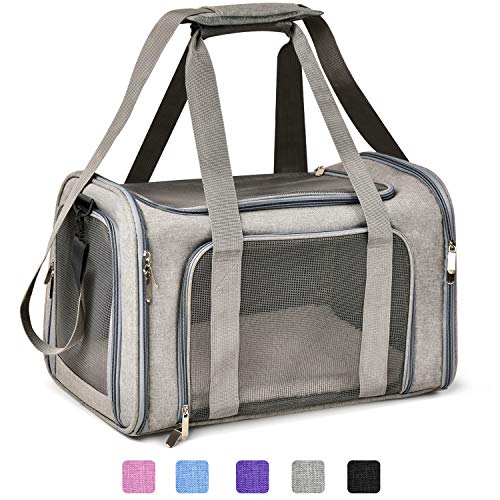
Made from fabric stretched over a lightweight frame. Typically the lightest option and the most common choice for in-cabin airline travel. Mesh panels provide ventilation and visibility. Easy to store flat. Best for calm dogs and car or cabin travel. Less structural protection than hard carriers.
Entry-level to mid-rangeHard-Sided Carriers
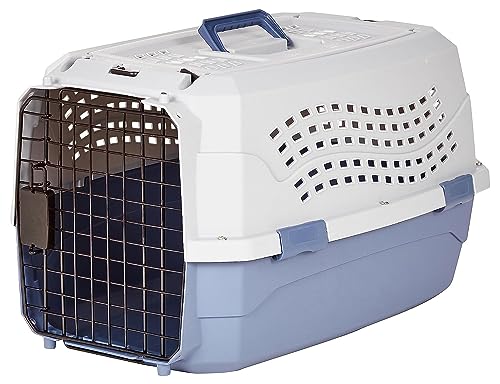
Rigid plastic or fiberglass shells with metal or plastic doors. Offer the strongest protection, are easiest to clean and disinfect, and are generally required for cargo hold travel. Heavier and bulkier to store. Best for anxious dogs, large dogs, and maximum safety. Some models meet airline cargo standards.
Mid-range to premiumCarrier Backpacks
Wearable carriers with padded shoulder straps and a structured compartment. Popular for small and toy breeds, hiking, and urban transit. Must be sized carefully so your dog can stand and turn. Ventilation and weight distribution vary widely — check load ratings and mesh coverage before buying.
Mid-rangeWheeled Carriers & Crates
Carriers with built-in wheels and a telescoping handle, or hard crates on wheeled bases. Excellent for large dogs and long airport walks. The rolling mechanism adds weight and can rattle, which unsettles some dogs. Best for heavy dogs and owners who travel frequently through airports.
Mid-range to premiumSlings & Front Carriers
Fabric pouches worn across the chest, designed for very small dogs and puppies. Handy for quick errands and vet visits. Not suitable for long journeys, and most airlines do not accept them as cabin carriers. Use only for short, low-stress trips with dogs under roughly 15 pounds.
Budget-friendlyExpandable Carriers
Soft carriers with zip-out panels that create extra interior space at rest. Useful for longer layovers and car trips, giving your dog room to stretch. The expanded sections are not structural and must be zipped closed for transport. Check that the closed dimensions still meet airline rules.
Mid-rangeQuick Comparison Table
| Carrier Type | Best For | Airline Cabin | Airline Cargo | Durability | Portability |
|---|---|---|---|---|---|
| Soft-sided | Small/medium calm dogs, cabin travel | Often approved | Not suitable | Moderate | Excellent |
| Hard-sided | Anxious or large dogs, cargo travel | Some models | Best choice | Excellent | Moderate |
| Backpack | Small dogs, hiking, urban transit | Rarely approved | No | Good | Excellent |
| Wheeled | Large dogs, frequent flyers | Check dimensions | Good for large dogs | Good | Good (rolling) |
| Slings | Very small dogs, short trips | Not accepted | No | Fair | Excellent |
| Expandable | Long layovers, car trips | If closed dimensions pass | No | Moderate | Excellent |
How to Measure Your Dog Correctly
Carrier sizing is where most buyers go wrong. Manufacturers label carriers as "small," "medium," or "large," but these labels are inconsistent across brands. The only reliable method is to measure your dog and compare those measurements to the carrier's internal dimensions.
The Three Essential Measurements
- Height: Measure from the floor to the top of your dog's head while standing naturally. Do not measure to the shoulders — dogs lift their heads. Add 2-4 inches of clearance so your dog can stand without crouching, which is a hard requirement for airline approval.
- Length: Measure from the tip of the nose to the base of the tail (not the tail tip). Add 2-4 inches so your dog can lie down fully stretched and turn around inside.
- Width: Measure across the widest part of the chest, just behind the front legs. Add 1-2 inches for comfortable turning space.
Sizing Tip: Measure your dog while standing on a flat floor, not while lying down or curled up. Measure twice — once relaxed and once alert with head up — and use the larger numbers. If your dog is between sizes, always size up. A carrier that is slightly too large is far safer than one that is too small.
Rough Size Guidance by Dog Category
Use these as starting points only, then verify with your own measurements:
- Toy breeds (Chihuahuas, Pomeranians, Yorkshire Terriers): Typically fit carriers roughly 17–19 inches long. Many fit in airline cabin carriers. For breed-specific guidance, see our toy poodle guide or Pomeranian overview.
- Small breeds (Shih Tzus, Pugs, Miniature Schnauzers): Usually need carriers 19–22 inches long. Cabin travel is often possible but check the airline's weight limit.
- Medium breeds (Beagles, Cocker Spaniels, French Bulldogs): Often 22–26 inches long. Most medium dogs exceed airline cabin limits and travel in cargo or by car. A dog car seat may be a better fit for everyday travel.
- Large breeds (Labradors, German Shepherds, Golden Retrievers): Require hard-sided crates or wheeled carriers. See our guide to pet crates for large dogs for sizing and safety details.
- Giant breeds (Great Danes, Mastiffs): Need specifically rated XXL crates. Soft carriers are not appropriate. Consider a purpose-built dog crate for safe transport.
Weight Limits Matter Too: Every carrier has a maximum weight rating, and airlines impose their own pet weight limits (often including the carrier itself). Weigh your dog and check both the carrier rating and your airline's published limit before booking. A sturdy GPS tracker on your dog's collar adds peace of mind during any travel.
Airline Carrier Rules & Approval
Air travel is the most rule-heavy use case for dog carriers, and the rules change frequently. No article can list every current airline dimension — instead, here is what you must verify directly with your airline before flying.
In-Cabin Travel Requirements
- Under-seat fit: The carrier must fit completely under the seat in front of you for the entire flight. Most airlines publish a maximum dimension, commonly around 18 x 11 x 11 inches, but this varies by aircraft type. Always check the specific aircraft assigned to your flight.
- Stand-and-turn rule: Your dog must be able to stand up and turn around inside the carrier while it is closed. A carrier that is technically the right size but too short for your dog will be rejected at the gate.
- Soft-sided preference: Most airlines require soft-sided carriers for cabin travel because they can compress to fit under seats. Hard carriers are rarely accepted in the cabin.
- Ventilation: Carriers must have mesh or vented panels on at least two sides. Fully enclosed carriers are not accepted.
- Secure closures: Zippers must be sturdy and lockable with zip ties or small locks where required. Some airlines require metal hardware rather than plastic.
- Pet weight limits: Many airlines cap the combined weight of pet plus carrier. Small dogs fit comfortably; medium dogs often do not qualify.
Cargo Hold Travel Requirements
- Hard-sided carriers only: Cargo travel requires rigid carriers with metal doors and secure latch systems. Soft carriers are never accepted in the hold.
- Airline cargo standards: Some carriers are specifically labeled as meeting cargo requirements. These typically have metal bolts, no plastic snap closures, and ventilation on three or four sides.
- Size and weight: Your dog must be able to stand, turn, and lie down naturally. Cargo carriers are sized by dog weight class, and airlines may charge by combined weight.
- Food and water bowls: Cargo carriers must include attached food and water bowls accessible from outside the carrier.
- Live animal labeling: Airlines provide "Live Animal" stickers at check-in. Never attach them yourself in advance.
Critical Airline Tip: Call your airline and confirm all pet carrier requirements at least 48 hours before your flight. Ask about aircraft type, under-seat dimensions, weight limits, health certificate requirements, and whether your dog's breed is restricted. Some breeds — particularly brachycephalic (flat-faced) dogs like French Bulldogs and Pugs — face airline restrictions or bans, especially in cargo. See our guide to French Bulldog care for more on brachycephalic travel concerns.
Materials, Ventilation & Safety Features
Two carriers can look identical online but differ enormously in safety. These are the construction details that matter.
Materials
- 600D Oxford fabric: The standard for quality soft carriers. Durable, water-resistant, and tear-resistant. Avoid thin nylon or polyester mesh that can rip with a determined dog.
- EVA foam panels: Provide structure in soft carriers. Look for carriers with panels on the bottom, back, and sides so the carrier holds its shape instead of collapsing onto your dog.
- Hard plastic shells: Look for high-density polyethylene or polypropylene. Thicker walls resist cracking in cold cargo holds. Check for rounded edges with no sharp interior seams.
- Metal hardware: Zippers, clips, and door latches should be metal, not plastic. Plastic buckles fail in cold temperatures and under stress.
- Fleece or Sherpa liners: Removable, washable liners keep the carrier clean and comfortable. A familiar-smelling liner also reduces travel anxiety.
Ventilation & Visibility
Adequate airflow is non-negotiable. Look for mesh panels on at least three sides for soft carriers, and metal vents on three or four sides for hard carriers. Mesh must be fine enough to contain your dog but open enough for airflow. Avoid carriers where the only ventilation is a small window — these overheat quickly, especially in cars.
Safety Features Checklist
- Safety tether or seat belt loops: Essential for car travel. These allow you to secure the carrier with a seat belt or dog seat belt so the carrier cannot slide or tip.
- Locking zippers: Prevents clever dogs from escaping. Zip ties or small luggage locks add security for air travel.
- Padded shoulder strap and handle: Reduces fatigue and improves balance when carrying your dog through busy terminals or vet clinics.
- Machine-washable base pad: Accidents happen. A removable, washable pad makes cleanup easy and keeps odors from setting in.
- Reflective trim: Improves visibility during evening walks or emergency situations.
- Interior tether ring: Lets you clip your dog's collar or harness to the carrier, preventing them from bolting when the door opens.
Training Your Dog to Love the Carrier
A carrier is only useful if your dog will enter it willingly. Forcing a scared dog into a carrier creates a lifelong aversion and makes every future trip a battle. The solution is systematic desensitization — teaching your dog that the carrier predicts good things.
The 7-Day Carrier Acclimation Plan
- Days 1–2 — Open invitation: Place the carrier in a quiet room with the door open or removed. Put a familiar blanket and a few treats inside. Do not close the door. Let your dog investigate at their own pace.
- Days 3–4 — Feed nearby: Move your dog's food bowl progressively closer to the carrier, then just inside the entrance. Reward any voluntary approach with praise and high-value treats. Never push your dog toward it.
- Day 5 — Short closures: Once your dog enters comfortably, close the door for 5–10 seconds while feeding treats through the mesh. Open immediately. Repeat several times, gradually extending to 30 seconds.
- Day 6 — Movement practice: With your dog inside and the door closed, lift the carrier and carry it a few steps, then set it down and treat. Build up to walking around the room, then out to the car and back.
- Day 7 — Real trip: Take a short drive to a pleasant destination — a park, a friend's house, or a pet store. Reward calm behavior. End with play or a treat. Repeat short, positive trips before any longer journey.
Training Tip: If your dog is highly anxious or has been traumatized by a carrier in the past, slow down. Spend two weeks on the open-door stage if needed. For dogs with severe travel anxiety, consider calming products or pheromone sprays — see our guides to calming products for dogs and pheromone diffusers. A professional behaviorist can help with extreme cases; our guide on when to see a behaviorist explains the signs.
Car, Cabin, Hiking & Emergency Use
Different travel scenarios place different demands on a carrier. Consider which use cases apply to you:
Car Travel
A carrier or secured seat is essential for car safety. For small dogs, a soft carrier secured with a seat belt works well. For larger dogs, a hard crate strapped to the seat or placed in the cargo area of an SUV is safer. Never let a dog ride loose in the back of a pickup truck. If your dog is too large for a carrier, a crash-tested dog car harness is the next best option. A dog car seat offers a middle ground for small and medium breeds.
Hiking & Outdoor Use
For older, injured, or toy-breed dogs who cannot cover long distances, a carrier backpack lets you include them in outdoor adventures. Look for padded shoulder straps, a load-distribution hip belt, and mesh panels on the side facing you for airflow. A dog stroller is an alternative for paved paths and urban outings.
Airline Cabin Travel
Cabin travel is limited to small dogs whose carrier fits under the seat. Soft-sided carriers with flexible frames are the standard choice. Confirm your dog plus carrier weight against the airline limit, and bring the carrier to the gate prepared for inspection. Avoid bulkhead seats, where carriers may not fit under the seat in front.
Emergency Preparedness
Keep a carrier accessible at all times, not buried in the attic. In a fire, flood, or evacuation order, you may have minutes to leave. A carrier lets you transport your dog quickly and keeps them contained in emergency shelters, many of which require animals to be crated. A basic dog first aid kit stored near the carrier completes your emergency kit.
Common Carrier Mistakes to Avoid
- Buying a carrier that is too small. This is the single most common mistake. A dog who cannot stand or turn will be rejected by airlines and will be uncomfortable and stressed. Measure first, then buy.
- Assuming "airline-approved" is universal. There is no single universal standard. "Airline-approved" means the carrier meets some airlines' requirements, not all. Always check your specific airline's published dimensions and rules.
- Skipping carrier training. Pushing a scared dog into a carrier and slamming the door teaches fear. A week of positive acclimation prevents years of struggle.
- Leaving the carrier unsecured in the car. A carrier that is not belted in can slide or flip in a turn or sudden stop. Use seat belt loops or place the carrier on the floor behind a seat.
- Using a soft carrier for cargo. Soft carriers are not designed for the cargo hold and may not survive handling. Use a hard-sided carrier rated for cargo.
- Forgetting ventilation in warm weather. Cars heat up fast. Never leave a dog in a carrier in a parked car, even briefly. Choose carriers with abundant mesh when traveling in summer.
- Washing the carrier with harsh chemicals. Dogs live with their noses. Use pet-safe cleaners or a mild detergent, and rinse thoroughly. A lingering scent of bleach or strong cleaner can make the carrier aversive.
- Ignoring your dog's comfort. A hard plastic floor is uncomfortable for long trips. Add a washable pad or a familiar blanket. A dog mat or small bed liner can be trimmed to fit.
Frequently Asked Questions
Ready to Choose Your Carrier?
Start with your dog's measurements, then decide whether you need cabin approval, cargo durability, or everyday car safety. Prioritize a carrier that lets your dog stand and turn, has secure metal hardware, and plenty of ventilation. Take a week to train your dog to see the carrier as a safe den, and your travels will be calmer for both of you. Browse our recommended dog carriers below to compare top options that meet these standards.