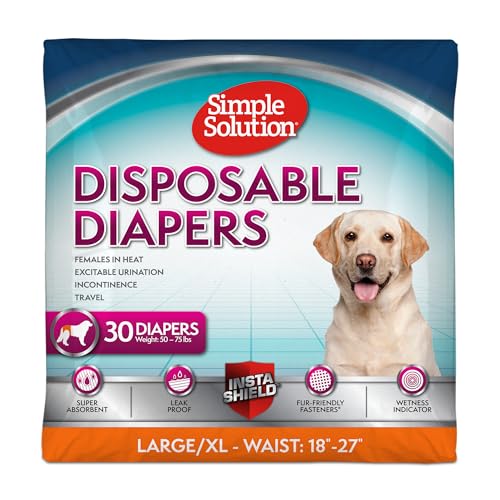
Dog Nappies for Dogs on Heat
Everything you need to know about choosing, fitting, and using dog nappies to manage your dog's heat cycle with confidence — keeping your home clean and your dog comfortable.
When your female dog enters her heat cycle for the first time, it can be a confusing and messy experience for both of you. Bleeding, discharge, and the constant need to keep your home clean can feel overwhelming. This is where dog nappies — also known as dog diapers or heat pants — become an invaluable tool for any dog owner.
In this comprehensive guide, we will walk you through everything you need to know about dog nappies for dogs on heat. From understanding what they are and why they are beneficial, to choosing the right type, getting the perfect fit, and using them correctly, we have you covered. Whether you are a first-time dog owner or have been through several heat cycles, this guide will help you make informed decisions and keep your dog comfortable and your home clean.
What Are Dog Nappies?
Dog nappies, also commonly referred to as dog diapers, heat pants, or sanitary pants, are specially designed garments worn by female dogs during their estrus (heat) cycle. Their primary purpose is to absorb and contain the vaginal bleeding and discharge that occurs during this period.
Unlike human baby diapers, dog nappies are designed with a dog's unique anatomy in mind. They feature a hole or opening for the tail, adjustable straps or Velcro closures for a secure fit, and are shaped to accommodate a dog's body structure. Most dog nappies are either disposable or washable, and many are designed to hold a sanitary pad that can be replaced as needed.
The heat cycle in female dogs typically occurs every six to eight months and lasts for approximately two to four weeks. During this time, your dog may experience bleeding, swelling of the vulva, and behavioral changes. Dog nappies are an effective way to manage the physical aspects of this cycle without confining your dog to a crate or limiting her to areas that are easy to clean.
Did You Know?
The first heat cycle in female dogs usually occurs between six and twelve months of age, depending on the breed and size. Smaller breeds tend to go into heat earlier than larger breeds. Understanding your dog's heat cycle is essential for proper care and management.
Why Use Dog Nappies for Dogs on Heat?
Using dog nappies during your dog's heat cycle offers numerous benefits for both you and your dog. Here are the primary reasons why dog owners choose to use them:
- Keeps your home clean: The most obvious benefit is that nappies prevent blood stains on carpets, furniture, bedding, and floors. This saves you hours of cleaning and protects your valuable belongings.
- Reduces the risk of infection: A properly fitted nappy keeps your dog's genital area clean and dry, reducing the risk of bacterial infections that can occur when blood and discharge are left on the skin for extended periods.
- Prevents unwanted mating: While a nappy is not a foolproof method of birth control, it does provide a physical barrier that can help prevent accidental mating when your dog is most fertile.
- Provides comfort: Many dogs feel more comfortable and secure when wearing a nappy during their heat cycle. It keeps them clean and prevents the discomfort of blood drying on their fur.
- Allows freedom of movement: Unlike confining your dog to a crate or a small area, a nappy allows your dog to move freely around the house and enjoy her normal routine.
- Reduces stress for both of you: Knowing that your dog is not leaving a trail of blood around the house reduces your stress levels, and a relaxed owner means a relaxed dog.
It is important to note that while nappies are highly beneficial, they are not a substitute for proper supervision. A female dog in heat should never be left unsupervised with male dogs, even if she is wearing a nappy. The nappy is a management tool, not a birth control method.
Pro Tip: If you are not planning to breed your dog, consider spaying her after her first or second heat cycle. Spaying eliminates the heat cycle entirely, along with the associated mess and health risks. Consult your veterinarian to determine the best timing for spaying based on your dog's breed and health.
Types of Dog Nappies
Dog nappies come in several different types, each with its own advantages and disadvantages. Understanding the differences will help you choose the best option for your dog's needs and your lifestyle.
Disposable Dog Nappies
These are single-use nappies that are thrown away after each change. They are convenient, hygienic, and ideal for travel or for owners who prefer not to deal with laundry. They typically feature an absorbent core and adjustable closures. Best for short-term use or when convenience is the top priority.
Budget-FriendlyWashable Dog Nappies
Made from fabric materials like cotton or microfiber, these nappies can be washed and reused multiple times. They are more environmentally friendly and cost-effective in the long run. Most feature a waterproof outer layer and a pocket for inserting a sanitary pad. Best for long-term use and owners who prefer sustainability.
Mid-RangeDog Nappies with Pad Holders
These are washable nappies that come with a built-in holder for disposable or washable sanitary pads. The nappy itself serves as a reusable outer shell, while the pad provides the absorbency. This system allows you to change only the pad, reducing laundry. Best for heavy flow days and maximum absorbency.
PremiumFull-Body Suit Nappies
These are one-piece garments that cover the dog's entire torso and hindquarters. They provide maximum coverage and are ideal for dogs who tend to wriggle out of traditional nappies or for those who have heavy bleeding. They can be more restrictive but offer the most security. Best for escape artists and heavy flow.
High-EndBelly Bands (for Male Dogs)
While this guide focuses on female dogs in heat, it is worth noting that belly bands are the equivalent for male dogs. They are used for marking behavior, incontinence, or post-surgery recovery. They wrap around the belly and cover the penis. Best for male dogs with marking issues.
SpecializedReusable Pads for Nappies
These are the absorbent inserts that go inside washable nappies. They can be made of microfiber, bamboo, or hemp. They come in different absorbency levels, from light to heavy. Having a stash of reusable pads means you can change the pad frequently without washing the entire nappy each time. Best for economical and eco-friendly management.
Essential AccessoryComparison of Nappy Types
| Type | Absorbency | Convenience | Eco-Friendly | Best For |
|---|---|---|---|---|
| Disposable | Moderate | High | Low | Travel, short-term use |
| Washable | Moderate to High | Moderate | High | Long-term use, daily wear |
| With Pad Holder | High | High | High | Heavy flow, maximum protection |
| Full-Body Suit | High | Low | Moderate | Escape artists, overnight |
How to Choose the Right Dog Nappy
With so many options available, choosing the right dog nappy can feel overwhelming. Here are the key factors to consider when making your decision:
- Your dog's size and breed: Dog nappies come in a range of sizes, from extra-small for toy breeds to extra-large for giant breeds. Always measure your dog's waist accurately and consult the manufacturer's sizing chart. Breeds with longer bodies or shorter legs may require special sizing considerations.
- Your dog's activity level: If your dog is active and likes to run and play, choose a nappy that is secure and will not slip off. Full-body suits or nappies with adjustable straps are good options. If your dog is more sedentary, a standard nappy may suffice.
- The heaviness of the flow: Some dogs have light bleeding, while others have heavy flow. For heavy flow, choose a nappy with high absorbency or one that can accommodate thick pads. Washable nappies with pad holders are excellent for this purpose.
- Your lifestyle and preferences: If you travel frequently or prefer not to do laundry, disposable nappies may be the best choice. If you prefer a sustainable option and don't mind washing, washable nappies are ideal. Consider your daily routine and how much time you can dedicate to cleaning and maintenance.
- Your dog's comfort: The nappy should be comfortable for your dog to wear. Look for soft, breathable materials that won't irritate the skin. Avoid nappies with rough seams or tight elastic that can cause chafing. Your dog should be able to move, sit, lie down, and go to the bathroom (if you leave the nappy on during potty breaks) without discomfort.
- Ease of use: Consider how easy the nappy is to put on and take off. Velcro closures are generally easier and faster than snaps or buttons. If you have mobility issues or a wriggly dog, look for nappies with simple, quick-release closures.
- Durability and quality: If you choose washable nappies, invest in high-quality ones that will withstand repeated washing. Look for reinforced stitching, strong Velcro, and durable fabrics. Cheaper nappies may fall apart after a few washes and end up costing you more in the long run.
Important Consideration: Some dogs are escape artists and will try to remove their nappies. If your dog is determined to get out of her nappy, consider a full-body suit or a nappy with additional security features like locking closures or a snugger fit. You may also need to use a dog crate or a dog gate to confine her when you cannot supervise her directly.
Fitting and Sizing Guide
Getting the right fit is crucial for the effectiveness and comfort of your dog's nappy. A nappy that is too loose will leak and slip off, while one that is too tight will cause discomfort, restrict movement, and may cause skin irritation. Follow these steps to ensure a proper fit:
How to Measure Your Dog
- Gather your tools: You will need a soft measuring tape (or a piece of string and a ruler), a pen, and paper to record the measurements.
- Measure the waist: Measure the narrowest part of your dog's waist, which is typically just behind the rib cage and in front of the hind legs. Wrap the measuring tape snugly around the body, but not so tight that it compresses the fur or skin.
- Measure the length: For full-body suits or nappies that cover more area, measure from the base of the tail to the front of the hind legs. This measurement helps ensure the nappy covers the necessary area without being too long or too short.
- Measure the tail opening: If the nappy has a tail hole, measure the circumference of the base of your dog's tail to ensure the opening is the right size. Too small and it will be uncomfortable; too large and it may leak.
- Record and compare: Write down all measurements and compare them to the manufacturer's sizing chart. If your dog falls between two sizes, it is generally better to size up, especially if you plan to use thick pads. However, if the nappy is too loose, it may leak, so consider a size that offers adjustable closures.
Signs of a Good Fit
- The nappy stays in place when your dog walks, runs, and sits.
- You can fit two fingers comfortably between the nappy and your dog's body.
- The nappy does not leave red marks, indentations, or cause chafing.
- The tail opening is comfortable and does not pull on the tail.
- Your dog can urinate and defecate without the nappy getting in the way (if you leave it on during potty breaks).
- Your dog does not appear uncomfortable, itchy, or irritated by the nappy.
If your dog seems uncomfortable or is constantly trying to remove the nappy, it may be too tight or too loose. Adjust the closures or try a different size or style. Remember, every dog is different, and what works for one may not work for another. It may take some trial and error to find the perfect nappy for your dog.
How to Use and Change Dog Nappies
Using dog nappies correctly is essential for your dog's comfort and hygiene. Follow these steps for proper usage:
Putting on the Nappy
- Prepare the nappy: If you are using a washable nappy, insert a sanitary pad or absorbent liner into the designated pocket or holder. For disposable nappies, simply unfold them and prepare them for use.
- Position your dog: Have your dog stand on a non-slip surface. You may want to have a treat ready to reward her for staying still.
- Place the nappy: Slide the nappy under your dog's belly from behind, or position it over the hindquarters, depending on the style. Ensure the tail goes through the tail hole (if applicable).
- Secure the closures: Bring the front flaps over the back and secure them with Velcro, snaps, or buttons. Make sure the closures are snug but not tight. You should be able to fit two fingers between the nappy and your dog's body.
- Check the fit: Have your dog walk around and observe the nappy. It should stay in place and not shift or slip. Check for any gaps where leakage could occur.
Changing the Nappy
- Check the nappy frequently: During the heaviest days of the heat cycle, check the nappy every few hours. If it feels wet or heavy, it needs to be changed.
- Remove the nappy carefully: Unfasten the closures and gently slide the nappy off. Be careful not to get blood or discharge on your dog's fur or your hands.
- Clean your dog: Use pet-safe wipes or a damp cloth to gently clean your dog's genital area. This helps prevent infections and keeps her comfortable. Pat dry with a soft towel.
- Inspect the skin: Check for any signs of irritation, redness, or infection. If you notice anything unusual, consult your veterinarian.
- Apply a new nappy: Put on a fresh nappy, following the steps above. If using a washable nappy, make sure it is clean and dry before use.
- Dispose of or wash the used nappy: If disposable, wrap it in a plastic bag and dispose of it in the trash. If washable, rinse it in cold water to remove blood, then wash according to the manufacturer's instructions.
Pro Tip: Always have at least two or three nappies on hand so you can rotate them. This is especially important if you are using washable nappies, as they need time to dry after washing. Having multiple nappies ensures you are never caught without a clean one.
Alternatives to Dog Nappies
While dog nappies are the most popular solution for managing a dog's heat cycle, there are other alternatives you can consider. Some owners use a combination of methods to keep their homes clean and their dogs comfortable.
- Dog Pads: Placing dog pads or puppy pads in your dog's favorite resting spots can help catch blood and discharge. This is a good supplementary method but not a substitute for nappies when your dog is moving around.
- Dog Potties: If your dog is trained to use a dog potty or a designated indoor potty area, you can confine her to that area during her heat cycle. This contains the mess but limits her freedom.
- Dog Belly Bands: While designed for male dogs, some owners use belly bands for female dogs in heat. However, they are not as effective for females because they do not have a tail hole and may not stay in place.
- Old Towels and Blankets: Covering furniture and bedding with old towels or blankets can protect them from stains. This is a budget-friendly option but requires constant washing.
- Confinement to Easy-to-Clean Areas: Some owners confine their dogs to areas with hard flooring, such as the kitchen or bathroom, during the heat cycle. This makes cleanup easier but can be stressful for the dog.
- Spaying: If you are not planning to breed your dog, spaying is the most effective way to eliminate the heat cycle entirely. This is a permanent solution that also provides health benefits. Discuss with your veterinarian about when to spay your dog.
Ultimately, the best approach depends on your dog's temperament, your lifestyle, and your preferences. Many owners find that a combination of methods works best. For example, you might use nappies during the day and dog pads at night, or use nappies when your dog is out of her crate and dog pads when she is confined.
Common Mistakes to Avoid
To ensure your dog's health and comfort during her heat cycle, avoid these common mistakes:
- Leaving a soiled nappy on for too long. This can cause skin irritation, bacterial infections, and urinary tract infections. Change the nappy as soon as it becomes soiled, and check it frequently.
- Using a nappy that is too tight. A tight nappy restricts movement, causes chafing, and can lead to skin problems. Always ensure you can fit two fingers between the nappy and your dog's body.
- Using a nappy that is too loose. A loose nappy will slip off and leak, defeating its purpose. Choose a nappy that fits snugly but comfortably.
- Not cleaning your dog properly. Always clean your dog's genital area when changing the nappy. This prevents infections and keeps her comfortable.
- Leaving the nappy on 24/7. Your dog needs breaks from wearing the nappy to allow her skin to breathe. Let her go without the nappy for short periods when she is in a safe, easy-to-clean area.
- Relying on nappies for birth control. Nappies are not a foolproof method of preventing pregnancy. Never leave your dog unsupervised with a male dog, even if she is wearing a nappy.
- Ignoring signs of infection. If you notice redness, swelling, discharge with a foul odor, or excessive licking, consult your veterinarian. These can be signs of an infection that requires treatment.
- Using human diapers without modification. Human baby diapers are not designed for dogs and can cause discomfort, leaks, and skin issues. Use dog-specific nappies for the best results.
- Not having enough nappies. Always have at least two to three nappies on hand so you are never caught without a clean one. This is especially important if you are using washable nappies.
- Forgetting about potty breaks. If you leave the nappy on during potty breaks, make sure it is positioned so your dog can urinate and defecate without soiling the nappy. Some owners prefer to remove the nappy during potty breaks to avoid this issue.
Frequently Asked Questions
Final Thoughts
Managing a dog in heat does not have to be a stressful or messy experience. With the right dog nappies, you can keep your home clean, your dog comfortable, and your sanity intact. Remember to choose a nappy that fits well, change it frequently, and always clean your dog's genital area to prevent infections. If you are not planning to breed your dog, consider spaying her to eliminate the heat cycle entirely — consult your veterinarian about the best timing. With a little preparation and the right supplies, you and your dog can navigate her heat cycle with ease. For more information on managing your dog's heat cycle, explore our related guides on how to tell if your dog is in heat and the four stages of a dog in heat.