Labrador Retriever Dog Food: The Complete Feeding Guide
Everything you need to know about feeding your Labrador — from puppy nutrition and adult portion control to senior joint support and choosing the right food for this famously food-motivated breed.
Labrador Retrievers are one of the most popular dog breeds in the world — and for good reason. They are loyal, intelligent, eager to please, and wonderful with families. But any Labrador owner knows one thing for certain: Labs love food. They love it with an enthusiasm that can easily lead to overfeeding and weight gain if you are not careful.
Choosing the right Labrador Retriever dog food is not just about filling a bowl. It is about matching nutrition to your dog's life stage, supporting their joint health, managing their weight, and understanding the unique nutritional challenges this breed faces. Whether you have a new puppy, an energetic adult, or a gentle senior, this guide will help you make informed feeding decisions.
Why Labradors Need Special Feeding Attention
Labradors are not just any dog when it comes to food. Research has shown that many Labradors carry a genetic mutation affecting the POMC gene, which plays a role in appetite regulation. In simple terms, many Labs genuinely feel hungry more often than other breeds. This is not greed — it is biology. Combined with their food-motivated nature and love of treats, this makes portion control absolutely essential [citation:1][citation:11].
Beyond appetite, Labradors are a large breed prone to specific health concerns that nutrition can influence. Hip and elbow dysplasia, osteoarthritis, and obesity are all common in the breed. The right food — with controlled calories and joint-supporting nutrients — can help manage these risks throughout your dog's life [citation:13][citation:16].
The Labrador Paradox: Labs are notoriously enthusiastic eaters, which makes them easy to train with treats but also easy to overfeed. A Labrador who appears "starving" is often simply exhibiting normal breed behavior, not genuine hunger. Stick to measured portions and use body condition scoring to guide adjustments.
Labrador Puppy Food & Feeding
Labrador puppies grow rapidly in their first year, and proper nutrition during this period sets the foundation for a lifetime of good health. However, growth must be controlled. Large-breed puppies that grow too quickly are at higher risk of developing joint problems later in life [citation:2][citation:13].
Feeding Schedule by Age
- 8–12 weeks: Four small meals daily. Establish a consistent routine from day one.
- 3–6 months: Transition to three meals daily as growth accelerates. Monitor body condition every few weeks.
- 6–12 months: Move toward two meals daily as growth slows and muscle development increases.
- 12–18 months: Continue puppy food until fully grown, especially for larger Labs. Some vets recommend staying on large-breed puppy formula until 15–18 months.
What to Look For in Puppy Food
- Large-breed puppy formula: Specifically designed with controlled calcium and phosphorus levels for healthy bone development.
- DHA: Supports brain and eye development during the critical growth period.
- Quality protein: Named meat sources like chicken or fish as the first ingredient for muscle growth.
- Controlled calories: Prevents excessive weight gain during growth.
- Prebiotics and fiber: Supports digestive health, which is especially important during food transitions.
Puppy Feeding Tip: Labrador puppies will often act hungry even when they are receiving adequate food. Do not interpret begging as a sign that you need to increase portions. Follow the feeding guide on your chosen food, assess body condition regularly, and consult your vet if you are unsure. Overfeeding a growing Labrador puppy is more harmful than underfeeding slightly.
If you are bringing home a new Labrador puppy, our puppy food guide covers additional considerations for choosing the right nutrition during this critical stage. You may also want to review our large breed puppy food for sensitive stomachs guide if your puppy has a delicate digestive system.
Adult Labrador Nutrition
Once your Labrador reaches adulthood — typically around 15 to 24 months for this breed — their nutritional needs shift from growth to maintenance. The goal is to preserve lean muscle, maintain a healthy weight, and support joint health for the long term [citation:2].
Key Nutritional Priorities for Adult Labs
- Controlled calories: Adult Labradors need enough energy for their activity level without excess. Most adult Labs do well on a food with moderate fat content and high-quality protein. Active working Labs may need more calories, while couch potatoes need less.
- High-quality protein: Maintains muscle mass and supports recovery from exercise. Look for named animal proteins as the primary ingredient.
- Joint support nutrients: Glucosamine, chondroitin, and omega-3 fatty acids (especially from fish oil) help protect joints that carry this large breed's weight [citation:13][citation:16].
- Fiber for satiety: Ingredients like beet pulp, pumpkin, and whole grains help Labradors feel full between meals, which is important for this food-motivated breed.
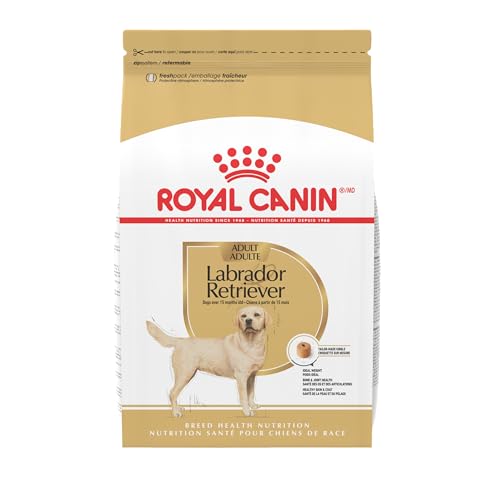
- Appropriate kibble size: Some breed-specific formulas feature larger or specially shaped kibble to slow eating and encourage chewing, which can help with digestion and portion control [citation:9].
For adult Labradors with specific dietary needs, our guides on dry dog food for large dogs with sensitive stomachs and limited ingredient dog food for skin allergies may be helpful if your Lab has sensitivities.
Senior Labrador Feeding
Labradors are generally considered seniors around age 7, though larger individuals may show signs of aging earlier. As metabolism slows and activity levels decrease, senior Labs need fewer calories but continued support for joint health, muscle maintenance, and digestive function [citation:4].
Senior Nutrition Priorities
- Reduced calories: Prevents weight gain as activity decreases.
- High-quality protein: Helps maintain muscle mass, which naturally declines with age.
- Enhanced joint support: Higher levels of glucosamine, chondroitin, and omega-3s for aging joints.
- Easily digestible ingredients: Senior digestive systems can be more sensitive.
- Antioxidants: Vitamins E and C support immune function and cognitive health.
When to Switch to Senior Food
There is no exact age that applies to every Labrador. Watch for signs that your dog is slowing down: less interest in long walks, stiffness after rest, weight gain despite normal feeding, or changes in appetite. These are signals to discuss senior nutrition with your vet.
Some senior Labs do well on a senior-specific formula, while others may need a weight management diet or a therapeutic joint-support formula. Your veterinarian can help you decide based on your dog's individual health status.
For senior Labs with specific health concerns, see our recommendations for canned food for senior dogs with heart conditions and wet food for senior dogs with kidney problems.
Types of Dog Food for Labradors
Labradors can thrive on different types of food as long as the diet is complete and balanced. The best choice depends on your budget, lifestyle, and your dog's individual preferences and needs.
Dry Kibble
The most convenient and cost-effective option for most Labrador owners. Modern high-quality kibble provides complete nutrition with the added benefit of dental friction. Look for large-breed formulas with controlled calories and joint support. Some breed-specific kibbles are designed to slow fast eaters.
Mid-range to premiumWet/Canned Food
Higher moisture content and more palatable aroma, making it useful for picky eaters or senior Labs with reduced appetite. Can be fed alone or mixed with kibble. More expensive per calorie than dry food and requires refrigeration after opening. Great for adding hydration.
Mid-range to premiumFresh/Refrigerated
Human-grade ingredients, gently cooked and refrigerated or frozen. Excellent palatability and portion control. Often favored by owners who want recognizable ingredients. Requires freezer space and costs more than kibble, but precise portions make weight management easier.
Premium to luxuryRaw Diet
Some owners choose raw feeding for their Labs. While some dogs do well on carefully balanced raw diets, this approach requires significant research and veterinary guidance to ensure nutritional completeness. Bacterial contamination is a concern, especially in households with children or immunocompromised individuals.
PremiumFor a deeper comparison of dry food options, explore our dry dog food guide. If you are considering wet food for your Lab, our wet dog food guide covers what to look for in canned formulas.
Portion Control & Weight Management
Weight management is arguably the single most important nutritional issue for Labrador Retrievers. Studies consistently show that lean Labs live longer, healthier lives with fewer joint problems than overweight Labs. Yet obesity is incredibly common in the breed [citation:1][citation:3].
How to Assess Body Condition
Body Condition Score (BCS) is a hands-on assessment, not just a number on a scale. For a Labrador at ideal weight:
- You should be able to feel the ribs easily with light pressure, without seeing them prominently.
- From above, there should be a visible waist behind the rib cage.
- From the side, the belly should tuck up gently behind the ribs.
- The spine should be palpable but not prominent.
If you cannot feel your Lab's ribs, or if there is no visible waist, your dog is likely carrying excess weight. Even a few extra pounds on a Labrador can increase stress on joints and raise the risk of other health issues [citation:3][citation:13].
Portion Control Strategies for Food-Motivated Labs:
• Use a measuring cup or kitchen scale every time you feed — eyeballing portions leads to overfeeding over time.
• Account for treats in your dog's daily calorie intake. Treats should make up no more than 10% of daily calories.
• Use a slow feeder bowl or puzzle feeder to extend mealtime and provide mental stimulation.
• Avoid free-feeding. Measure meals and stick to a schedule.
• If your Lab is still acting hungry after meals, add low-calorie bulk like green beans (plain, no salt) or increase fiber-rich vegetables.
For dogs that need to lose weight, our guide on dry dog food to help dogs lose weight provides specific recommendations. If your Lab has food allergies contributing to weight or skin issues, see our article on what to feed a dog with food allergies.
Foods to Avoid
Labradors are notorious scavengers. Their love of food means they will happily eat things that are dangerous for them. Keep these items securely out of reach:
- Chocolate: Contains theobromine, which is toxic to dogs. Dark chocolate and baking chocolate are especially dangerous.
- Grapes and raisins: Can cause kidney failure in dogs. Even small amounts can be harmful to some individuals.
- Onions, garlic, and chives: Damage red blood cells and can cause anemia.
- Xylitol: An artificial sweetener found in sugar-free gum, some peanut butters, and baked goods. Causes dangerous insulin release and liver failure.
- Cooked bones: Splinter easily and can cause internal injuries or blockages.
- High-fat table scraps: Can trigger pancreatitis, a painful and serious condition. Labradors are already prone to weight gain without added fat.
- Macadamia nuts and avocados: Toxic to dogs in different ways — macadamias cause neurological symptoms, avocados contain persin.
Training Treat Strategy: Because Labradors are so food-motivated, treats are a powerful training tool. But they add up quickly. Break treats into small pieces, use part of your dog's regular kibble as training rewards, or choose low-calorie training treats. A single medium-sized biscuit can represent a significant portion of a small Lab's daily calories.
Frequently Asked Questions
The Bottom Line for Feeding Your Labrador
Labradors are wonderful dogs who deserve the best nutrition you can provide. Focus on controlled portions, high-quality ingredients, and life-stage appropriate formulas. Keep your Lab lean — you should be able to feel those ribs. Support their joints with the right nutrients. And remember that your veterinarian is your best partner in tailoring a feeding plan to your individual dog's needs. A well-fed Labrador is a healthy Labrador, ready for a long life of retrieving, swimming, and being your best friend.