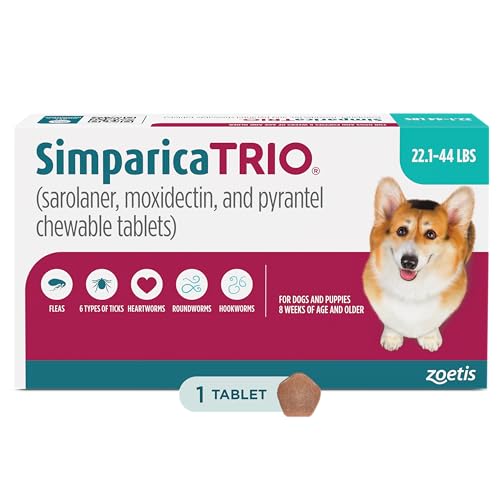
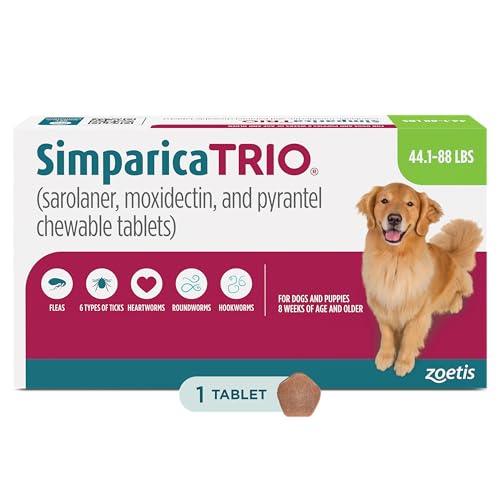
Flea, Tick & Heartworm Prevention for Dogs: The Chewable Guide
Chewable preventives are the simplest way to protect your dog from three serious parasite threats — but choosing the right one requires understanding what each product actually covers.
If you have ever tried to keep a squirming dog still for a topical treatment, you already understand why chewable parasite preventives have become the default choice for millions of dog owners. There is no greasy spot on the neck, no waiting period before swimming or bathing, no risk of transferring medication to children who pet the dog, and no wrestling match at the end of the month. For most dogs, a flavored chew is simply easier — and easier means more consistent, which is what actually protects your dog.
But convenience alone should not drive your decision. Fleas, ticks, and heartworms are three very different parasites with three different life cycles, and not every chewable covers all three. Some products are flea-only, some combine flea and tick control, and others add heartworm prevention. Choosing the wrong one leaves a gap in protection that can cost your dog their health and cost you far more in treatment than prevention ever would have.
This guide walks you through exactly what chewable preventives do, how to compare them, which safety considerations matter most for your dog's age and breed, and how to build a dosing routine that does not break down. Whether you are switching from topicals, adding a new dog to the household, or simply want to confirm that your current product is doing what you think it is, the information below will help you decide with confidence.
Why Chewable Prevention Has Become the Standard
Topical spot-on treatments still have their place, but chewables have steadily gained ground for practical reasons that matter in real households.
- No application barrier. Topicals require parting the fur, applying to the skin, and keeping the dog from licking the site for hours. Chewables eliminate all of that.
- Bathing and swimming are unrestricted. A topical's efficacy can be reduced by shampooing or swimming soon after application. A chewable is already absorbed, so water activities are unaffected.
- No residue transfer risk. Topical residue can transfer to furniture, clothing, and the hands of children who pet the dog. A chewable works internally, so there is nothing on the coat.
- Precise, consistent dosing. Each chew is formulated for a weight range, and because the dog consumes the entire dose, you know exactly how much medication was delivered.
- Easier for multi-dog households. You can give each dog their own chew individually, without worrying about one dog licking the treated spot off another.
The consistency advantage: The single biggest reason parasite prevention fails is a missed dose. Products that are easy to administer get given on time. If switching to a chewable means you stop skipping months, that switch is genuinely protective — even if the active ingredient is similar to what you were using before.
The Three Threats: Fleas, Ticks, and Heartworms
Understanding what each parasite does to your dog explains why combination products exist and why skipping one category is a real risk rather than a minor omission.
Fleas
Fleas are the most common external parasite of dogs and far more than an itch. A flea infestation causes flea allergy dermatitis — an intensely itchy reaction to flea saliva that leads to hair loss, skin infections, and chronic discomfort. Fleas also carry tapeworms and can transmit Bartonella bacteria. Because a single female flea can lay dozens of eggs per day, and those eggs fall off into your carpet, bedding, and sofa, a small visible flea problem usually represents a much larger environmental infestation. Chewable flea products break the reproductive cycle by killing fleas before they can lay viable eggs.
Ticks
Ticks are the parasite category most often underestimated by owners, because a tick bite is usually painless and easy to miss. The real danger is disease transmission: ticks carry Lyme disease, ehrlichiosis, anaplasmosis, Rocky Mountain spotted fever, and babesiosis, among others. Unlike fleas, ticks do not necessarily cause itching, so an infected tick can feed unnoticed for days. Tick-borne diseases can cause lameness, fever, joint pain, anemia, and in serious cases organ damage. Chewable tick products kill ticks after they attach and begin feeding, which interrupts the transmission window before most diseases are passed on — but speed matters, which is why tick coverage is worth prioritizing if you live in or travel to tick-endemic regions.
Heartworms
Heartworm disease is the most serious of the three because it is potentially fatal and expensive to treat. Heartworms are transmitted by mosquitoes: a mosquito bites an infected animal, then bites your dog, depositing microscopic larvae that migrate through the body and mature into foot-long worms living in the heart and pulmonary arteries. Over months to years, this causes heart failure, lung disease, and organ damage. Heartworm treatment in dogs is not a simple pill — it involves a series of injections, strict exercise restriction, and close veterinary monitoring, and the disease can leave permanent damage even after the worms are gone. Prevention, by contrast, is a monthly chew that costs a fraction of treatment and carries minimal risk. You can learn more about the disease itself in our guide to heart disease in dogs.
Critical timing point: Heartworm preventives do not kill adult worms already living in your dog's heart. They work by killing the immature larval stage before it matures. This is why most veterinarians require a negative heartworm test before starting or continuing prevention — giving a preventive to a heartworm-positive dog can cause a dangerous reaction as large numbers of larvae die at once. Never start a heartworm chewable without confirming your dog's status with your vet.
Types of Chewable Parasite Prevention
Chewable products fall into three broad coverage categories. Understanding the categories helps you read labels correctly, because marketing names can be misleading.
Flea-Only Chewables
These target fleas and nothing else. They are useful for dogs already on a separate heartworm preventive and living in low-tick areas. Speed of flea kill varies by active ingredient — some start killing within hours, others take longer. Not suitable as standalone protection in tick country.
Focused protectionFlea + Tick Chewables
The most common combination category. These cover the two external parasites most likely to cause visible problems and disease. Tick coverage is the key differentiator between products — check which tick species are listed, because some products cover only a subset.
External parasite coverageFlea + Tick + Heartworm Chewables
All-in-one monthly protection against all three major threats. The simplest routine for most owners and the hardest to get wrong. Some formulations also add intestinal worm coverage, making them a true broad-spectrum option. Usually mid-range to premium in cost.
Broad-spectrum, premium tierHeartworm-Only Chewables
A monthly chew covering only heartworm. Often paired with a separate flea and tick product. Useful for dogs that cannot tolerate combination products or for owners who prefer to customize each category. Requires two separate dosing routines.
Entry-level, single targetIf you are evaluating products in the flea-only category and want to understand what is available without a veterinary visit, our overview of flea and tick medicine for dogs without a vet prescription covers the over-the-counter landscape. For owners specifically focused on fast flea knockdown, there is also a detailed breakdown of the flea pill for dogs that kills fleas instantly.
Coverage Comparison at a Glance
Use this table to compare the three main categories side by side. Note that individual products within each category vary — always read the specific label for the exact parasite list.
| Category | Fleas | Ticks | Heartworm | Intestinal Worms | Dosing Frequency |
|---|---|---|---|---|---|
| Flea-only chew | Yes | No | No | No | Monthly |
| Flea + tick chew | Yes | Yes (species varies) | No | No | Monthly or 3-monthly |
| Flea + tick + heartworm chew | Yes | Yes (species varies) | Yes | Some formulations | Monthly |
| Heartworm-only chew | No | No | Yes | No | Monthly |
If your goal is a single product that covers all three threats, look for a chew labeled explicitly for flea, tick, and heartworm prevention. Our dedicated page on flea, tick, and heartworm prevention for dogs chewable goes deeper into specific formulation differences within that category.
How to Choose the Right Chew for Your Dog
There is no single best product for every dog. The right choice depends on five factors that you and your veterinarian should weigh together.
- Your local parasite risk. Heartworm is present nationwide but concentrated in warmer, wetter regions. Tick pressure varies enormously by geography — a dog in the Northeast faces different risks than a dog in the desert Southwest. Your vet knows the local epidemiology and can tell you which threats actually apply to your dog.
- Your dog's lifestyle. A dog that hikes in wooded areas, swims in ponds, or frequents dog parks has higher exposure than a dog that walks the same suburban block twice a day. Travel also matters — a dog that vacations in tick country needs tick coverage even if home is low-risk.
- Age and weight. Every chewable has a minimum age and weight threshold printed on the label. Puppies below those thresholds cannot safely use the product. Weight ranges are precise — do not guess. Our puppy guide covers the vaccination and parasite-prevention timeline for young dogs in more detail.
- Breed-specific sensitivities. Some herding breeds — Collies, Australian Shepherds, Shetland Sheepdogs, and related breeds — carry the MDR1 gene mutation, which affects how they process certain drug classes. This does not mean they cannot use chewable preventives, but it does mean the choice of active ingredient matters. Always disclose your dog's breed (or suspected breed mix) to your veterinarian.
- Existing health conditions and medications. Dogs with liver disease, seizure disorders, or those taking multiple medications need a veterinary review before starting any new preventive. Drug interactions are uncommon but real.
Practical tip: If your dog is a picky eater, ask your vet for a product sample before committing to a full box. Chewables come in different flavors and textures, and a dog who refuses the chew turns a convenience product into a daily battle. Some chews can be crumbled into food, but check the label first — some must be swallowed whole to ensure full absorption.
If your dog has sensitive skin and you are weighing chewables against topicals, our guide to the best flea and tick treatment for dogs with sensitive skin compares the categories with skin sensitivity in mind. For a broader ranking of options across all formats, see the safest and most effective flea and tick treatment for dogs.
Safety and Side Effects
Chewable preventives have a strong safety record when used as labeled, but "safe" is not the same as "risk-free." Understanding the real side-effect profile helps you respond appropriately instead of panicking — or ignoring something important.
Common, Mild Reactions
Most dogs experience no side effects at all. When reactions do occur, they are typically mild and short-lived: loose stool, mild vomiting, decreased appetite, or lethargy lasting less than 24 hours. These are often related to the flavoring or to giving the chew on an empty stomach. Giving the chew with a small meal frequently resolves mild GI upset. Contact your vet if symptoms persist beyond a day or worsen.
Less Common but Serious Reactions
Rarely, dogs experience neurological signs such as tremors, wobbliness, or seizures, or a hypersensitivity reaction with facial swelling, hives, or difficulty breathing. These require immediate veterinary attention. Certain active ingredients are more associated with neurological effects than others, and dogs with a pre-existing seizure history should be prescribed with care.
Do not give dog chewables to cats. Some active ingredients that are safe for dogs — particularly certain pyrethroids used in some flea and tick products — are highly toxic to cats. Never share medication between species, and store dog chews where cats cannot access them. If a cat accidentally ingests a dog product, contact an emergency veterinary clinic immediately.
Puppies, Pregnancy, and Nursing
Minimum age and weight requirements exist for a reason. Very young puppies lack the metabolic maturity to process some medications safely. Pregnant and nursing dogs are frequently excluded from product labeling because the products have not been tested in those populations. If your dog is pregnant or nursing, your veterinarian can recommend an appropriate alternative based on her specific situation.
Dosing Schedules and What to Do About Missed Doses
The effectiveness of any preventive depends on maintaining protective drug levels in the body. For monthly products, that means giving the chew on roughly the same date each month. For three-monthly products, the interval is wider but the same principle applies.
Building a Routine That Holds Up
- Anchor the dose to an existing habit. Give the chew on the same day you pay rent, take out the recycling, or do another fixed monthly task. Habits stick better than dates.
- Set a phone reminder with a two-day lead. A reminder on the day itself is easy to dismiss. A reminder two days early gives you flexibility to act.
- Keep a simple log. A note on the fridge or a shared phone calendar listing the date and product for each dog prevents the "did I already give it?" uncertainty that leads to double-dosing.
- Refill before you run out. The most common missed dose is the one that happens because the box was empty and the refill had not arrived. Order when you open the last chew.
If You Miss a Dose
For flea and tick chewables, give the missed dose as soon as you remember, then resume the normal schedule — but do not give two doses back-to-back to "catch up," and check the product label for specific guidance on the acceptable window. For heartworm preventives, the timing question is more consequential: the label typically permits a small window of flexibility, but if more than a few weeks have passed, your veterinarian may recommend a heartworm test before resuming. This is not because the product is dangerous on its own, but because a gap in protection creates a window during which your dog could have become infected, and giving a preventive to an infected dog carries risk. When in doubt, call your vet rather than guessing.
Year-round vs. seasonal: Heartworm prevention was once given seasonally in cold climates, but current guidance from veterinary organizations generally favors year-round prevention in most of the United States. Mosquitoes can survive indoors and in mild winters, and travel can introduce exposure at any time of year. Year-round dosing also removes the risk of forgetting to restart in spring. Ask your vet what is appropriate for your specific region and lifestyle.
Common Myths About Chewable Prevention
- Myth: "A chewable prevents fleas from ever getting on my dog." Truth: Chewables work systemically, which means fleas must bite before they die. You may still see an occasional flea. What the product does is stop reproduction, collapsing the population over time. A visible flea in the first weeks of treatment is not a sign of product failure.
- Myth: "If my dog never goes outside, they don't need prevention." Truth: Mosquitoes and fleas come indoors. Heartworm transmission happens via mosquitoes that enter homes. Indoor dogs absolutely can and do become infected.
- Myth: "Natural or herbal products are safer than conventional chewables." Truth: "Natural" is a marketing term, not a safety guarantee. Many herbal products lack efficacy data, and some botanical ingredients can be toxic to dogs in the wrong dose. Conventional preventives undergo regulatory review and post-market surveillance. Discuss any natural product with your vet before combining it with a prescription preventive.
- Myth: "My dog had one flea, so the product isn't working." Truth: As above, a single visible flea reflects the product's mechanism, not its failure. Persistent live fleas weeks into treatment usually indicate an environmental reservoir that needs addressing.
- Myth: "Once my dog tests negative for heartworm, I can stop prevention." Truth: A negative test means your dog is not currently infected. It does not mean exposure has ended. The test is a checkpoint, not a finish line.
If you are dealing with an active infestation rather than prevention, our guides on the best way to get rid of fleas on a dog and what to do when you cannot get rid of fleas on your dog walk through the environmental control steps that complement medication. For a single-flea false alarm, there is a short guide on finding one flea on your dog and no more.
Frequently Asked Questions
The Bottom Line
Chewable flea, tick, and heartworm preventives are the most convenient and consistently administered parasite protection available — but convenience is only valuable if the product actually covers the threats your dog faces. Start by identifying your local risk profile with your veterinarian, then choose a chew that matches that profile and your dog's age, weight, and health history. Set a dosing routine you will not forget, keep the refills coming, and do not skip the heartworm test before starting or restarting a heartworm preventive. That combination — the right product, given consistently, with proper veterinary oversight — is what genuine protection looks like.