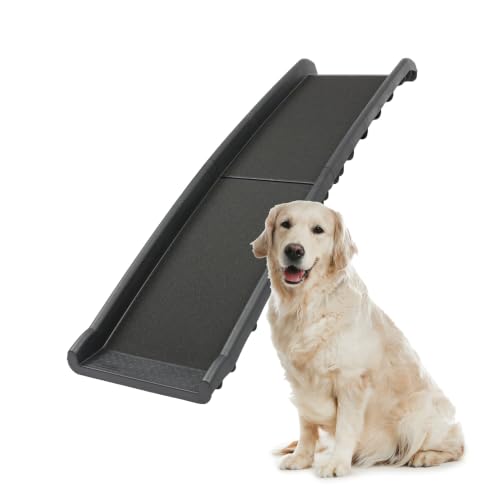
Dog Ramp Guide: Helping Your Dog Move Safely and Comfortably
Everything you need to know about dog ramps — why they matter for senior dogs, small breeds, and pets with joint issues, how to choose the right type, and what safety features to look for before you buy.
For many dogs, jumping on and off furniture, vehicles, or beds is a daily activity that quietly takes a toll on their joints. A dog ramp is one of the most overlooked yet genuinely useful pieces of equipment a pet owner can buy. It removes the need for repetitive jumping, reduces stress on hips, elbows, and spine, and gives aging or mobility-limited dogs back their independence.
If you are researching dog ramps, you are likely past the "should I get one?" stage and now want to understand which type fits your home, your car, and your dog's size and condition. This guide walks you through every decision point — from ramp style and material to slope, surface grip, and training — so you can choose confidently and avoid the common mistakes that lead to ramps sitting unused in a closet.
What Is a Dog Ramp?
A dog ramp is a sloped surface that lets a dog walk up or down between two different heights instead of jumping. Unlike dog steps, which use a series of short, flat platforms, a ramp provides a continuous incline. This makes ramps especially suitable for dogs who cannot comfortably lift their legs high enough for stairs, or for taller heights where many steps would be needed.
Ramps are commonly used for:
- Vehicles — helping dogs get in and out of cars, SUVs, and trucks without being lifted or jumping
- Furniture — access to beds, couches, and chairs without repetitive jumping
- Outdoor structures — porches, decks, and thresholds that are otherwise too high
- Rehabilitation — controlled movement for dogs recovering from surgery or injury
The core principle is simple: a gradual slope distributes weight more evenly and avoids the sudden impact of landing from a jump. For a dog with arthritis, hip dysplasia, or a history of tracheal collapse, that difference can meaningfully improve quality of life.
Who Benefits from a Dog Ramp?
Ramps are sometimes marketed as products for "old dogs," but the reality is broader. Several categories of dogs benefit — and in some cases, prevention is the whole point.
Senior Dogs
As dogs age, muscle mass declines and joints stiffen. A senior dog that once leapt onto the couch without thinking may now hesitate or yelp. A ramp gives them a low-impact route that preserves independence. Senior dogs also benefit from other mobility aids — see our guides on dog mats for joint-friendly resting surfaces and dog stretchers for emergencies.
Small Breeds
Small dogs like Chihuahuas and Yorkshire Terriers often jump proportionally higher relative to their body size. A couch or bed can be the equivalent of a human jumping from a second-story window. Ramps remove that risk. Owners of tiny breeds should also look at dog carriers for safe transport.
Dogs with Joint Conditions
Arthritis, hip dysplasia, patellar luxation, and cruciate ligament injuries all make jumping painful and risky. A ramp is often recommended by veterinarians as part of a joint-protection strategy. Pair it with dog vitamins and a joint-supportive diet.
Post-Surgery & Rehab
Dogs recovering from orthopedic surgery need controlled movement. A ramp allows them to move between levels without the jarring impact of a jump, which can compromise healing.
Large Dogs with Owners Who Can't Lift
A 70-pound dog cannot be safely lifted into a truck by most people. A ramp makes vehicle access possible without strain on the owner's back.
Puppies (with caution)
Puppies should not do repetitive high jumps, though they also should not be over-exercised on ramps. Use ramps for furniture access and supervise closely.
Prevention Matters: Many owners buy a ramp only after their dog shows pain or reluctance. Starting earlier — especially with breeds predisposed to joint issues like German Shepherds, Labradors, and Dachshunds — can delay or reduce the severity of problems.
Types of Dog Ramps
Ramps vary widely in form factor, and the right choice depends on where you plan to use it and how often you'll move it. Here are the main categories.
Folding Dog Ramps
The most popular style. Hinges in the middle or folds in half for storage and transport. Ideal for cars and SUVs. Look for a secure locking mechanism so the ramp doesn't collapse mid-use.
mid-range to premiumTelescoping Dog Ramps
Slides in and out to adjust length. Great for vehicles of different heights and for compact storage. Check that the locking pins are robust — this is where cheap models fail.
mid-rangeFixed (Non-Folding) Ramps
Permanent installations for beds, couches, or decks. Usually the most stable option because there are no hinges or joints. Not portable.
entry-level to premiumBed & Couch Ramps
Shorter ramps designed for furniture. Often upholstered to match home decor. Check the slope — a short ramp to a tall bed can be too steep for small dogs.
entry-level to mid-rangeCar & SUV Ramps
Longer ramps with non-slip surfaces and often a slight curve. Many include side rails. Consider whether you need one that fits inside the vehicle or stays in the garage.
mid-range to premiumModular / Configurable Ramps
Sectional ramps that can be assembled to different lengths. Useful for multi-purpose use but generally heavier and more expensive.
premium to luxuryIf your dog struggles specifically with car travel, also consider a dog car seat or dog seat belt for safety once inside. For home access, a dog gate can complement a ramp by restricting unsupervised access to stairs.
Materials & Construction
The material affects weight, durability, grip, and how the ramp looks in your home. There is no universally "best" material — only trade-offs.
- Aluminum: Lightweight, rust-resistant, and strong for its weight. The most common choice for folding and telescoping ramps. Can be slippery when wet unless paired with a textured surface or grip tape.
- Wood: Sturdy and aesthetically warm. Often used for fixed furniture ramps. Heavier and susceptible to moisture damage unless sealed. Check for non-slip strips.
- Plastic / Polymer: Lightweight and inexpensive but can become brittle in cold weather and may flex under heavy dogs. Best for small dogs and indoor use.
- Metal + Fabric: Some ramps use a metal frame with a tensioned fabric walking surface. Portable and lightweight but grip and durability vary widely.
Grip Is Everything: A ramp that slips or has a slick surface is worse than no ramp — the dog loses confidence and may refuse to use it. Look for rubberized surfaces, traction grooves, or high-friction carpet. If buying used, check the grip surface for wear.
Ramp vs. Steps vs. Stairs
Ramps are not the only option. Here is how they compare:
| Feature | Dog Ramp | Dog Steps |
|---|---|---|
| Best for | Dogs who can't lift legs high; taller heights | Dogs who can still step but shouldn't jump |
| Space needed | Long footprint (need length for gentle slope) | Compact footprint |
| Joint impact | Lower — continuous slope | Higher — each step is a small lift |
| Portability | Folding ramps are portable but bulky | Usually easier to move |
| Ideal for | Seniors, arthritic dogs, car access | Small dogs, minor height changes |
Safety Features to Look For
A ramp is only helpful if it is safe. These are the features that matter most:
- Gentle slope: The steeper the ramp, the harder it is for a dog to use confidently. As a rule of thumb, the ramp's length should be roughly 3–4 times the height it covers. A ramp to a tall SUV needs to be longer than a ramp to a low couch.
- Non-slip surface: Rubberized treads, grip tape, or textured carpet. Avoid smooth plastic or bare metal.
- Side rails or raised edges: These prevent a dog from stepping off the side, which is especially important for senior dogs with poor depth perception or balance issues.
- Secure anchoring: The ramp should not slide when the dog steps on it. Look for rubber feet, straps, or hooks that attach to the vehicle or furniture.
- Weight capacity: Check the rated capacity against your dog's weight with a safety margin — a 60-pound dog on a ramp rated for 60 pounds is at the limit.
- Locking mechanism: For folding and telescoping ramps, a positive lock prevents mid-use collapse.
- Low entry lip: A ramp that starts with a tall lip is hard for a dog to step onto. A low-profile entry is easier.
Watch for the "confidence gap": Many dogs refuse a ramp not because of the slope but because it wobbles or looks unstable. A rigid, well-anchored ramp builds trust faster than any training technique. If your dog is anxious about new objects, our guide on dog calming products and separation anxiety support may help.
Buying Checklist
Before you buy, answer these questions. They will narrow your options quickly.
- What height will the ramp bridge? Measure from the ground to the surface your dog needs to reach (car floor, bed height, couch seat).
- How long can the ramp be? A longer ramp means a gentler slope but takes more space. Measure your available floor or driveway space.
- Where will it live? If it stays in one place, a fixed ramp is fine. If it moves between car and home, choose folding or telescoping.
- How heavy is your dog? Match capacity with margin. Large dogs need sturdier frames and wider surfaces.
- Does your dog have balance or vision issues? Prioritize side rails and a wide walking surface.
- Will it be used outdoors? Choose rust-resistant materials and UV-stable surfaces.
- Will it be stored in a car? Check folded dimensions against your trunk space.
For other mobility and comfort products, see our recommendations for dog beds, cooling mattresses, and dog boots for traction and paw protection.
Placement & Usage Tips
Where and how you place the ramp matters as much as the ramp itself.
- Anchor it firmly. Use straps, hooks, or non-slip feet. The ramp should not move when your dog steps on it.
- Keep the path clear. Remove clutter around both ends so your dog has a straight approach and exit.
- Match the slope to the dog. If your dog hesitates, the slope may be too steep. Use a longer ramp or raise the lower end with a stable platform.
- Light it well. Senior dogs often have reduced vision. Ensure the ramp is well-lit, especially indoors.
- Use it consistently. Once your dog is trained, use the ramp every time rather than letting them jump occasionally. Consistency protects joints.
- Check weather conditions. Wet or icy ramps are dangerous. Dry the surface and consider indoor alternatives in bad weather.
If your dog has become reluctant to walk or move, the issue may be more than mobility — see our guide on dog diet and vitamins for overall health support, and consult your vet if symptoms persist.
Training Your Dog to Use a Ramp
Most dogs learn a ramp quickly with positive reinforcement. Here is a simple progression:
- Let them investigate. Place the ramp flat on the floor or at a very low angle. Let your dog sniff and walk on it without pressure.
- Reward any contact. Treat and praise when your dog puts a paw on the ramp.
- Lure with treats. Use a treat or favorite toy to guide your dog a few steps up the ramp. Reward generously.
- Increase height gradually. Only raise the ramp once your dog is confident at the current angle.
- Practice both directions. Going down is often scarier than going up. Practice descent with treats and a slow pace.
- Generalize. Practice in different locations and with the ramp at the real height before relying on it.
Never force it. Pushing or pulling a nervous dog onto a ramp builds fear and can cause injury. If your dog is fearful, slow down and use higher-value rewards. For dogs with broader anxiety, see our anxiety wraps and behavior modification techniques. If your dog shows aggression or extreme fear, consult a professional — our guide on when to see a behaviorist explains when to seek help.
Care & Maintenance
A well-maintained ramp lasts longer and stays safer.
- Inspect regularly. Check hinges, locks, and grip surfaces for wear. A loose hinge can collapse under weight.
- Clean the surface. Dirt and oils reduce grip. Wipe down with a mild cleaner and dry thoroughly.
- Store properly. Keep folding ramps dry and away from extreme heat, which can warp plastic components.
- Replace worn grip. If the non-slip surface is worn smooth, replace it or apply grip tape.
- Check weight capacity over time. If your dog's weight has increased, confirm the ramp is still within its rated limit.
Frequently Asked Questions
Final Thoughts
A dog ramp is a small investment that can make a real difference in your dog's comfort and mobility. Focus on a gentle slope, secure anchoring, and a non-slip surface — these three factors matter more than brand names. If you are also thinking about other mobility and safety products, explore our guides on dog harnesses and stopping leash pulling. For overall care, see our complete dog care guide.