
Labrador Retriever Dog Breed: Complete Care & Buying Guide
Everything you need to know about the Labrador Retriever — temperament, training, nutrition, health screening, exercise, grooming, and how to choose a healthy puppy from a responsible breeder.
The Labrador Retriever has held its place as one of the most popular dog breeds in the world for decades — and for good reason. This is a breed built on purpose: a working gundog from Newfoundland and the Scottish coast, bred to swim through cold water, retrieve game, and work closely alongside people. That history is written into everything a Labrador is today: eager to please, physically capable, deeply social, and endlessly food-motivated.
But popularity cuts both ways. Because Labradors are so common, they are also one of the most frequently poorly bred dogs, and a large share of the breed is overweight or obese. Buying a Labrador is not complicated; buying a healthy, well-bred Labrador requires knowing what to look for. This guide walks you through the temperament, care requirements, health screening, and buying decisions that separate a wonderful Labrador from a heartbreaking one.
Quick Verdict: The Labrador Retriever is an outstanding choice for active families, first-time owners who are committed to training, and anyone who wants a sociable, trainable, water-loving companion. It is a poor fit for households that cannot provide daily vigorous exercise or that expect a low-shedding, low-energy dog.
Breed Origins & History
The Labrador Retriever descends from the St. John's water dog, a hardy working dog used by fishermen on the island of Newfoundland. These dogs retrieved fish and nets from icy water and pulled lines — work that required a thick, water-resistant coat, webbed feet, a powerful swimming stroke, and a "soft mouth" that could carry an object without damaging it.
In the early nineteenth century, British sportsmen brought these dogs to England and Scotland, where they were refined into the modern Labrador Retriever. The breed was developed to retrieve waterfowl on land and in water, and it was recognized by the Kennel Club in the early 1900s. The Labrador's working heritage explains several breed behaviors that persist today: a love of water and retrieving, strong retrieving drive, high food motivation, and a genuine desire to cooperate with humans.
Today the breed performs a remarkable range of jobs — assistance and guide dog work, search and rescue, detection work, and therapy roles — a testament to its trainability, biddability, and stable temperament. If you want to understand any single Labrador behavior, remembering its retrieving-and-working ancestry is usually the best starting point.
Breed Profile at a Glance
Before you commit, it helps to see the breed's characteristics laid out. The table below summarizes the traits that matter most when deciding whether a Labrador fits your home and lifestyle.
| Attribute | Labrador Retriever |
|---|---|
| Breed Group | Sporting (Gundog) Group |
| Typical Weight | Males roughly 65–80 lb; females roughly 55–70 lb |
| Typical Height | Males roughly 22.5–24.5 in; females roughly 21.5–23.5 in at the shoulder |
| Coat Type | Short, dense double coat; water-resistant; yellow, black, or chocolate |
| Grooming Level | Moderate — daily brushing during seasonal coat blows |
| Exercise Needs | High — roughly 1–2 hours daily for adults |
| Trainability | Very high — food-motivated and eager to please |
| Friendliness | Very high with people and other dogs; generally poor guard dog |
| Average Lifespan | Around 10–12 years |
| Good With Children | Excellent, with supervision and training |
If you are still comparing breed options, our guide to large dog breeds puts the Labrador alongside other similar-sized companions, and our list of every dog breed is a useful starting point if you have not settled on a breed yet.
Temperament & Personality
The Labrador Retriever is famously one of the friendliest, most even-tempered breeds available. It is a genuinely social dog — not merely tolerant of people, but actively interested in them. Labs generally greet strangers with enthusiasm, get along well with other dogs, and tend to fit into busy households without the guarding instinct that complicates life with many other large breeds.
That friendliness is exactly why the breed makes a poor guard dog. A Labrador is far more likely to greet an intruder with a wagging tail than to protect the house. If home security is a priority, a Labrador is the wrong choice — but if you want a companion that is reliably safe around visitors, children, and other pets, few breeds match it.
Energy Level
High, especially during the first three years. Adult Labs need serious daily activity and settle best when they have a job to do.
HighTrainability
Excellent. Food motivation and desire to please make the Labrador one of the easiest large breeds to train — and one of the most likely to work for food rewards.
Very HighSociability
Very high with people and other animals. Labs generally dislike being alone and may develop separation-related distress if left for long periods.
Very HighMouthiness
Retrieving instinct can show up as chewing and carrying. Puppies need appropriate chew toys and guidance to redirect mouthing behavior.
ModerateVocalization
Relatively quiet for a large dog, but some Labs bark when bored, excited, or seeking attention.
Low to ModerateFood Drive
Notoriously strong. This makes training easy but weight management difficult — measured portions are non-negotiable.
Very HighOne personality detail that surprises many new owners: Labradors mature slowly. The exuberant, bouncy, "puppy-brained" adolescent stage can last until roughly two to three years of age. A large, heavy, energetic young Labrador can be genuinely difficult to manage without consistent training and enough exercise — which is why the breed is best suited to owners who can commit to both. Mental stimulation through puzzle toys and interactive dog toys helps a great deal during this period.
Pros and Cons of Labrador Retrievers
An honest breed guide should acknowledge both sides. Labradors are wonderful dogs, but they are not a low-effort choice.
Advantages
- Exceptionally friendly and patient with children and strangers
- Highly trainable and eager to work with their owner
- Strong retrieving drive makes fetch and swim games easy
- Generally sociable with other dogs and pets
- Adaptable to many living situations, including apartments with enough exercise
- Predictable temperament and widely available from reputable breeders
Drawbacks
- High exercise needs — an under-exercised Lab becomes destructive
- Strong food drive leads to obesity without portion control
- Heavy seasonal shedding from a dense double coat
- Slow to mature; adolescence can be demanding
- Predisposed to hip and elbow dysplasia and other hereditary conditions
- Prone to ear infections due to floppy ears and love of water
Choosing a Healthy Labrador Puppy
This is the most consequential decision you will make as a future Labrador owner. Because the breed is so popular, the market is flooded with poorly bred puppies — and the consequences show up years later as crippling joint disease, early eye problems, or temperament issues. The right breeder will make the process slower and more expensive than a casual listing; that is precisely the point.
Health Clearances to Ask For
Reputable Labrador breeders screen their breeding dogs before breeding them. Ask to see documentation for:
- Hip evaluation — typically an OFA or PennHIP score on both parents
- Elbow evaluation — OFA elbow clearance on both parents
- Eye examination — current CAER/OFA eye clearance from a veterinary ophthalmologist
- Exercise-induced collapse (EIC) DNA test
- Progressive retinal atrophy (PRA) DNA test
- Centronuclear myopathy (CNM) DNA test
If a breeder cannot provide these clearances for both parents, that is a serious red flag. Our guides on genetic testing for dog breeds and health guarantees for puppies explain what legitimate documentation looks like.
Questions to Ask the Breeder
A good breeder will welcome these questions and answer them without hesitation:
- Can I meet the mother, and see where the puppies are raised?
- What health clearances do both parents have, and can I see the certificates?
- How are the puppies socialized in the first eight weeks?
- What vaccinations and deworming have the puppies received?
- What is your contract and health guarantee, and what does it cover?
- Will you take the dog back if my circumstances change?
When you visit, check for a clean environment, confident and curious puppies, and a mother with a stable temperament. Avoid puppies that are fearful, lethargic, or kept isolated from household sounds and people. Our puppy visit checklist covers what to inspect on the day, and our questions to ask a dog breeder guide goes deeper into the interview process.
Buying Tip: Puppy prices vary widely by lineage, health clearances, and breeder reputation. Rather than shopping on price alone, compare breeders on health screening, contract terms, and long-term support. A cheaper puppy without health clearances frequently becomes the most expensive dog you ever own. See our puppy prices by breed overview for how the market typically segments, and read puppy mill vs reputable breeder before you start contacting sellers.
If you would rather adopt, Labradors and Labrador mixes are common in rescue. Our guide to looking for a rescue dog and our directory of local animal adoption shelters are good places to start. Adoption is a legitimate and often excellent route to a Labrador — just ask about the dog's known health history and temperament with children and other animals.
For a wider selection of listings and breeders, see our Labrador Retriever breeders page and our Labrador Retriever puppies guide. If you are still deciding, the broader large breed puppy food guidance will also matter once your puppy comes home.
Nutrition & Feeding
Labradors are genetically wired to be hungry. Research on the breed has identified a variant in the POMC gene that affects satiety signaling — which is a scientific way of saying many Labradors genuinely do not feel full the way other dogs do. This is not a behavioral flaw; it is biology, and it means portion control must be deliberate rather than intuitive.
The practical consequences are straightforward: measure every meal, count treats as part of the daily calorie total, and do not free-feed. Labradors are among the breeds most likely to be obese, and extra weight dramatically accelerates joint disease in a breed already prone to dysplasia.
Life-Stage Feeding
- Puppy phase: Feed a large-breed puppy formula, which is specifically balanced for controlled growth in large dogs. Labs need three to four small meals daily as young puppies, reducing to two meals by around six months. Large breed puppy food is formulated with appropriate calcium and calorie levels to support even, moderate growth rather than rapid growth that stresses joints.
- Adult phase: Two measured meals per day of a complete adult formula that meets AAFCO standards. Choose a food with a named animal protein as the first ingredient and adjust the portion to your dog's body condition, not the bag recommendation alone. If your dog is very active or works, a higher-calorie performance formula may be appropriate.
- Senior phase: Around age seven, transition to a senior formula with lower calories, added joint support, and higher-quality protein to maintain muscle. Weight gain is easier in older Labradors with reduced activity, so portions often need to shrink.
Because the Labrador is a large breed, choosing the right formula matters. Our guide to large breed dog food explains the nutritional differences, and if your puppy has a sensitive digestive system, see large breed puppy food for sensitive stomachs and large breed puppy food for sensitive stomach and diarrhea. You can also review our dedicated Labrador Retriever dog food recommendations for breed-specific feeding guidance.
Feeding Sanity Check: You should be able to feel your Labrador's ribs under a light layer of fat, see a waist from above, and see a belly tuck from the side. If you cannot feel the ribs, reduce portions gradually. Ask your vet to assess body condition score at every visit — this single metric predicts joint health and lifespan better than almost anything else you control.
Treats are part of training with a food-motivated breed, so budget them as calories rather than extras. Keep training treats small and use a portion of the daily ration as rewards when possible. For weight management, our dry dog food to help a dog lose weight guide explains how to reduce calories without reducing volume too abruptly.
Exercise & Activity Needs
A Labrador is a sporting dog with real physical needs. As a rough figure, adults need around one to two hours of activity per day, but the type of exercise matters as much as the duration. A slow walk around the block does not tire a Labrador; retrieving, swimming, running, and mental work do.
- Structured walks: At least two walks daily, ideally with sniffing time. Sniffing is mentally tiring in a way that pure distance is not.
- Retrieving games: The breed's instinct and primary joy. Fetch, Frisbee, and dummy retrieval satisfy the Labrador's drive better than almost anything else. Always avoid hard surfaces and repetitive jumping for young dogs.
- Swimming: Excellent low-impact conditioning for Labs, who are natural swimmers with water-resistant coats and webbed feet. Swimming is especially valuable for dogs with joint issues or in recovery from injury.
- Mental stimulation: Training sessions, puzzle feeders, snuffle mats, and scent games. Fifteen minutes of hard mental work tires many Labs as much as a much longer walk.
- Free running: In a secure area, off-leash running allows a natural gait. Ensure the space is genuinely secure — a Labrador following its nose can cover surprising distance.
Puppy exercise deserves special care. Large-breed puppies should not do repetitive high-impact jumping, long forced runs, or stair work while growth plates are open. Short, frequent, self-paced play is preferable to structured distance. Adult exercise can increase steadily as the dog matures. If you want help building a daily routine, our guide to dog exercise needs offers a framework you can adapt. A leash and a well-fitted harness make walks safer and more comfortable for a strong, enthusiastic dog.
Under-Exercise Warning Signs: Destructive chewing, digging, counter-surfing, barking for attention, and generally being unable to settle are classic signs that a Labrador needs more physical and mental work — not stricter punishment. Address the exercise gap first.
Training & Socialization
Training a Labrador is one of the genuine pleasures of owning the breed. Few large dogs are as responsive to positive reinforcement. The Labrador's combination of food motivation and desire to please means that reward-based training works quickly, and the breed is often used as a demonstration dog in training classes for exactly this reason.
Training Priorities for Labradors
- Early socialization: Expose your puppy to many people, sounds, surfaces, and friendly dogs during the critical socialization window in a positive, controlled way. Do this safely before the vaccination series is complete by carrying your puppy in public areas and hosting calm visitors at home.
- Loose-leash walking: A full-grown Labrador is strong. Teaching polite walking from the start prevents a lifetime of being pulled down the street. Reward the position you want and stop moving when the leash tightens.
- Recall: The most important safety command for a retrieving dog that will be off-leash near water and trails. Practice constantly, reward generously, and never punish a dog for coming to you.
- Impulse control: "Leave it," "wait," and "stay" are essential in a breed that will eat anything within reach. Practice around food and dropped items from an early age.
- Polite greeting: Labs are enthusiastic greeters. Teach a default sit when meeting people to prevent jumping on children and visitors.
Keep training sessions short, frequent, and upbeat. The Labrador learns fast but bores easily with repetition for its own sake — vary the location, difficulty, and rewards. Avoid punishment-based methods; they damage trust with a breed that is naturally cooperative, and they are unnecessary when the dog is so responsive to rewards. For training equipment, see our dog collars, dog harnesses, and dog toys guides to find gear that suits a strong, active large breed.
Adolescence is the training challenge for most owners. A one-year-old Labrador may look fully grown but still behaves like a puppy, testing boundaries and forgetting cues when excited. Stay consistent, keep reinforcing basics, and increase exercise rather than tightening control. If your dog develops anxiety-related behaviors during this period, our guides on dog calming products and behavior modification techniques may help. If problems escalate, when to see a behaviorist explains the right time to bring in professional help.
Health Issues & Prevention
The Labrador is a generally robust breed, but it has several well-documented hereditary conditions. Reputable breeding reduces risk; it does not eliminate it. Knowing what to watch for lets you catch problems early.
Hereditary and Breed-Associated Conditions
- Hip and elbow dysplasia: The most important hereditary conditions in the breed. Screening of both parents is essential. Keeping your Labrador lean and well-exercised is the single most effective way to reduce severity. Our dog vitamins overview covers joint-support supplements such as glucosamine that may help maintain comfort.
- Exercise-induced collapse (EIC): A genetic condition causing muscle weakness and collapse after intense exercise. DNA testing of breeding stock helps identify carriers.
- Progressive retinal atrophy (PRA): An inherited, progressive eye disease that can lead to blindness. DNA testing and ophthalmologist screening of breeding dogs are standard in responsible breeding programs.
- Hereditary cataracts: A clouding of the lens that affects vision. Screening by a veterinary ophthalmologist is part of the standard clearance battery.
- Centronuclear myopathy (CNM): A muscle disorder causing weakness and exercise intolerance. DNA testing available.
- Obesity: Not hereditary in the strict sense, but the breed's strong appetite drive makes it common. It worsens every joint and metabolic issue.
- Ear infections: A predictable consequence of floppy ears and a love of water. Regular cleaning and drying after swimming prevent most cases.
Preventive Care Routine
- Annual wellness exams: A yearly physical exam, weight and body condition assessment, dental check, and vaccination review. Ask your vet to screen for joint issues as your dog ages, and consider baseline bloodwork once your Lab enters middle age.
- Vaccinations: Core vaccines — rabies, distemper, parvovirus, adenovirus, and parainfluenza — on the schedule your vet recommends. Discuss non-core vaccines such as leptospirosis if your dog swims or hikes in areas where wildlife is present; see our guide to the leptospirosis vaccine for dogs for context.
- Parasite prevention: Year-round flea, tick, and heartworm prevention. Labradors are outdoors often and swim frequently, so reliable coverage matters. Our guide to the safest and most effective flea and tick treatment covers options and safety considerations.
- Dental care: Daily or near-daily brushing with dog-safe toothpaste, plus professional cleanings as your vet advises. Dental disease is common in large breeds and affects systemic health.
- Weight monitoring: Weigh your Labrador at every vet visit and track body condition. This is the highest-return health investment you can make.
If you are comparing breeds on health grounds, our healthiest dog breeds guide offers a useful benchmark for what a robust breed looks like and how screening changes outcomes.
Grooming & Coat Care
The Labrador's short coat misleads many new owners into thinking the breed is low-maintenance. It is not. A Labrador has a dense double coat — a soft insulating undercoat and a harsh, water-resistant outer coat — and it sheds year-round, with heavy seasonal coat blows in spring and fall.
Brushing Routine
- Brush two to three times weekly during most of the year to remove loose undercoat and distribute skin oils.
- During shedding seasons, brush daily with an undercoat rake and a slicker or curry brush. This is the difference between manageable shedding and hair everywhere.
- Never shave a Labrador. The double coat insulates against heat as well as cold, and shaving can permanently damage coat texture and leave the skin vulnerable to sunburn.
Bathing, Ears, Nails, and Teeth
- Bathing: Every two to three months is typical, and more often if your Lab swims frequently. Use a dog-specific shampoo — human shampoo disrupts the skin's acid mantle. See our dog shampoo guide for product selection.
- Ear cleaning: Weekly, or after every swim, with a dog-specific ear cleaner. Floppy ears trap moisture and create an ideal environment for infection. Never push anything deep into the ear canal.
- Nail trimming: Every two to four weeks. If you hear nails clicking on hard floors, they are too long. Long nails alter gait and stress the joints — which matters even more in a breed prone to joint disease. See our dog nail clippers guide.
- Dental care: Brush with dog toothpaste several times weekly, and ask your vet about professional cleanings. Our dog toothbrush guide covers technique and product options.
Grooming sessions are also a health check. Run your hands over your Labrador weekly, feeling for lumps, skin irritation, hot spots, and ear odor. Labradors are prone to skin fold irritation and ear problems, and early detection makes treatment far easier. A good dog brush and a dedicated dog dryer (helpful after swimming) make the routine much easier during shedding season.
If you live somewhere with harsh winters, a paw protection balm helps prevent cracked pads from ice and salt. And because Labradors love water and mud, keeping a dog bath setup ready saves your plumbing. A dog bed sized for a large breed will also last longer than a small-dog bed — see our guide to large pet beds for dogs.
Colour and Coat Variations
The Labrador comes in three recognized colours — black, yellow, and chocolate. Coat length and texture should be short, dense, and weather-resistant. There is no health advantage to any colour, though chocolate Labradors have a higher reported incidence of some skin conditions. A yellow Labrador can range from nearly white to a rich fox red; this is a matter of breeding lines and preference, not quality. The terms "silver" and "charcoal" Labrador are marketing labels for chocolate or black dogs with dilution genes and are not recognized breed colours — approach breeders advertising them with extra caution.
Is a Labrador Retriever Right for You?
Choose a Labrador if you can commit to daily vigorous exercise, consistent reward-based training, measured feeding, and regular veterinary care. The breed rewards that commitment with one of the most affectionate, capable, and joyful companions a family can have. If you are ready, start with our Labrador breed resources and choose a breeder who documents health clearances.
Explore Labrador Puppy ResourcesIf a Labrador is not quite right for your home, our medium-sized dogs that are good for families and medium-sized dogs that are good for apartments guides offer alternatives with lower exercise needs. For households concerned about shedding, our medium-sized dog breeds that don't shed a lot guide is a sensible starting point.
Frequently Asked Questions
The Labrador Retriever earns its popularity through temperament, trainability, and genuine sociability. Bring one into your home only if you can meet its exercise and training needs consistently — and choose your breeder on health clearances, not on convenience. Do that, and you get one of the most rewarding companions in the dog world. If you want to see how the Labrador compares with other large breeds before deciding, our large dog breeds guide is the natural next step.
Best Labrador Retriever Care Products We Recommend
⚠️ AFFILIATE DISCLOSURE: This website contains affiliate links. As an Amazon Associate, we earn from qualifying purchases. If you make a purchase through these links, we may receive a small commission at no additional cost to you. Read our full affiliate policy.
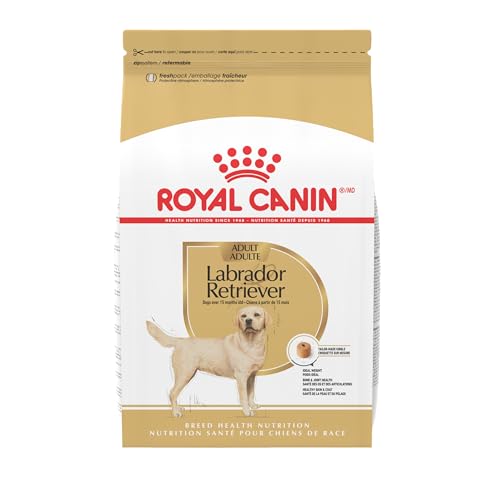
Royal Canin Labrador Retriever Adult Dry Dog Food, 30 lb Bag | Healthy Weight Management, Bone & Joint Support, For Adult Labrador Retrievers 15+ Mo, Specialized Kibble for Quick Eaters
Check price on Amazon
Black Labrador Retriever Dog Breed Socks Unisex Sock Daddy by E&S Pets
Check price on Amazon
ROYAL CANIN Labrador Retriever Adult Dry Dog Food, 5 lb Bag | Healthy Weight Management, Bone & Joint Support, For Adult Labrador Retrievers 15+ Mo, Specialized Kibble for Quick Eaters
Check price on Amazon
ROYAL CANIN Labrador Retriever 5+ Adult Dry Dog Food, 28 lb Bag | Kidney Support, Bone & Joint Support, Exclusive Antioxidants for Healthy Aging, For Adult Labrador Retrievers 5+ Years
Check price on Amazon
Jeefome Tough Dog Toys for Aggressive Chewers, Dog Chew Toys for Large Dogs | Alligator Dog Chew Toy for Medium & Large Breeds, Keep Them Busy, Reduce Boredom
Check price on Amazon
ROYAL CANIN Labrador Retriever Puppy Dry Dog Food, 30 lb Bag | Immune System Support, Bone & Joint Development, For Labrador Retriever Puppies, Specialized Donut Kibble
Check price on Amazon
Golden Retriever Labrador Dog Patch – Embroidered Dog Breed Iron On Patch for Jackets Bags Clothing
Check price on Amazon