Flea, Tick & Mosquito Prevention for Dogs
Protect your dog from fleas, ticks, and mosquito-borne disease with a complete, vet-informed prevention strategy — from chewables and topicals to collars, shampoos, and natural repellents.
Parasites are more than a nuisance — they are a genuine health threat that can affect your dog's comfort, organ function, and lifespan. Fleas cause relentless itching and can trigger severe allergic reactions. Ticks transmit diseases like Lyme, ehrlichiosis, and anaplasmosis. Mosquitoes carry heartworm, a condition that can be fatal if left untreated.
The good news: with the right prevention plan, nearly all of these threats are avoidable. This guide explains how each parasite operates, compares the main product categories on the market, and helps you choose a strategy that fits your dog's age, health history, and lifestyle. If you are looking for a broader overview of parasite control, our guide to flea and tick preventative for dogs covers the fundamentals, while this page goes deeper into product selection and species-specific concerns.
Why Parasite Prevention Matters
Many owners only think about parasites when they see a problem — a scratching dog, a tick attached after a hike, or a positive heartworm test. By then, the issue has already taken hold. Preventive products work by stopping infestations and infections before they start, which is both safer for your dog and far less expensive than treatment.
Consider what each parasite actually does to a dog's body:
- Fleas feed on blood and cause flea allergy dermatitis (FAD), the most common skin disease in dogs. A single flea can trigger intense itching in sensitive dogs, leading to hair loss, hot spots, and secondary infections.
- Ticks attach and feed for days, transmitting pathogens through their saliva. Tick-borne diseases can cause joint pain, fever, anemia, and in severe cases, kidney or neurological damage.
- Mosquitoes transmit heartworm larvae with a single bite. These larvae migrate to the heart and pulmonary arteries, where they grow into adult worms that can cause heart failure and lung disease.
- Fleas also carry tapeworms. When a dog swallows an infected flea during grooming, the tapeworm develops in the intestine — an often-overlooked consequence of flea infestation.
The Cost of Waiting: Treating a flea infestation requires treating the dog, the home, and the yard — often repeatedly. Treating heartworm disease involves months of restricted activity and painful injections, and carries its own risks. Treating tick-borne disease may require weeks of antibiotics and follow-up bloodwork. Prevention costs a fraction of any of these scenarios and protects your dog from suffering.
Fleas: Risks and Life Cycle
Understanding the flea life cycle is essential because it explains why treating the dog alone is rarely enough. Only about 5% of a flea infestation consists of adult fleas on the dog. The remaining 95% — eggs, larvae, and pupae — live in the environment: carpets, bedding, furniture, and shaded outdoor areas.
- Eggs: A single female flea can lay up to 50 eggs per day. Eggs fall off the dog wherever it rests and hatch within 1-10 days depending on temperature and humidity.
- Larvae: These worm-like stages avoid light and feed on organic debris, including dried blood from adult flea feces. They develop over 5-20 days.
- Pupae: The cocoon stage is the hardest to kill. Pupae can remain dormant for months, waiting for vibrations, warmth, and carbon dioxide to signal a host is nearby.
- Adults: Newly emerged fleas seek a host within seconds. They begin feeding and reproducing within 24 hours, restarting the cycle.
This is why prevention must be continuous. A product that kills adult fleas is important, but breaking the cycle requires either an insect growth regulator (IGR) that prevents eggs and larvae from developing, or consistent year-round use that eliminates adults before they can reproduce. For dogs dealing with an active infestation, our guide to the best thing to get rid of fleas on a dog walks through the treatment process step by step.
Signs Your Dog Has Fleas
- Persistent scratching, biting, or licking — especially around the tail base, lower back, and hindquarters
- Visible live fleas or dark specks (flea dirt) in the coat
- Red, irritated skin, scabs, or hot spots
- Hair loss, particularly on the back half of the body
- Restlessness or sleep disruption
- In severe infestations, pale gums from blood loss (especially in puppies)
Quick Test for Flea Dirt: Comb a small amount of debris from your dog's coat onto a white paper towel, then add a few drops of water. If the specks turn reddish-brown, that's digested blood — a confirmed sign of fleas.
Ticks and Tick-Borne Disease
Ticks are arachnids, not insects, and they are efficient disease vectors. Unlike fleas, ticks attach firmly to the skin and feed slowly over several days, which gives pathogens ample time to transfer into the dog's bloodstream.
Common Tick Species and What They Carry
- Deer tick (black-legged tick): Transmits Lyme disease and anaplasmosis. Common in wooded and grassy areas across many regions.
- American dog tick: Carries Rocky Mountain spotted fever and tularemia.
- Brown dog tick: Unique in that it can complete its entire life cycle indoors. Transmits ehrlichiosis and babesiosis.
- Lone star tick: Associated with ehrlichiosis and STARI (Southern tick-associated rash illness).
Signs of Tick-Borne Illness
- Lethargy and reluctance to move
- Fever and loss of appetite
- Joint swelling or lameness that shifts between legs
- Swollen lymph nodes
- Pale gums or unexplained bruising
- In Lyme disease, possible kidney involvement with vomiting and weight loss
Tick-borne diseases can take weeks to appear after a bite, and some dogs show no symptoms at all while the infection quietly progresses. This makes prevention far more practical than waiting for symptoms. If you live in or travel to a high-risk region, talk to your vet about annual tick-borne disease screening alongside your regular dog vitamins and wellness routine.
Proper Tick Removal
If you find an attached tick, remove it promptly and correctly:
- Use fine-tipped tweezers or a tick removal tool. Do not use your fingers.
- Grasp the tick as close to the skin as possible.
- Pull straight upward with steady, even pressure. Do not twist or jerk.
- Do not crush, burn, or apply petroleum jelly or alcohol to the tick — these methods can cause the tick to regurgitate into the wound.
- Clean the bite area and your hands with antiseptic.
- Save the tick in a sealed container or take a photo in case your vet needs to identify it.
Important: Never use a match, nail polish, or petroleum jelly to remove a tick. These home remedies increase the risk of disease transmission by irritating the tick and causing it to release saliva into the bloodstream.
Mosquitoes and Heartworm Risk
Mosquitoes are often overlooked in parasite prevention conversations, yet they transmit one of the most dangerous diseases a dog can face: heartworm. Heartworm disease is caused by Dirofilaria immitis, a parasitic worm that lives in the heart, lungs, and associated blood vessels of infected dogs.
Here is how transmission works. A mosquito bites an infected dog and picks up microscopic heartworm larvae (microfilariae) from the bloodstream. Over the next 10-14 days, the larvae develop inside the mosquito into an infectious stage. When that mosquito bites a new dog, the larvae enter the bloodstream and migrate to the heart over the following months, where they mature into adult worms that can grow up to 12 inches long.
Why Heartworm Prevention Is Non-Negotiable
- Heartworm disease is potentially fatal and treatment carries significant risks, including the danger of worm fragments blocking blood vessels.
- Treatment requires multiple injections, strict cage rest for weeks, and can cost far more than a lifetime of prevention.
- Most heartworm preventives also protect against intestinal parasites, adding value beyond mosquito-borne disease.
- Heartworm has been diagnosed in all 50 U.S. states, so geographic assumption of safety is unreliable.
Many combination products protect against all three threats — fleas, ticks, and heartworm — in a single monthly dose. Our guide to flea and tick and heartworm medicine for dogs explains how these multi-purpose products compare, and our page on flea, tick, and heartworm prevention for dogs chewable focuses specifically on oral options.
Additional Mosquito Control Measures
- Eliminate standing water around your home — buckets, plant saucers, gutters, and old tires are breeding grounds.
- Keep dogs indoors during peak mosquito activity, typically dawn and dusk.
- Use screens on windows and doors to reduce indoor mosquito presence.
- Consider mosquito-repellent sprays formulated specifically for dogs for extra protection during outdoor activities.
- Never apply human insect repellent containing DEET to a dog — it is toxic when ingested through grooming.
Types of Flea, Tick, and Mosquito Prevention
There is no single best product for every dog. Each category has advantages and limitations, and the right choice depends on your dog's health, lifestyle, and your own preferences about application and handling.
Oral Chewables & Tablets
Systemic medications absorbed into the bloodstream. Highly effective against fleas and, in some formulations, ticks. No residue on the coat, so they are safe around children and swimming. Require the dog to accept a pill or chew. Some formulas last 30 days, others up to 12 weeks.
Convenience-focusedTopical Spot-On Treatments
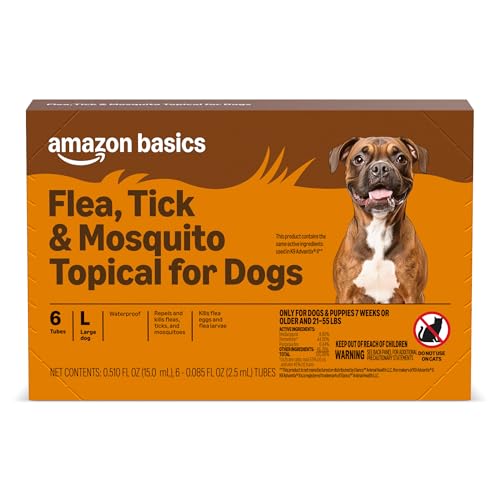
Liquid applied between the shoulder blades, where the dog cannot lick it off. Products spread through the oil glands of the skin. Effective against fleas and ticks, with some formulas also repelling mosquitoes. Requires waiting period before bathing or swimming.
Broad coverageFlea & Tick Collars
Slow-release collars that distribute active ingredients across the coat. Some last 6-8 months, making them cost-effective over time. Best suited for dogs with mild exposure risk or as a supplement to other methods. Not all collars are effective against ticks.
Long-lastingShampoos & Dips
Provide immediate knockdown of existing fleas but no lasting residual protection. Useful as part of an active infestation treatment plan or for dogs who cannot tolerate systemic medications. Require thorough application and careful rinsing.
Immediate actionSprays & Mists
Applied directly to the coat for quick coverage. Some provide residual protection for days to weeks. Useful for spot treatment and for dogs who dislike chewables. Must be reapplied more frequently than systemic options.
Flexible applicationCombination Products
Single products that address fleas, ticks, heartworm, and intestinal parasites together. Reduce the number of separate medications your dog receives. Often the most practical choice for owners who want comprehensive coverage with minimal effort.
All-in-onePrescription vs Over-the-Counter: Many effective flea and tick products require a veterinarian's prescription, while others are available over the counter. If cost or access to a vet is a concern, our guide to flea and tick medicine for dogs without vet prescription reviews the OTC options and their limitations. For chewable forms specifically, see flea and tick chewables for dogs without a vet prescription.
Chewables vs Topicals vs Collars: Which Is Right for Your Dog?
This comparison focuses on practical differences rather than brand names. The best product is the one that fits your dog's health profile and your ability to use it consistently.
| Factor | Oral Chewables | Topical Spot-Ons | Collars |
|---|---|---|---|
| Speed of flea kill | Rapid — often within hours | Moderate — spreads over 24 hours | Slow release — builds over days |
| Tick effectiveness | High in most formulas | High in most formulas | Variable; best for specific tick species |
| Mosquito repellency | Some formulas only | Some formulas repel mosquitoes | Generally not a primary feature |
| Water resistance | Excellent — no coat residue | Requires waiting period after application | Good — designed for daily wear |
| Duration | 1–3 months depending on product | 30 days typically | 6–8 months depending on product |
| Ideal for | Dogs who accept pills; multi-dog homes | Dogs with skin sensitivities; easy application | Long-term, low-maintenance coverage |
For dogs with allergies or sensitive skin, topicals and chewables may need careful selection. Our page on the best flea and tick treatment for dogs with sensitive skin reviews fragrance-free and hypoallergenic options.
Special Cases: Puppies, Seizures, and Sensitive Skin
Puppies
Young puppies are especially vulnerable to fleas and worms because their immune systems are still developing and they have less blood volume to lose. However, not all products are safe for puppies. Always check the label for the minimum age and weight.
- Some oral chewables are approved for puppies as young as 8 weeks and 2 pounds.
- Many topical products are labeled for puppies 6-8 weeks and older.
- Flea shampoos are often the safest starting point for very young puppies, but they offer no lasting protection.
- Never use a product intended for adult dogs on a puppy unless your veterinarian specifically approves it.
For more detailed guidance, see our guides on flea treatment for dogs puppies and flea and tick shampoo for puppies 6 weeks old. If your puppy is under 12 weeks, flea and tick shampoo for puppies under 12 weeks covers the safest approaches.
Dogs with Seizure Disorders
Some flea and tick medications, particularly those in the isoxazoline class (oral chewables), have been associated with neurological side effects in dogs with a history of seizures. If your dog has epilepsy or any seizure disorder, product selection requires veterinary guidance.
Veterinarians often recommend non-systemic options for these dogs, including topicals containing fipronil or similar ingredients, flea collars, and medicated shampoos. Our guide to flea and tick medicine for dogs with seizures explains which options are generally considered safer, and flea and tick prevention for dogs with seizures covers prevention strategies specifically. For those worried about specific ingredients, flea and tick medicine that doesn’t cause seizures reviews the available evidence.
Dogs with Sensitive Skin
Dogs with allergies, dermatitis, or sensitive skin may react to certain topical products. Signs of reaction include redness, itching, hair loss at the application site, or excessive licking. In these cases:
- Choose fragrance-free, alcohol-free topicals when possible.
- Oral chewables bypass skin contact entirely and may be better tolerated.
- Flea shampoos formulated for sensitive skin can address active infestations without harsh chemicals.
- Always test a small area before applying a full dose of any new product.
For more detail, see flea and tick shampoo for dogs with sensitive skin.
Natural and Holistic Prevention Options
Some owners prefer to minimize chemical exposure for their dogs. While natural options are generally less potent than veterinary-grade preventatives, they can play a supporting role in an integrated pest management plan.
- Diatomaceous earth (food grade): Can be sprinkled in the environment and lightly in the coat. It dehydrates fleas and larvae mechanically. Must be food grade, not pool grade. Avoid inhaling the dust.
- Essential oil repellents: Some oils like cedarwood, peppermint, and lemongrass have repellent properties. However, many essential oils are toxic to dogs if ingested, and cats are extremely sensitive. Never apply undiluted essential oils to a dog without veterinary guidance.
- Apple cider vinegar: Sometimes added to drinking water or diluted as a rinse. Evidence for effectiveness is anecdotal, and it should not replace proven prevention.
- Frequent grooming and inspection: Regular brushing and tick checks after outdoor time are low-tech but highly effective for early detection.
- Yard management: Keeping grass short, removing leaf litter, and discouraging wildlife reduces tick and flea populations around your home.
Important Reality Check: No natural repellent provides the same level of protection as veterinary-approved preventatives, especially against ticks and heartworm. If you choose a natural approach, discuss it with your veterinarian and consider at least using a proven heartworm preventive, since heartworm disease is difficult and dangerous to treat.
Seasonal vs Year-Round Protection
In colder climates, many owners stop parasite prevention during winter. This is a common mistake with real consequences.
- Fleas survive indoors year-round. Central heating creates a warm, humid environment that fleas thrive in, regardless of outdoor temperature.
- Ticks can remain active in winter. Some species, including the deer tick, become active whenever temperatures rise above freezing, even in January.
- Heartworm prevention should be continuous. The American Heartworm Society recommends year-round prevention for all dogs, even in areas with cold winters, because infected mosquitoes can survive indoors and because travel can expose dogs to heartworm in warmer regions.
- Year-round prevention eliminates guesswork. You never have to wonder whether it is warm enough for parasites to be active.
If you are concerned about the cost of year-round preventatives, remember that treating a single case of heartworm disease or a severe flea infestation typically costs far more than a full year of prevention. If cost is a barrier, see our guide to financial assistance for emotional support animals for resources that may help offset veterinary expenses.
For a broader look at prevention strategies, flea prevention for dogs and flea and tick prevention for dogs both expand on the principles discussed here.
Safety, Side Effects, and Common Mistakes
Flea, tick, and mosquito preventatives are generally safe when used correctly. Problems usually arise from improper use — wrong product for the species, wrong dose for the dog's weight, or combining products incorrectly.
Common Mistakes
- Using dog products on cats. Many dog flea treatments contain permethrin, which is highly toxic to cats and can be fatal. Never share products between species.
- Applying too much or too little. Dosing is based on weight. A dose that is too low may not work; one that is too high increases the risk of side effects. Always follow the label.
- Not waiting after bathing. Most topical products need 24-48 hours before the dog gets wet, or the medication will not distribute properly.
- Combining multiple products with the same active ingredient. This can lead to overdose. Check labels carefully and ask your vet if you are unsure.
- Stopping treatment during winter. As discussed above, parasites do not take a season off.
- Ignoring early signs of reaction. If your dog shows vomiting, diarrhea, excessive salivation, lethargy, or skin irritation after a new product, contact your vet immediately.
Potential Side Effects
Most side effects are mild and temporary, but some require veterinary attention:
- Topicals: Application-site irritation, redness, temporary hair loss, or itching. More serious reactions are rare but possible.
- Chewables: Digestive upset, vomiting, diarrhea, or loss of appetite. Neurological signs like tremors or ataxia are rare but have been reported, particularly in dogs with a seizure history.
- Collars: Skin irritation, redness, or hair loss around the neck. Remove the collar and contact your vet if this occurs.
- Allergic reactions: Hives, facial swelling, difficulty breathing. This is a veterinary emergency — seek care immediately.
Before You Switch Products: If you are switching from one prevention product to another, overlap is sometimes recommended to avoid gaps in protection. Ask your veterinarian whether an overlap period is appropriate for the specific products you are using.
Frequently Asked Questions
The Bottom Line
The most effective prevention plan is the one you will actually follow consistently. Choose a product format that fits your routine — whether that is a monthly chewable, a long-lasting collar, or a topical you apply on the same day each month. Set reminders, keep a calendar, and stick with year-round protection. Your dog cannot tell you when a tick is attached or when a mosquito has transmitted heartworm, but consistent prevention speaks for itself. If you are unsure which product is right for your dog, your veterinarian is the best source of personalized advice.