Poodle Puppies for Sale: What to Know Before You Buy
Poodles are among the smartest, most trainable, and most affectionate dog breeds in the world. Before you bring one home, understand the three Poodle sizes, the real grooming commitment, how to spot a reputable breeder, and what a healthy Poodle puppy truly needs.
Searching for Poodle puppies for sale is exciting — but it is also a decision that will shape the next 12 to 16 years of your life. Poodles are brilliant, sensitive, and deeply social dogs. They thrive when their owners understand their needs for mental stimulation, structured training, and consistent grooming. They struggle when they are treated as decorative accessories rather than the athletic, intelligent working dogs they were bred to be.
This guide is written for buyers who are in the research phase — you already know you want a Poodle, and now you need to understand the details before committing. We cover the differences between Toy, Miniature, and Standard Poodles, the questions to ask a breeder, the health tests that matter, and the daily realities of living with a curly-coated dog. If you are also considering other small companion breeds, our Poodle puppies overview and Toy Poodle guide offer additional depth.
Why Choose a Poodle?
Poodles consistently rank among the most popular dog breeds in the world, and for good reason. They are intelligent enough to learn complex commands quickly, affectionate enough to bond deeply with their families, and adaptable enough to live happily in apartments or large homes alike. Their low-shedding coats also make them a strong candidate for households concerned about allergens — see our guide on Poodles as hypoallergenic dogs for the full picture.
- Exceptional intelligence: Poodles are ranked among the top three smartest dog breeds. They learn new commands in very few repetitions, which makes training rewarding but also means they get bored easily and need variety.
- Low-shedding coat: The curly coat traps loose hair rather than dropping it around your home. This reduces shedding but increases grooming requirements — a trade-off every Poodle owner must accept.
- Highly trainable: Their eagerness to please and quick learning make them excellent candidates for obedience, agility, and therapy work. Many Poodles excel in competitive dog sports.
- Affectionate and social: Poodles bond closely with their humans and dislike being left alone for long periods. They are best suited to homes where someone is present for most of the day.
- Athletic and versatile: Despite their elegant appearance, Poodles are true sporting dogs. Standard Poodles were originally bred as water retrievers and retain strong swimming and retrieving instincts.
- Long lifespan: Toy and Miniature Poodles often live 14-16 years, while Standard Poodles typically live 12-15 years — giving you many years of companionship.
A Reality Check: Poodles are not low-maintenance dogs. Their intelligence requires daily mental engagement, their coats require professional grooming every 4-6 weeks, and their social nature means they do poorly when left alone for long hours. If you cannot commit to these requirements, another breed may be a better fit.
Poodle Sizes Compared: Toy, Miniature, and Standard
One of the most important decisions you will make is which Poodle size suits your lifestyle. The three recognized sizes differ not just in height and weight, but in energy needs, exercise requirements, and ideal living environments. For a deeper look at the largest variety, see our guide on the Standard Poodle.
Toy Poodle
Standing under 10 inches at the shoulder and weighing roughly 4-6 pounds, Toy Poodles are compact companions ideal for apartments and smaller homes. They are affectionate lap dogs but retain surprising energy and intelligence. They need 30-45 minutes of daily activity plus mental stimulation to prevent boredom.
Mid-range to premium tierMiniature Poodle
Between 10-15 inches tall and 10-15 pounds, Miniatures are the middle ground — small enough for apartment living but sturdy enough for active families. They are playful, highly trainable, and adapt well to a variety of households. Daily exercise of 45-60 minutes is ideal.
Mid-range to premium tierStandard Poodle
Over 15 inches tall and typically 40-70 pounds, Standard Poodles are athletic sporting dogs that need substantial daily exercise — 1-2 hours including running, swimming, or vigorous play. They are calm, dignified, and deeply loyal. Best suited to active families with space to roam.
Premium to luxury tierMoyen & Klein Poodles
Some breeders offer "Moyen" (medium) Poodles between Miniature and Standard size. These are not universally recognized by major kennel clubs but are popular with owners who want a mid-sized Poodle. Always verify the breeder's health testing and lineage documentation regardless of size label.
Premium tierChoosing the Right Size: Match the Poodle size to your living situation and activity level, not just your aesthetic preference. A Standard Poodle in a small apartment with a sedentary owner will become frustrated and destructive. A Toy Poodle in a home with rough toddlers may be injured accidentally. Be honest about your lifestyle before committing.
Temperament & Family Fit
Poodles are famously affectionate, sensitive, and intuitive. They read human emotions remarkably well and often mirror the mood of their household. This makes them wonderful companions but also means they are sensitive to stress and conflict. A chaotic home environment will produce an anxious Poodle.
Are Poodles Good With Children?
Yes, when properly socialized and introduced early. Poodles are patient and gentle with respectful children, but their small size (especially Toys and Miniatures) makes them vulnerable to rough handling. Children should be taught to interact calmly and to never pick up a Poodle without adult supervision. Standard Poodles are generally sturdier and more tolerant of active children, but all interactions should be supervised.
Are Poodles Good With Other Pets?
Poodles generally coexist well with other dogs and cats, especially when introduced during the critical socialization window between 3 and 14 weeks of age. Their social nature makes them inclined toward companionship rather than conflict, though early positive experiences are essential.
Do Poodles Suffer From Separation Anxiety?
They can. Poodles form strong attachments and dislike being left alone for extended periods. If your household is empty for more than 6-8 hours on a regular basis, a Poodle may not be the right fit — or you will need to invest in doggy daycare, a midday walker, or a companion pet. This is one of the most common reasons Poodles end up in rescue.
Finding a Reputable Poodle Breeder
The breeder you choose matters more than any other decision. A well-bred Poodle from a health-tested, ethically managed program will likely live a long, healthy life. A poorly bred puppy from a puppy mill or backyard breeder may carry genetic diseases, temperament issues, and a lifetime of veterinary bills. Before you buy, read our detailed guide on how to find a reputable dog breeder and how to distinguish a puppy mill from a reputable breeder.
Red Flags to Watch For
- No health testing documentation: Reputable breeders test hips, eyes, and genetic conditions. They will happily share results. Avoid any breeder who refuses or claims "our dogs are healthy, no testing needed."
- Multiple litters available at once: A breeder with five litters on the ground is running a commercial operation, not a careful breeding program.
- No home visit or video call: Ethical breeders want to meet you and show you where the puppies are raised. Refusal to allow any visit is a major red flag.
- Puppies available immediately with no waitlist: Quality breeders typically have waitlists. Instant availability often signals a puppy mill or broker.
- Pressure to buy quickly: "This puppy will be gone tomorrow" is a sales tactic, not an ethical breeding practice.
- No contract or health guarantee: See our guide on what a breeder contract should include and how health guarantees work.
Questions to Ask a Poodle Breeder
- What health tests have the parents undergone, and can I see the results? (Hips, eyes, von Willebrand, PRA, and for Standards, Addison's and thyroid.)
- How old are the parents, and how many litters has the dam had? (A responsible breeder limits litters and retires dams early.)
- Where are the puppies raised? (Ideally inside a home, not in a kennel or outdoor run.)
- What socialization have the puppies received? (Look for exposure to household noises, different surfaces, and gentle handling.)
- What is your contract and health guarantee? (See our breeder contract guide.)
- Will you take the dog back if I can no longer care for it? (Ethical breeders always will.)
- Can I see the puppy's parents? (At least the mother — the father may be elsewhere.)
- What food are the puppies eating, and what is the weaning schedule? (This helps you transition smoothly.)
Use the Puppy Visit Checklist: Before visiting, download our puppy visit checklist to ensure you cover every critical question and observation. And review our guide on how to choose the right puppy from a litter to identify the healthiest, most well-adjusted puppy.
Health Testing & Common Poodle Issues
Poodles are generally healthy dogs, but like all breeds they have known genetic predispositions. A responsible breeder screens for these conditions before breeding, which dramatically reduces the risk in their puppies. Understanding these issues will help you ask the right questions and prepare for ongoing care.
Genetic Conditions to Know
- Hip dysplasia: Abnormal hip joint development that leads to arthritis. More common in Standard Poodles. Breeders should provide OFA or PennHIP scores for both parents.
- Progressive retinal atrophy (PRA): A degenerative eye disease that causes blindness. DNA testing is available and should be done on breeding dogs.
- von Willebrand disease: A bleeding disorder caused by a deficiency in a clotting protein. DNA testing is available.
- Addison's disease: An adrenal gland disorder causing hormonal imbalance. More common in Standard Poodles. While not fully preventable, reputable breeders monitor for it.
- Patellar luxation: Slipping kneecaps, more common in Toy and Miniature Poodles. Our article on patellar luxation symptoms explains what to watch for.
- Epilepsy: Seizure disorders occur in all sizes. While not fully preventable, careful breeding reduces incidence.
- Bloat (GDV): Especially in Standard Poodles. See our guide on preventive gastropexy for prevention options.
Vaccination & Preventive Care Schedule
Poodle puppies should follow the standard vaccination series starting at 6-8 weeks of age. Core vaccines include distemper, parvovirus, adenovirus, and parainfluenza, plus rabies as required by law. Read our parvovirus vaccine guide to understand why puppy vaccinations are critical, and always ensure your breeder provides a health record showing which vaccines have already been given.
Year-round parasite prevention is essential. Discuss flea treatment and heartworm prevention with your vet. If you are considering over-the-counter options, review our guide on OTC flea and tick prevention for dogs for safety information.
Pet Insurance: Worth Considering
Poodles can develop chronic conditions like Addison's disease, allergies, and joint issues that require ongoing veterinary care. Enrolling in pet insurance while your puppy is young and healthy — before any pre-existing conditions develop — is one of the smartest financial decisions you can make. Our pet insurance guide breaks down how to compare plans.
What to Expect: Poodle Ownership Tiers
Rather than quote prices that become outdated quickly, we classify Poodle ownership by tier. This helps you budget realistically without relying on numbers that vary by region, lineage, and breeder reputation.
Puppy Purchase
Pet-quality Toy and Miniature Poodles from health-tested parents generally fall in the mid-range to premium tier. Standard Poodles tend to sit higher due to size and health testing costs. Show-quality and champion-line puppies reach the luxury tier. Avoid "bargain" puppies — they almost always come from puppy mills.
Mid-range to luxury tierGrooming
Professional grooming every 4-6 weeks is non-negotiable for Poodles. Expect this to be one of your largest recurring costs. At-home brushing and bathing supplies add a smaller but consistent monthly expense. See our professional grooming shampoo guide for product recommendations.
Premium ongoing tierVeterinary & Preventive Care
Annual wellness exams, vaccinations, parasite prevention, and dental cleanings form the baseline. Pet insurance premiums should be budgeted for. Emergency care can reach high-end tier, which is why insurance is worth considering for most Poodle owners.
Mid-range to high-end tierFood & Supplies
Quality food appropriate for your Poodle's size and life stage is a worthwhile investment. Our complete dog food guide explains how to evaluate labels. Initial supplies include a crate, bed, harness, leash, bowls, and grooming tools — a mid-range one-time investment.
Affordable to mid-tierGrooming: The Real Commitment
Poodle coats are beautiful but demanding. The curly, dense coat does not shed normally — instead, loose hair gets caught in the curls and forms mats if not brushed regularly. This is the single most underestimated aspect of Poodle ownership, and the reason many Poodles end up in rescue with severely matted coats.
At-Home Grooming Routine
- Brushing: 3-4 times per week minimum, daily during shedding season or if the coat is long. Use a slicker brush and metal comb. Work in sections, starting from the skin outward — brushing only the surface leaves mats underneath.
- Bathing: Every 2-3 weeks with a dog-specific shampoo. Human shampoo disrupts the coat's pH. See our dog shampoo guide for selecting the right product.
- Ear cleaning: Weekly. Floppy Poodle ears trap moisture and wax, making ear infections common. Use a vet-approved ear cleaner.
- Nail trimming: Every 2-4 weeks. Long nails alter gait and cause joint stress. Our nail clipper guide covers tool selection.
- Dental care: Brush teeth 3-4 times weekly. Poodles are prone to dental disease like all small breeds. See our dog toothbrush guide.
- Eye care: Wipe tear stains daily for light-colored Poodles. Keep hair trimmed around the eyes.
Professional Grooming
Even if you groom at home diligently, professional grooming every 4-6 weeks is strongly recommended. Professional groomers have the tools and expertise to clip, shape, and maintain the coat properly — and they can spot skin issues, ear infections, and lumps that you might miss. Regular professional grooming keeps the coat manageable for at-home brushing between visits. If you prefer to clip at home, invest in quality clippers — our professional grooming clippers for Poodles guide covers the best options.
Grooming sessions should begin when the puppy is young — even before the full coat comes in. Positive early experiences with grooming tools prevent fear and resistance later. Our puppy grooming guide explains how to introduce grooming to a young puppy.
Time-Saving Tip: If grooming every 4-6 weeks feels overwhelming, consider a shorter "puppy clip" or "teddy bear clip" that keeps the coat shorter and easier to maintain at home. Many Poodle owners choose a practical clip length rather than a show-style cut. Discuss options with your groomer — function over fashion is a valid choice.
Bringing Your Poodle Puppy Home
The first few weeks with a new Poodle puppy set the tone for the rest of your life together. Preparation is essential — read our puppy preparation guide and puppy-proofing guide before pickup day. Use our puppy supplies checklist to make sure you have everything ready.
The First Night
Expect some crying and restlessness. Your puppy has just left everything familiar. Prepare a crate with a soft bed, place it near your bed, and be patient. Our guide on how to stop your puppy from crying in the crate offers practical strategies. Do not give in and let the puppy sleep in your bed if you plan to crate train — inconsistency now creates problems later.
Feeding Your Poodle Puppy
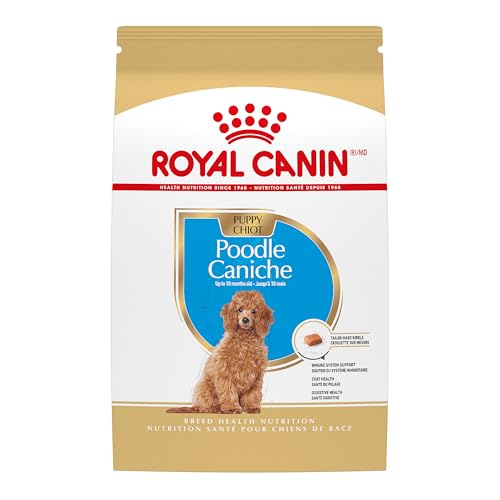
Feed a high-quality puppy food appropriate for your Poodle's size. Toy and Miniature puppies need small, frequent meals — typically 3-4 times daily until 6 months. Standard Poodle puppies grow rapidly and benefit from a large-breed puppy formula to support controlled growth. Our guides on puppy food, puppy food for sensitive stomachs, and large breed puppy food for sensitive stomachs will help you choose. Follow a consistent puppy feeding schedule to support digestion and house training.
House Training
Poodles are highly intelligent and generally learn house training quickly, but consistency is key. Use a consistent schedule: take the puppy out first thing in the morning, after meals, after naps, and before bed. Reward elimination outside immediately. Avoid punishment for accidents indoors — it creates anxiety and slows progress. For apartment owners or those without easy outdoor access, our pee pee pads for puppies guide explains how to use indoor training pads correctly.
Socialization & Training
Begin socialization immediately — the critical window is 3-14 weeks of age. Introduce your puppy to different people, sounds, surfaces, and friendly vaccinated dogs in controlled, positive settings. Enroll in a puppy class as soon as vaccinations allow. Poodles are quick learners and thrive on positive reinforcement. Use our puppy mental stimulation toys guide to keep their active minds busy, and consider interactive dog toys as they grow.
Crate Training
A crate provides a safe space and supports house training. Choose a crate appropriate for your Poodle's adult size. For Toy and Miniature Poodles, our puppy crates for small dogs guide covers sizing. Make the crate positive with treats and bedding — never use it for punishment. For larger Poodles or long-term use, see our pet crates for large dogs guide.
Ongoing Care Essentials
Poodle care is a long-term commitment that extends far beyond puppyhood. These essentials will keep your Poodle healthy, happy, and well-adjusted throughout every life stage.
Exercise & Mental Stimulation
Poodles are intelligent working dogs — physical exercise alone is not enough. They need mental challenges to prevent boredom and destructive behavior. Rotate puzzle toys, teach new tricks, and enroll in agility or obedience classes. Our dog exercise needs guide breaks down requirements by breed and age. For mental stimulation, our puzzle toys guide and chew toys guide offer product recommendations.
Gear & Supplies
Quality gear makes daily life easier and safer. A well-fitted harness is essential for Poodles prone to tracheal sensitivity. See our dog harness guide. A secure leash and comfortable collar are daily necessities — our dog collar guide and dog leash guide cover options. For car travel, a crash-tested harness is strongly recommended — see our dog car harness guide.
For grooming, invest in a slicker brush, metal comb, ear cleaner, and nail clippers. Our dog brush guide and grooming tools guide help you choose. A quality dog bed supports joint health — see our dog bed guide. For travel and outdoor safety, consider a dog carrier and a GPS tracker if your Poodle will be off-leash in open areas.
Senior Poodle Care
Poodles age gracefully but need adjustments as they enter their senior years (7+ for Toys and Miniatures, 6+ for Standards). Switch to a senior-appropriate diet, maintain gentle exercise, increase veterinary checkups to twice yearly, and monitor for cognitive decline. Our dog weight management guide is especially important for senior Poodles, who become less active and prone to weight gain.
Finding a Good Breeder Near You: Use our dog breeder directory to find reputable Poodle breeders. If you are open to other small companion breeds, you may also explore Pomeranian puppies, Maltese puppies, or puppies for sale near you. For a broader view of available puppies, see our puppies for sale directory.
Frequently Asked Questions
The Bottom Line on Poodle Puppies for Sale
Bringing a Poodle puppy into your home is a wonderful decision — but it is one that deserves careful research. Choose a breeder who health-tests their dogs, asks you as many questions as you ask them, and provides a contract that protects both you and the puppy. Budget for grooming every 4-6 weeks, commit to daily training and exercise, and prepare for a sensitive, intelligent companion who will bond deeply with your family. If you are ready for that commitment, a well-bred Poodle is one of the most rewarding dogs you could ever own. Start your search with our reputable breeder directory, and if you are still comparing breeds, explore our guides on Pomeranian puppies and Maltese puppies for alternative small-breed options.